NTSB probes near miss between Delta and American jets at Boston airport
A Delta A319 and an American 737-800 came within a few hundred feet at Boston Logan, renewing pressure on U.S. runway safety after another close call on intersecting runways.
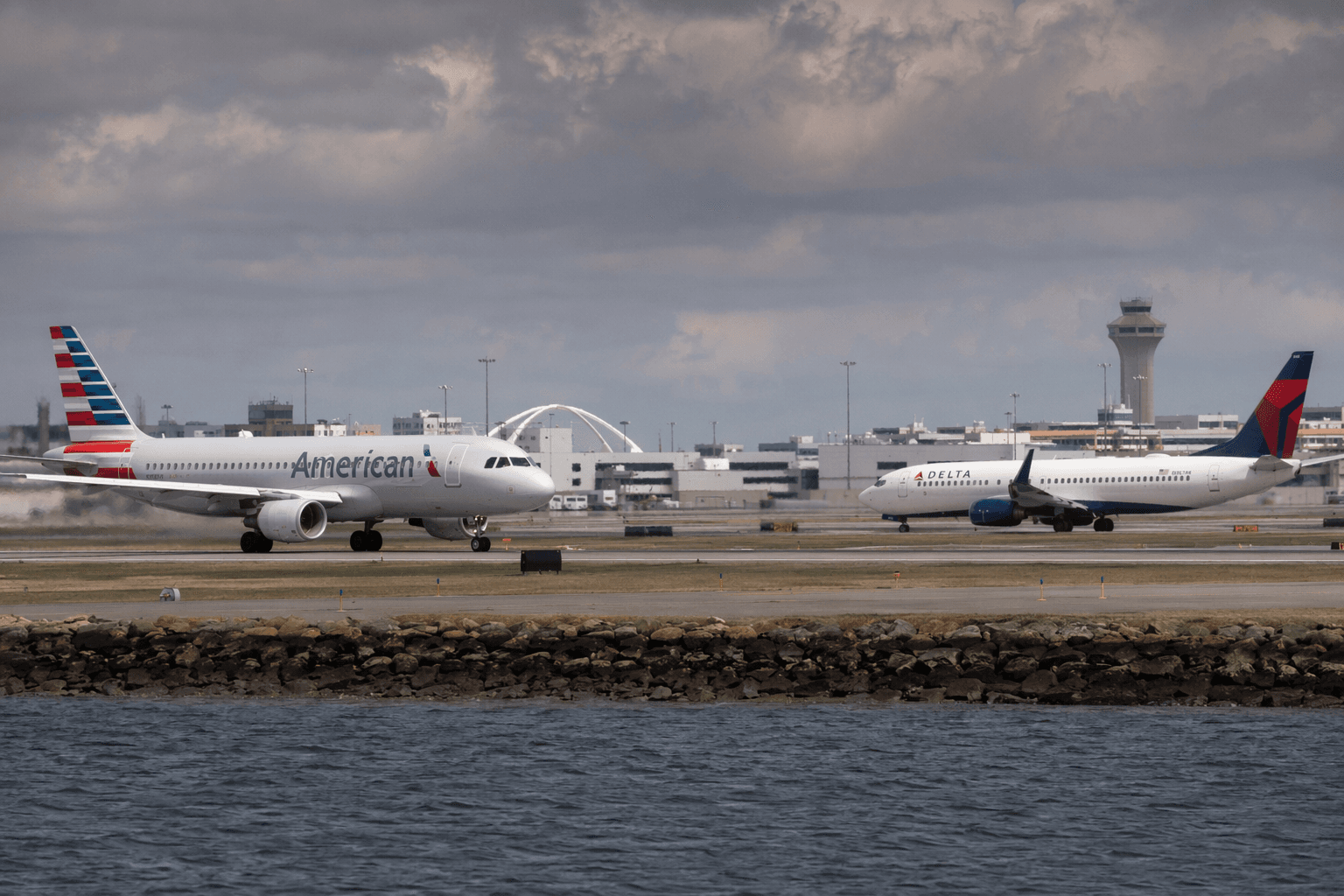
A Delta Air Lines Airbus A319 and an American Airlines Boeing 737-800 came perilously close at Boston Logan International Airport, where the Delta jet executed a go-around as the American aircraft departed on an intersecting runway. Investigators are now trying to determine how the two passenger planes ended up within roughly 325 to 350 feet of each other at the runway intersection, a gap that left little room for error.
The National Transportation Safety Board opened an investigation, and the Federal Aviation Administration was also reviewing the incident. Delta said its crew followed established procedures, coordinated with air traffic control, carried out the go-around and landed safely. American Airlines had not immediately commented.

The close call occurred around 11:30 a.m. local time on Saturday, June 21, and involved a Delta flight from Dallas and an American flight bound for Charlotte. Flight-tracking data suggested the aircraft were separated by only a few hundred feet when their paths converged at the airport, underscoring how quickly a routine landing sequence can turn hazardous when runways intersect.
The episode has landed in the middle of a wider aviation-safety fight in Washington, where lawmakers and regulators are under pressure to show they can reduce runway risks before a deadlier event occurs. Senator Jerry Moran, who chairs an aviation subcommittee, said the incident showed why Congress needs to address the challenges facing the system and strengthen the procedures and technology that protect the flying public. He pointed to “15,000 close calls” over three years near Ronald Reagan Washington National Airport as evidence of how fragile the system can be.
That concern has only sharpened since the January 29, 2025 collision near Washington, D.C., when an American Airlines regional jet and a U.S. Army Black Hawk helicopter crashed over the Potomac River, killing all 67 people aboard both aircraft. The NTSB later said systemic failures caused the disaster, making Boston the latest reminder that multiple safety layers can work, but still leave too little margin when runway operations get crowded.
FAA runway-incursion data show the risk has not disappeared. One industry summary said seven Category A or B incursions were recorded in 2024, down from 22 in 2023, and the FAA’s database reaches back to 2005. At the same time, the agency has been moving toward artificial-intelligence tools, including a Palantir-related effort, to help detect and prevent close calls.
The Boston near miss now sits at the center of that effort, a sharp example of what worked, what nearly failed, and why runway safety remains a national test of oversight, staffing and technology.
This article was produced by Prism’s automated news system from verified source data, official records, and press releases, then run through automated quality and moderation checks before publishing. The system is built and supervised by the people who set the standards it runs under. Read our full AI policy.
Did this article answer your question?

