Nvidia B300 server price in China doubles to $1 million amid U.S. curbs
Nvidia’s B300 servers were selling in China for about 7 million yuan, nearly twice earlier levels, as export curbs and smuggling crackdowns choked supply.

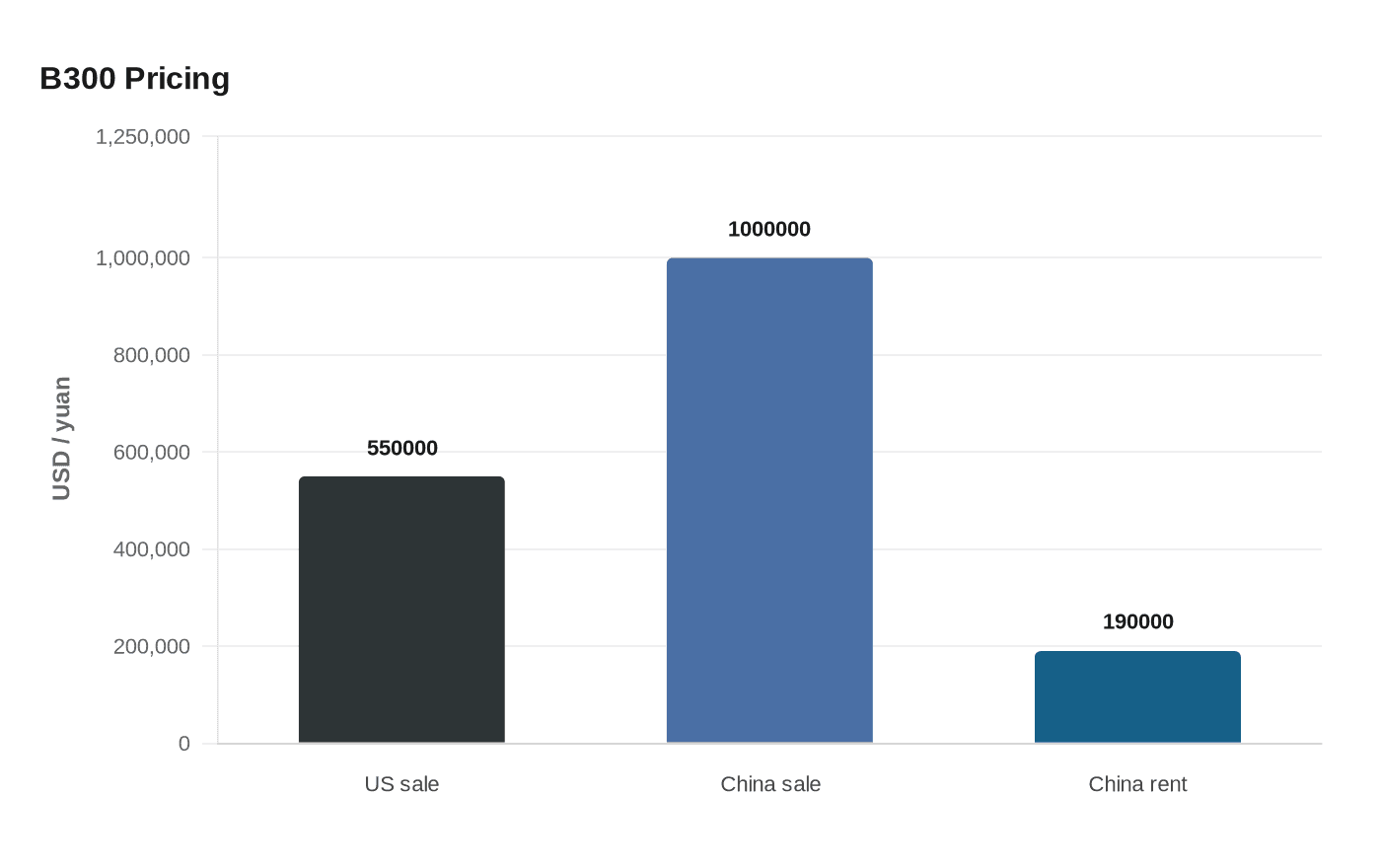
A Nvidia B300 server that costs about $550,000 in the United States was commanding about 7 million yuan, or roughly $1 million, in China, a scarcity premium that exposed how U.S. chip controls and anti-smuggling enforcement were reshaping the AI hardware market.
The price has nearly doubled from earlier this year, when the same server was trading closer to 4 million yuan late last year. Industry sources said the jump reflected strong demand for AI computing power, tighter U.S. export restrictions and a crackdown on chip smuggling that cut off gray-market supply channels Chinese buyers had been using.
The B300 is one of Nvidia’s most advanced servers and is central to AI workloads, especially inference tasks. Each server houses eight B300 GPUs, making it a prized piece of infrastructure for companies trying to scale model deployment, token generation and broader computing capacity. Some Chinese technology firms still want access to the hardware, but they are wary of putting Nvidia gear directly on their books because of possible exposure to U.S. sanctions.
That caution has pushed some buyers toward rentals instead of outright purchases. Monthly rental prices have climbed as high as 190,000 yuan on a one-year contract, another sign that restricted access is distorting procurement and turning high-end AI servers into a short-term, premium service rather than a standard capital purchase.
Nvidia said the B300 is restricted from sale in China and that its partners must comply strictly with export rules. The company also said it does not provide service or support for diverted systems. It warned that unlawful diversion is a recipe for failure and said the enforcement mechanisms are rigorous and effective.
The market reaction fits a broader pattern in China’s AI sector. U.S. restrictions on Nvidia chips tightened sharply in 2025, when the Commerce Department required licenses for H20 exports to China and later began issuing them. Authorities have also pursued smuggling cases involving at least $160 million worth of Nvidia H100 and H200 GPUs, underscoring why diversion networks have drawn tougher enforcement.
At the same time, Chinese demand for computing power has kept climbing. Reuters reported a surge in demand for Huawei’s Ascend 950 AI chips after the launch of DeepSeek V4, while separate reporting said Chinese AI models reached 32% of global token usage in March 2026, up from 5% a year earlier. That backdrop helps explain why the B300, despite sanctions pressure and supply risk, remains one of the most sought-after servers in China’s AI race.
This article was produced by Prism’s automated news system from verified source data, official records, and press releases, then run through automated quality and moderation checks before publishing. The system is built and supervised by the people who set the standards it runs under. Read our full AI policy.
Did this article answer your question?