Nvidia unveils AI PCs, while oil prices rise on Middle East tensions
Nvidia pushed AI from the cloud onto Windows PCs as Brent jumped above $97, a split-screen day that tested the market’s risk-on mood.

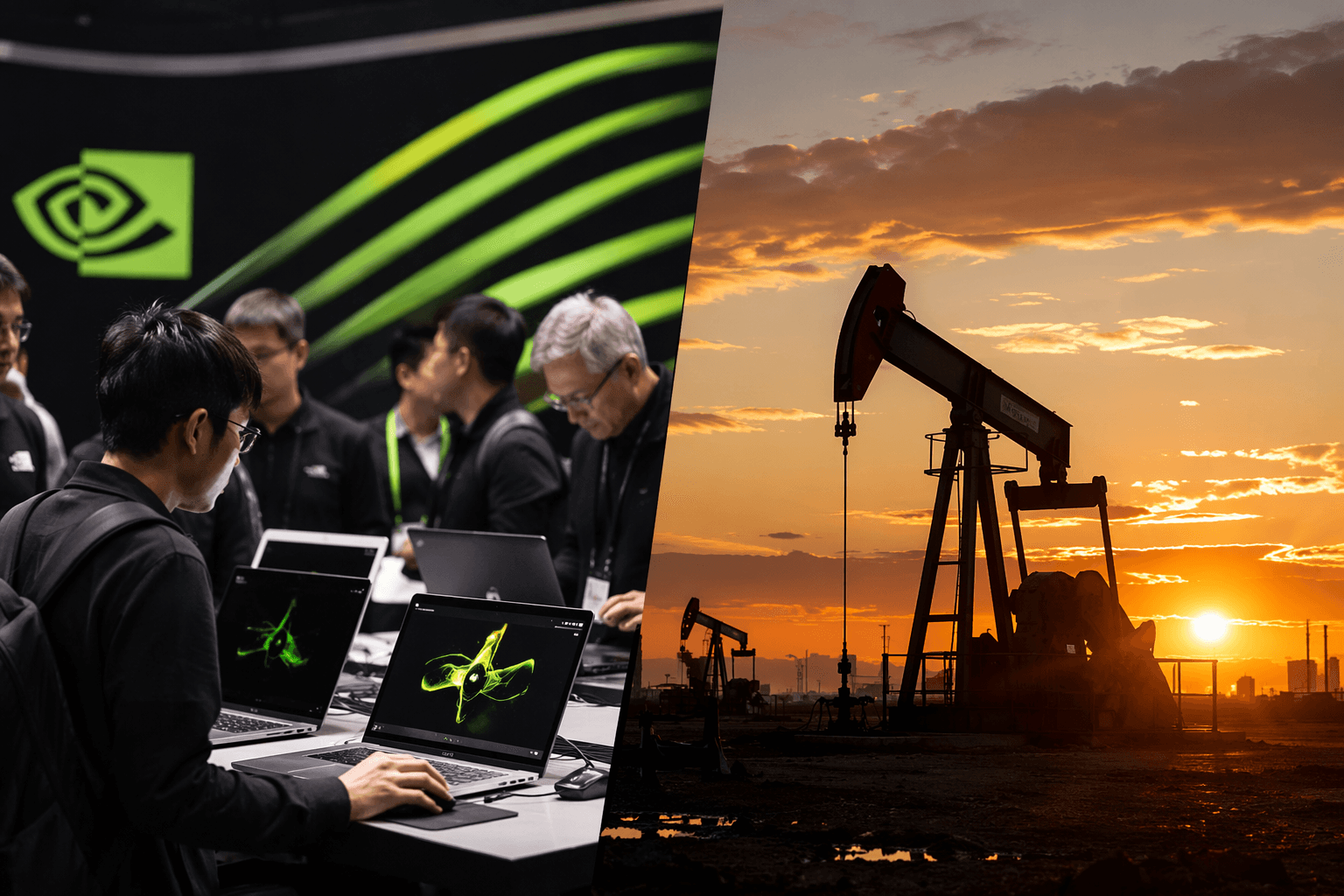
Nvidia put a new wager on the next phase of artificial intelligence, unveiling RTX Spark at Computex in Taipei as a 1-petaflop superchip for Windows PCs built for personal AI agents. The system is designed to run local AI models and agents on the device itself, with support for up to 128GB of unified memory, and Nvidia said the effort includes new Windows agent features and security primitives developed with Microsoft.
Microsoft quickly matched that ambition with hardware of its own. The company introduced the Surface Laptop Ultra as its most powerful Surface Laptop ever, saying it was engineered with Nvidia from the silicon up and optimized for RTX Spark. The first wave of RTX Spark machines is expected later in 2026 from Microsoft, Dell, HP, ASUS, Lenovo, MSI, Acer and Gigabyte, signaling a broad push to turn the PC into an AI endpoint rather than just a gateway to cloud services.
For Nvidia, the move opens another growth lane beyond data-center chips, where demand has already been strong enough to make the company the market’s central AI bellwether. It also puts pressure on the PC-chip ecosystem, where Intel, AMD, Qualcomm and Apple have long defined the competitive field. If consumers and enterprise buyers embrace local AI workloads, Nvidia could help reshape buying patterns in laptops and desktops over the next several product cycles.
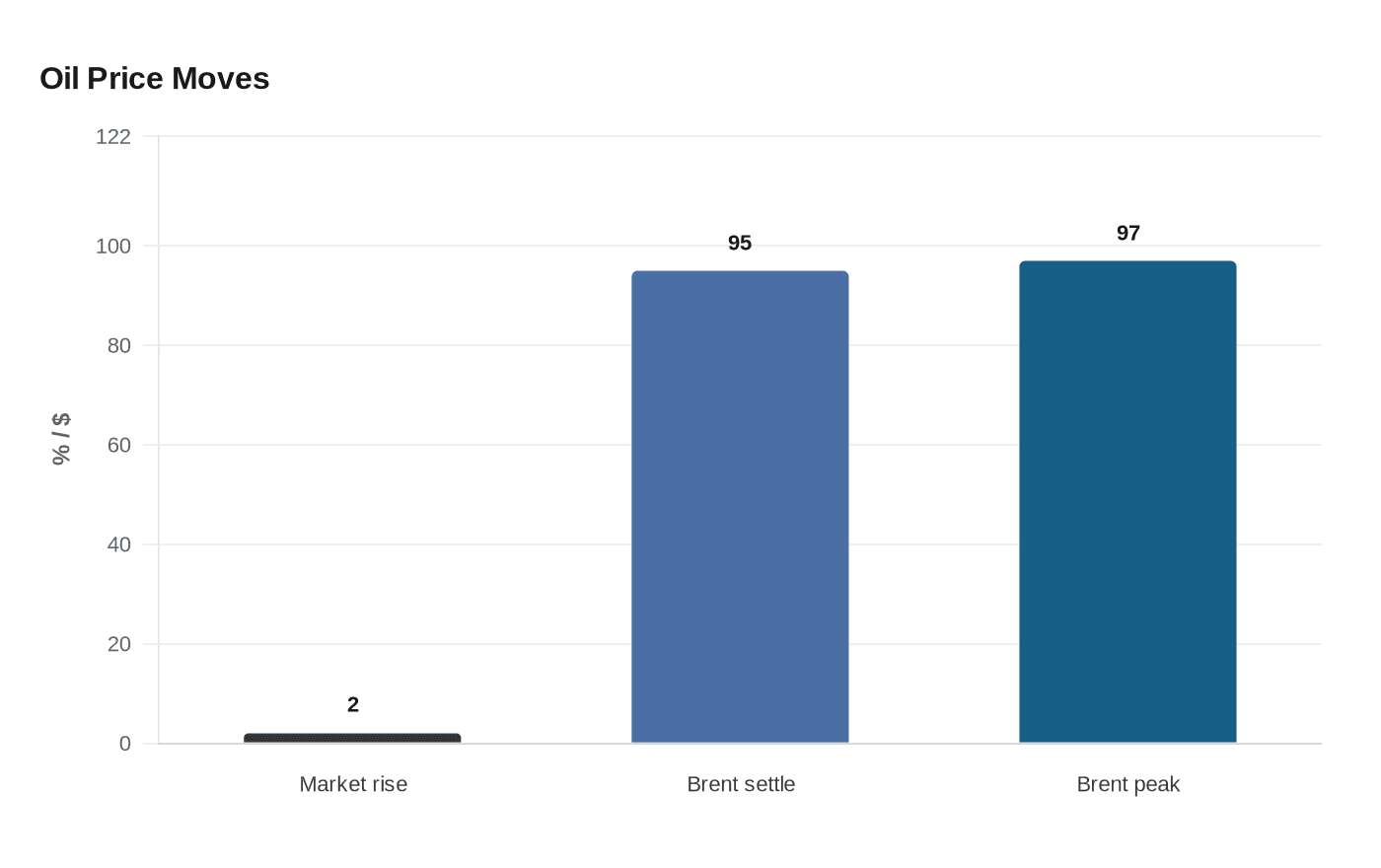
At the same time, oil markets delivered a very different signal. Prices rose more than 2% as Iran and the United States traded strikes and Israel pushed troops further into Lebanon, reviving fears of supply disruption across the Middle East. Brent climbed 4.3% to settle near $95 a barrel and briefly traded above $97, underscoring how quickly geopolitical risk can feed into energy costs.
The split-screen day captured the market’s mood in one glance: investors still have a powerful growth story in Nvidia’s AI expansion, but they are also staring at inflationary and geopolitical risks that can reprice everything from transport costs to central-bank expectations. The question now is whether the rally can broaden beyond a handful of tech winners, or whether it remains vulnerable to shocks from oil and the Middle East.
This article was produced by Prism’s automated news system from verified source data, official records, and press releases, then run through automated quality and moderation checks before publishing. The system is built and supervised by the people who set the standards it runs under. Read our full AI policy.
Know something we missed? Have a correction or additional information?
Submit a Tip
