Trump revises steel and aluminum tariffs, cuts rates on some imports
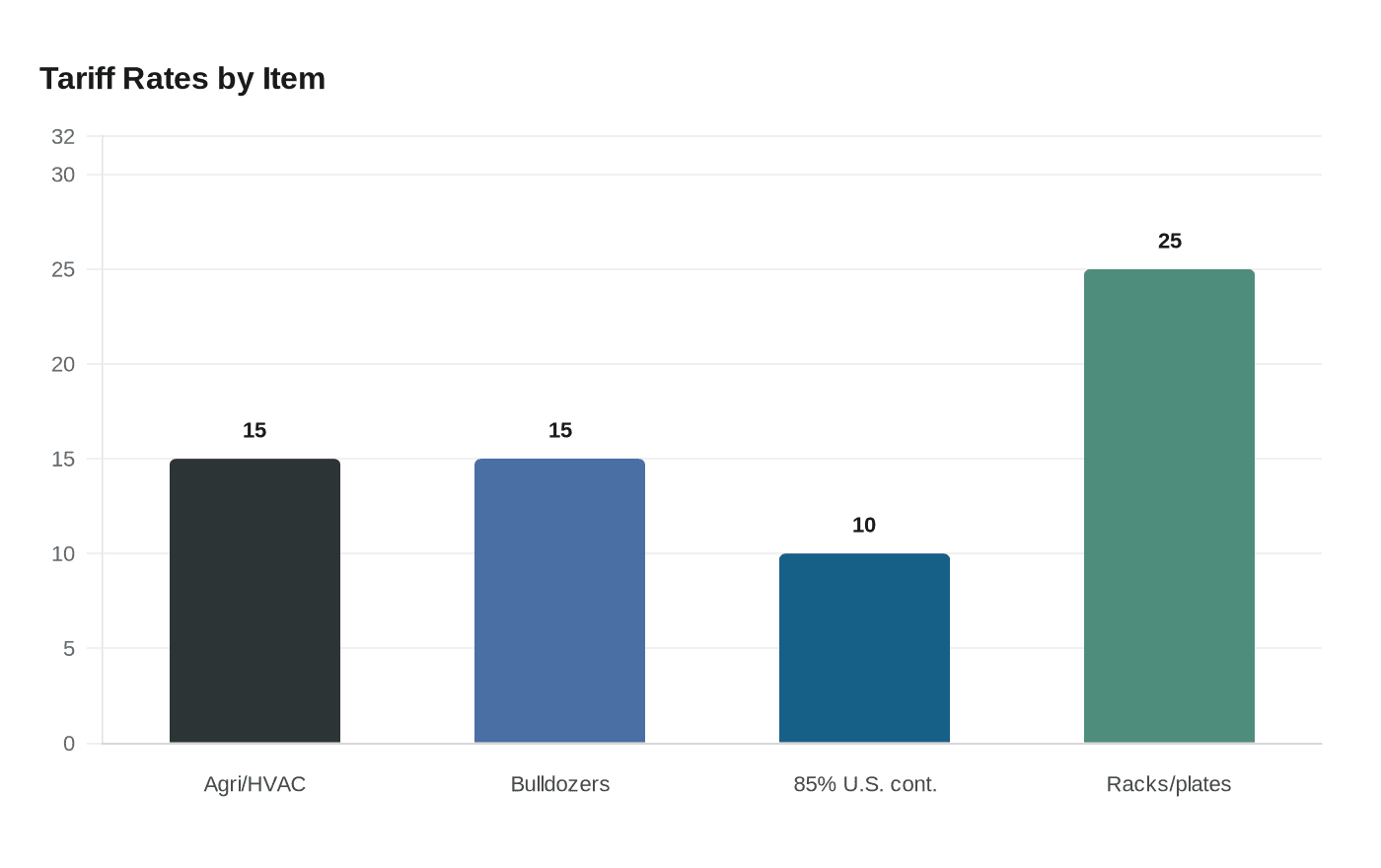
Trump cut duties on some farm machinery and HVAC imports to 15%, but added new 25% levies on steel racks and lithographic plates.

President Donald Trump tightened and narrowed his metal tariffs at the same time, signing a proclamation that lowered some steel and aluminum derivative duties while adding new 25% charges on other imports. The changes took effect on goods imported or withdrawn from bonded warehouses after 12:01 a.m. EST on June 8 and will run through Dec. 31, 2027, a sign that the White House wanted to keep the policy temporary even as it pushed harder on industrial strategy.
The biggest relief went to products tied to factories, farms and buildings. Tariffs on certain agricultural machinery and residential heating, air conditioning and ventilation equipment fell to 15% from 25%. Mobile industrial equipment such as bulldozers and forklifts also qualified for a 15% tariff when imported from trade-deal countries eligible for that treatment. Foreign companies could receive a 10% rate if their capital equipment contained at least 85% U.S.-melted, poured, smelted or cast steel or aluminum by weight. At the same time, the administration added steel racks and aluminum lithographic plates to the list of derivative products facing 25% duties.
For manufacturers, the package created a split screen. Importers of heavy equipment, HVAC systems and some farm machinery got lower rates, but producers that rely on racks, plates and other covered metal components faced higher costs that can move quickly into construction budgets, factory investment plans and consumer prices. The tariffs also increase the incentive to redesign supply chains around U.S.-made steel and aluminum, especially for companies that can raise domestic content enough to hit the 10% threshold. Domestic metals producers and manufacturers with high U.S. content stand to benefit, while buyers of imported inputs will have to absorb the added expense or pass it along.
The White House said the changes were meant to spur near-term investment that would rebuild the nation’s industrial base, framing the tariffs as a national-security measure and a defense of the economic resilience of vital industries. In practice, the latest revision looks as much like industrial policy as border protection. It rewards sourcing choices, steers demand toward domestic metal, and gives the administration room to ease pressure on some politically sensitive equipment markets while keeping broader protection in place.
Trump first used Section 232 on March 8, 2018, when he imposed a 25% tariff on steel and a 10% tariff on aluminum, effective March 23, 2018. In 2020, those duties were expanded to additional derivative products, and by early 2026 the regime had already been widened again for aluminum, steel and copper. The Bureau of Industry and Security still accepts tariff inclusion requests in two-week windows three times a year, leaving the system open to further changes. For now, the administration has made clear that its metal policy is not static protection, but a lever to shape investment, prices and industrial winners through 2027.
This article was produced by Prism’s automated news system from verified source data, official records, and press releases, then run through automated quality and moderation checks before publishing. The system is built and supervised by the people who set the standards it runs under. Read our full AI policy.
Know something we missed? Have a correction or additional information?
Submit a Tip
