Nye County Posts Official Agenda for January 21 Board of Commissioners Meeting
Residents can download the Nye County Board of Commissioners agenda posted Jan. 15 and review meeting materials ahead of the Jan. 21 regular session.
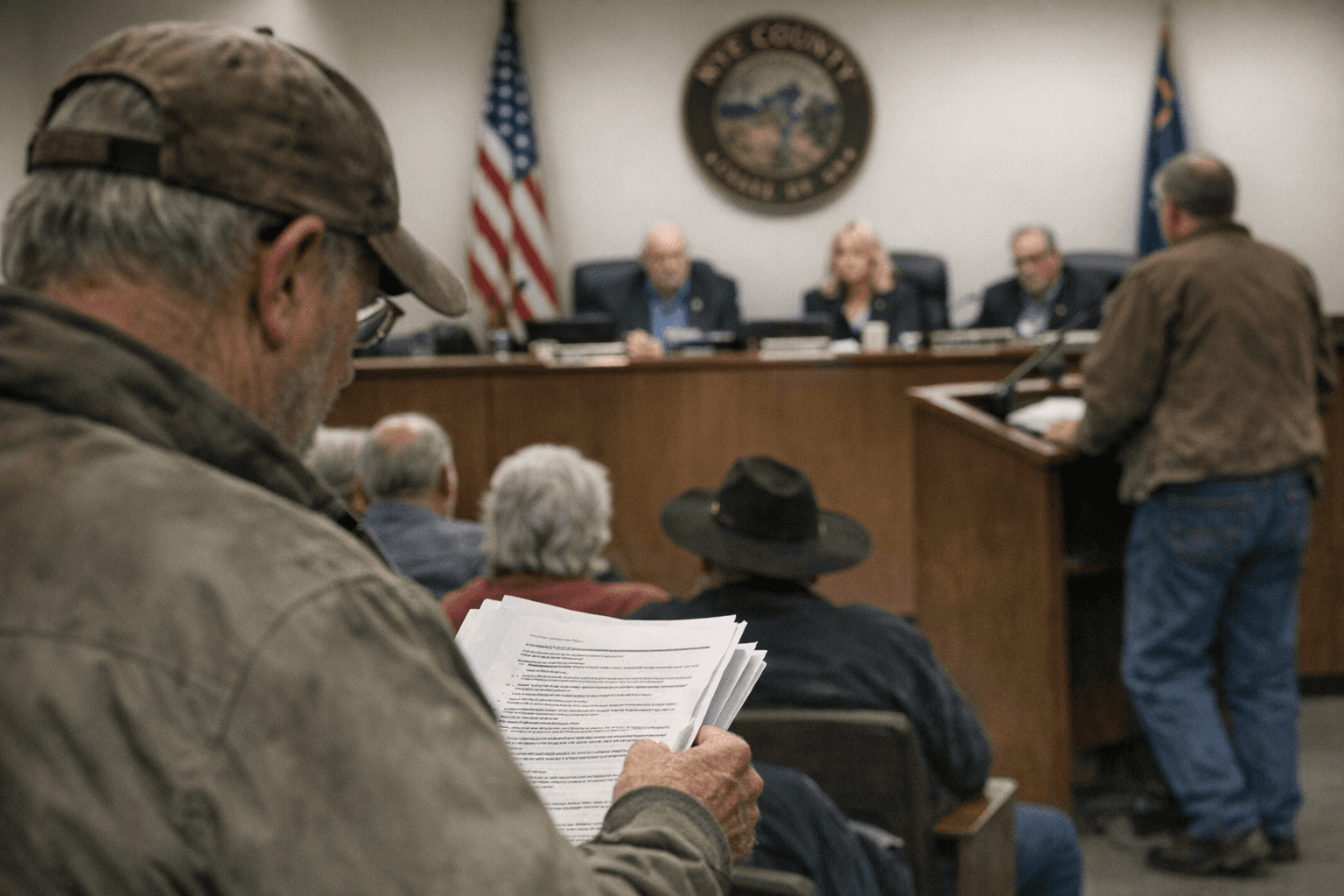
1. Meeting scheduled for January 21, 2026, regular Board of County Commissioners session
The agenda denotes a regular meeting of the Nye County Board of County Commissioners on January 21, 2026. Regular meetings are where the board schedules routine governance, policy decisions, and public business; local residents should expect discussions that affect county operations and services.
2. Agenda posted January 15, 2026 at 8:08 AM
The agenda was publicly posted on January 15, 2026 at 8:08 AM, giving the community time to review items before the meeting. That posting timestamp is the official public notice timestamp and helps residents verify they had reasonable notice to prepare comments or follow agenda items.
3. Downloadable agenda PDF is available
The Agenda Center entry includes a downloadable PDF of the board agenda, so residents can retrieve the full docket and any included materials. Having the PDF means taxpayers can read the exact items the commissioners will consider rather than relying on summaries.
4. Nye County Agenda Center is the official host for meeting materials
Nye County’s Agenda Center on the county website serves as the repository for agendas, minutes and meeting materials. Using a single official hub helps centralize public records and reduces confusion about where to find authoritative county documents.
5. Posted agenda functions as the official public notice
The posted agenda is the official public notice listing items for consideration by the Board of County Commissioners. That designation carries civic weight: what appears on the posted agenda is what the board may act upon during the meeting, so residents should use the posting to track decisions.
6. Public access to meeting materials and schedules
The Agenda Center provides the public with access to meeting materials and schedules, enabling residents to study attachments, background reports, or schedules tied to agenda items. This access supports more informed participation and media coverage.
7. Agenda Center includes agendas, minutes and meeting materials
Beyond a single agenda PDF, the Agenda Center houses past minutes and other meeting materials that create continuity and context for ongoing issues. Residents can follow a topic across multiple meetings to see how discussions and decisions evolve.
8. Transparency and local government accountability
Posting the agenda on the county site bolsters transparency and creates a public record that allows citizens to hold elected officials accountable. Regular, timely postings signal a functioning public process and give community groups a basis for monitoring board activity.
9. Practical uses for residents and community groups
Local residents, neighborhood groups and civic organizations can use the posted agenda to organize attendance, prepare testimony, or coordinate advocacy. Downloading materials in advance lets residents identify which items affect their neighborhoods or services.
10. Media and watchdog attention made easier
Local press and watchdog organizations rely on the Agenda Center posting to plan coverage and investigate decisions. When agendas are posted promptly and clearly, reporters can inform the community with accurate context rather than late or speculative reporting.
11. Timeline: six days between posting and meeting
With the agenda posted on January 15 and the meeting scheduled for January 21, there is a six-day window for public review. That interval gives the public and stakeholders time to analyze items, coordinate comments, or consult with officials before the dais convenes.
12. How residents can prepare using the PDF
Residents should download the PDF, highlight items of interest, and note agenda sequence numbers to follow the meeting flow effectively. Preparing questions or brief notes tied to specific agenda entries helps when addressing the board or speaking during any public comment period.
13. The board’s role in policy and local services
The Board of County Commissioners sets policy and oversees county services that touch everyday life, from roads to public safety and administrative functions. While the posted agenda lists items for this single session, decisions made here can have ripple effects across the county.
14. Record-keeping: minutes and follow-up documentation
Minutes linked in the Agenda Center provide an official written record of what transpired at meetings and any motions or votes taken. Residents who cannot attend can later consult minutes to see outcomes and next steps on issues that mattered to them.
15. Usefulness for tracking fiscal and operational matters
Budgetary decisions, contracts, and operational updates commonly appear on commissioner agendas; the posted PDF helps residents spot fiscal actions that affect taxes, services, or contract awards. Civic scrutiny around these items is a key aspect of local fiscal governance.
16. Planning and land-use issues often appear on agendas
While the research notes do not list specific agenda topics, county boards frequently address planning, permitting, and land-use matters; reviewing the agenda PDF lets residents identify any proposals with local impact. Staying informed helps neighbors weigh in on developments that may reshape local landscapes.
17. How the Agenda Center supports continuity across meetings
Because the Agenda Center archives agendas and materials, residents can trace how a subject moves from initial notice to final action across multiple sessions. This continuity is important for understanding long-term projects and county priorities.
18. Encouraging civic engagement and attendance
The posted agenda is the first step in civic engagement, it signals what the commission will tackle and when residents should show up or submit feedback. Even if you’re not a regular at the dais, scanning the Agenda Center before meetings is a quick way to stay plugged into county decisions.
19. Digital accessibility trends and expectations
Using a web-based Agenda Center reflects a broader public-sector trend toward digital transparency and record-sharing. For Nye County residents, the expectation should be timely postings and accessible documents so everyone, near or far, can follow county business.
20. Local impact: everyday services and community priorities
Items on the commissioners’ agenda collectively influence roads, public safety, county staffing, and regulatory frameworks that shape life in the county. Paying attention to the posted agenda equips residents to protect local services and promote community priorities.
21. Where to find the agenda and follow up
The agenda is posted in the Nye County website’s Agenda Center; residents should use that official hub to download the January 21 PDF, review accompanying materials, and check for updates or additions. Bookmark the Agenda Center as your go-to source for official meeting notices and records.
Practical closing thought: take five minutes to download the PDF, flag two agenda items you care about, and show up or contact the commissioners, staying informed is the simplest way to make sure county decisions reflect local needs.
Sources:
Know something we missed? Have a correction or additional information?
Submit a Tip