Oil surges, U.S. futures fall after Trump vows Hormuz blockade
Oil jumped almost 8% after Donald Trump ordered a Hormuz blockade, a move that threatened gasoline prices, shipping costs and inflation.
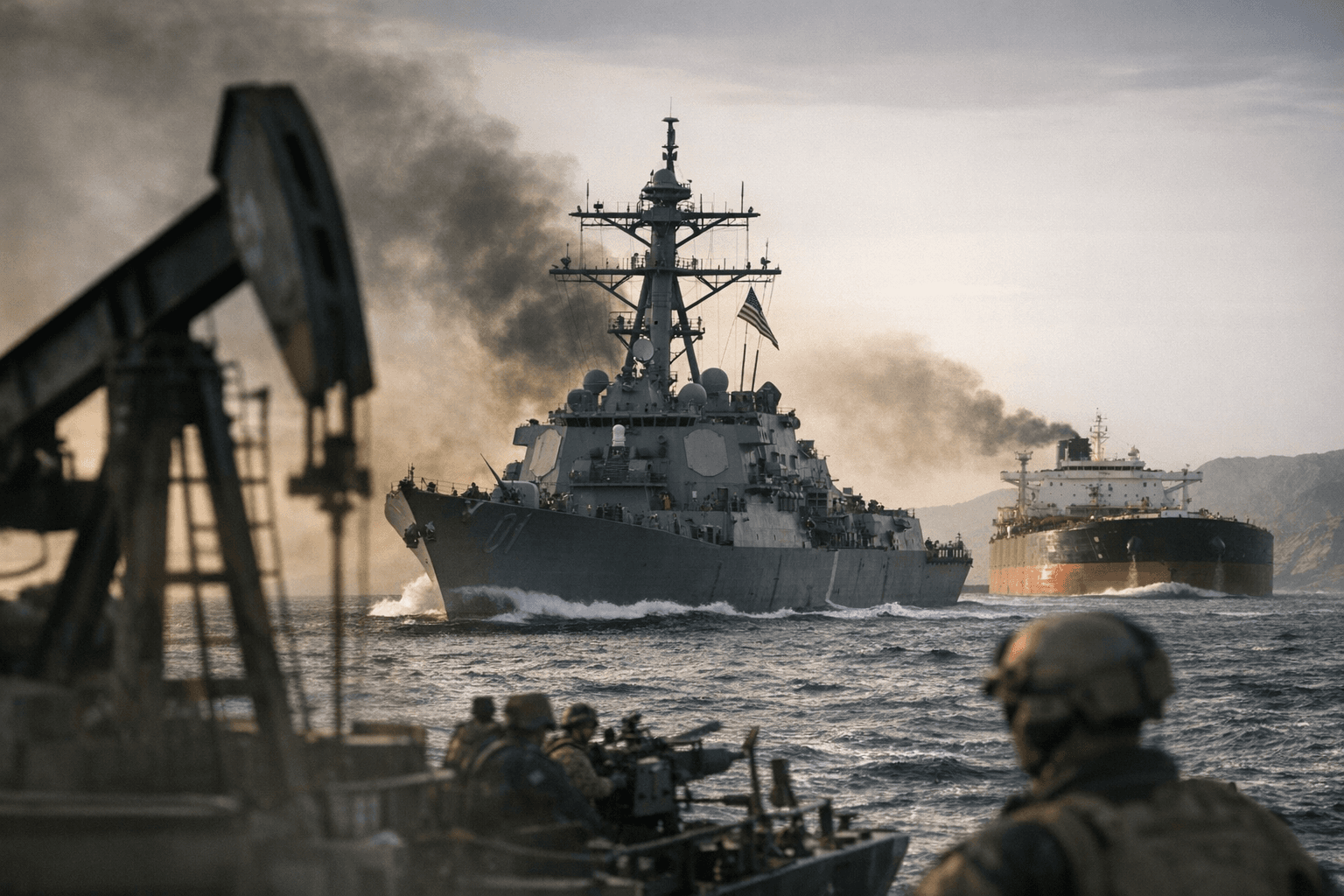
Oil prices spiked and U.S. futures slid after Donald Trump ordered a blockade of the Strait of Hormuz, the narrow waterway that carries roughly one-fifth of the world’s oil and a major share of its liquefied natural gas. The immediate market reaction signaled more than a trading shock: a closed Hormuz could push up gasoline prices, raise freight costs and keep pressure on inflation just as investors were already bracing for a wider energy squeeze.
U.S. crude for May delivery jumped nearly 8% to $104.20 a barrel, while Brent for June rose 7% to $101.86. Bloomberg said Brent climbed almost 8% and European natural gas futures surged as much as 17%, while stocks and bonds fell. ABC News reported Brent at $102.29, well above the roughly $70 level seen before the Iran war and still below the more than $119 peaks reached at times. The move rippled beyond energy, with U.S. equity futures weakening as traders assessed how long the disruption might last.
The Strait of Hormuz is one of the world’s most consequential energy chokepoints. The U.S. Energy Information Administration said about 20 million barrels per day of oil flowed through the strait in 2024, equal to about one-fifth of global petroleum liquids consumption, and around one-fifth of global liquefied natural gas trade also passed through it. The International Energy Agency put the oil flow at about 20 million barrels a day, or roughly 25% of world seaborne oil trade, with about 80% of that oil bound for Asia. The IEA also says only about 3.5 million to 5.5 million barrels a day of pipeline capacity exists to bypass the waterway, leaving the region heavily exposed if shipping is interrupted.
The U.S. military planned to begin the blockade at 10 a.m. New York time, and U.S. Central Command said the action would cover maritime traffic entering or leaving Iranian ports and be enforced impartially against vessels of all nations, while still allowing ships traveling between non-Iranian ports to pass through the strait. Bloomberg said the move followed the collapse of weekend peace talks over the nuclear issue, after the U.S. and Iran failed to turn a fragile ceasefire into a lasting agreement. Reuters reported that three supertankers fully laden with oil had passed through the strait as the talks were beginning, underscoring how closely traders were watching every tanker movement.
For Asia, the stakes were immediate. Roughly 80% of the oil that crosses Hormuz is headed there, and LNG cargoes from Qatar and the United Arab Emirates would be especially vulnerable if the route stayed constrained. The market’s repricing showed investors were not just reacting to headlines from the Middle East, but to the prospect of a sustained squeeze on the fuel that moves the global economy.
This article was produced by Prism’s automated news system from verified source data, official records, and press releases, then run through automated quality and moderation checks before publishing. The system is built and supervised by the people who set the standards it runs under. Read our full AI policy.
Did this article answer your question?

