Omiya Bonsai Museum launches BONSAIENCE 3D Digital Twin with Kyushu University students
Omiya Bonsai Art Museum launched a BONSAIENCE "Bonsai Digital Twin" website Jan 20, offering high-detail 3D views of its collection in collaboration with Kyushu University students.
A new online Bonsai Digital Twin now lets enthusiasts and students examine Omiya Bonsai Art Museum’s most celebrated trees in high-detail three-dimensional view, bringing close study into homes while the museum undergoes renovation. The museum posted that the BONSAIENCE Museum website went online “today, January 20” (Monday) at 6:30 p.m., announcing a collaboration with BONSAIENCE, a research group of Kyushu University students.
The BONSAIENCE platform provides highly detailed 3D images of bonsai from the Omiya collection. Developers used high-detail 3D imaging and related research techniques to create digital models that capture fine surface texture, branching geometry, and the relationship between tree and pot. The museum describes these models as a Bonsai Digital Twin, intended to serve both as an educational tool and a bridge to in-person visits once renovation work finishes.
This project grew out of the museum’s extended closure for renovation and its role in marking the 100th anniversary of nearby Omiya Bonsai Village. By turning to digital imaging while galleries are closed, Omiya Bonsai Art Museum aims to maintain public access to the collection and to reach a younger, tech-oriented audience. The museum explicitly encourages exploration of bonsai in new digital formats and hopes the online experience will inspire future visits.
For growers and students, the practical value is immediate. Digital twins allow detailed inspection of nebari, branch taper, jin and shari, surface bark patterns, and trunk movement without the constraints of travel or opening hours. Educators can integrate the 3D models into classroom demonstrations and critique sessions, and conservators gain a high-resolution baseline for monitoring condition before and after renovation work. For collectors and casual visitors, the site offers a way to preview specimens and learn visual vocabulary for styling and display.
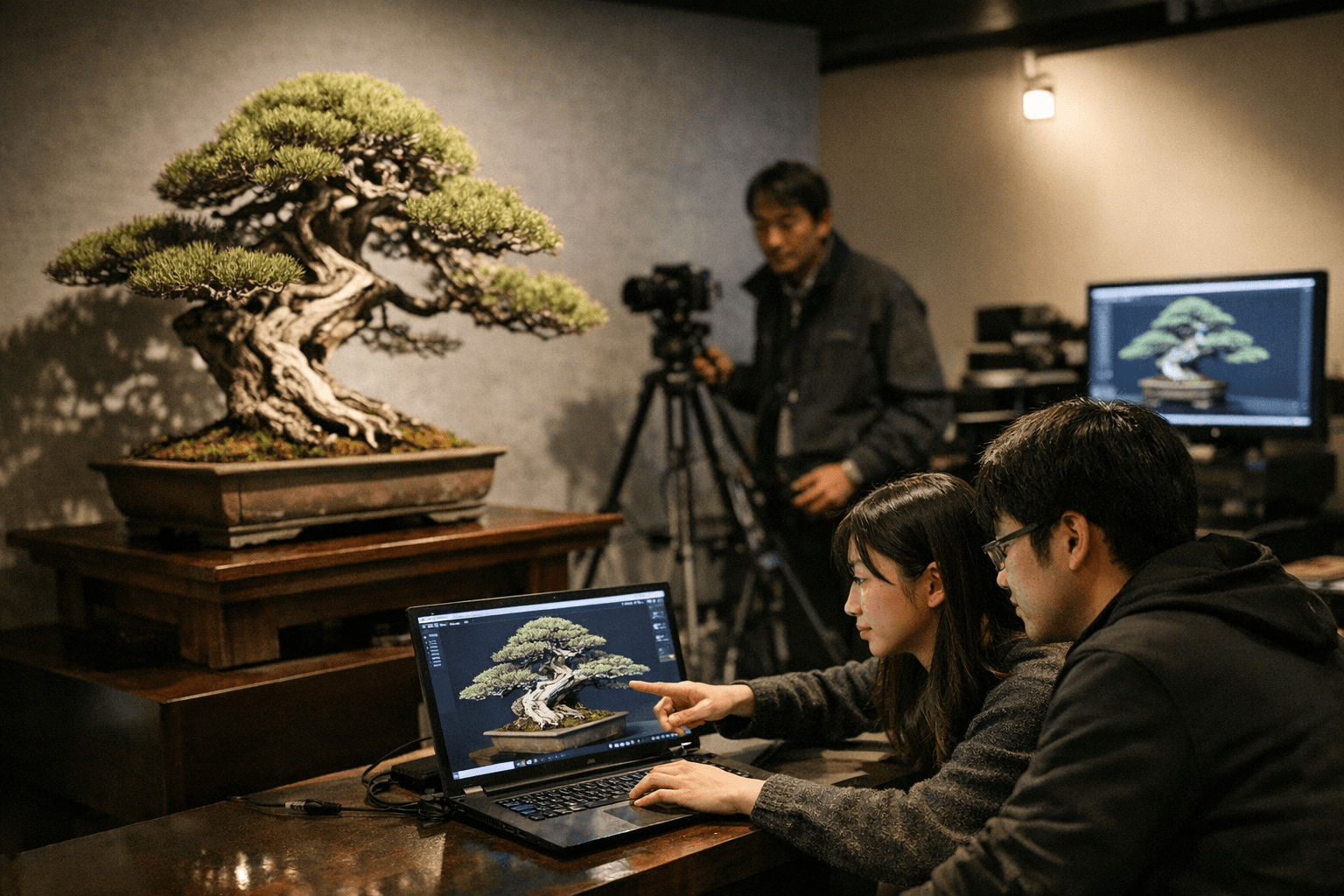
BONSAIENCE’s involvement brings academic research into the hobby community, creating potential follow-on projects such as time-series scans, comparative studies across cultivars, and interactive learning modules. The museum’s digital pivot also highlights how traditional craft and contemporary technology can work together to preserve and promote bonsai culture.
Expect the BONSAIENCE site to evolve as more trees are scanned and as museum renovations progress. For now, the digital twin gives growers, students, and fans a rare, close-up look at the Omiya collection and a practical way to keep studying trees until the museum’s galleries reopen.
Know something we missed? Have a correction or additional information?
Submit a Tip