OPEC+ approves modest June oil output hike after UAE exits group
OPEC+ agreed to add 188,000 barrels a day in June, but the bigger story is the UAE’s exit and a widening strain inside the oil alliance.
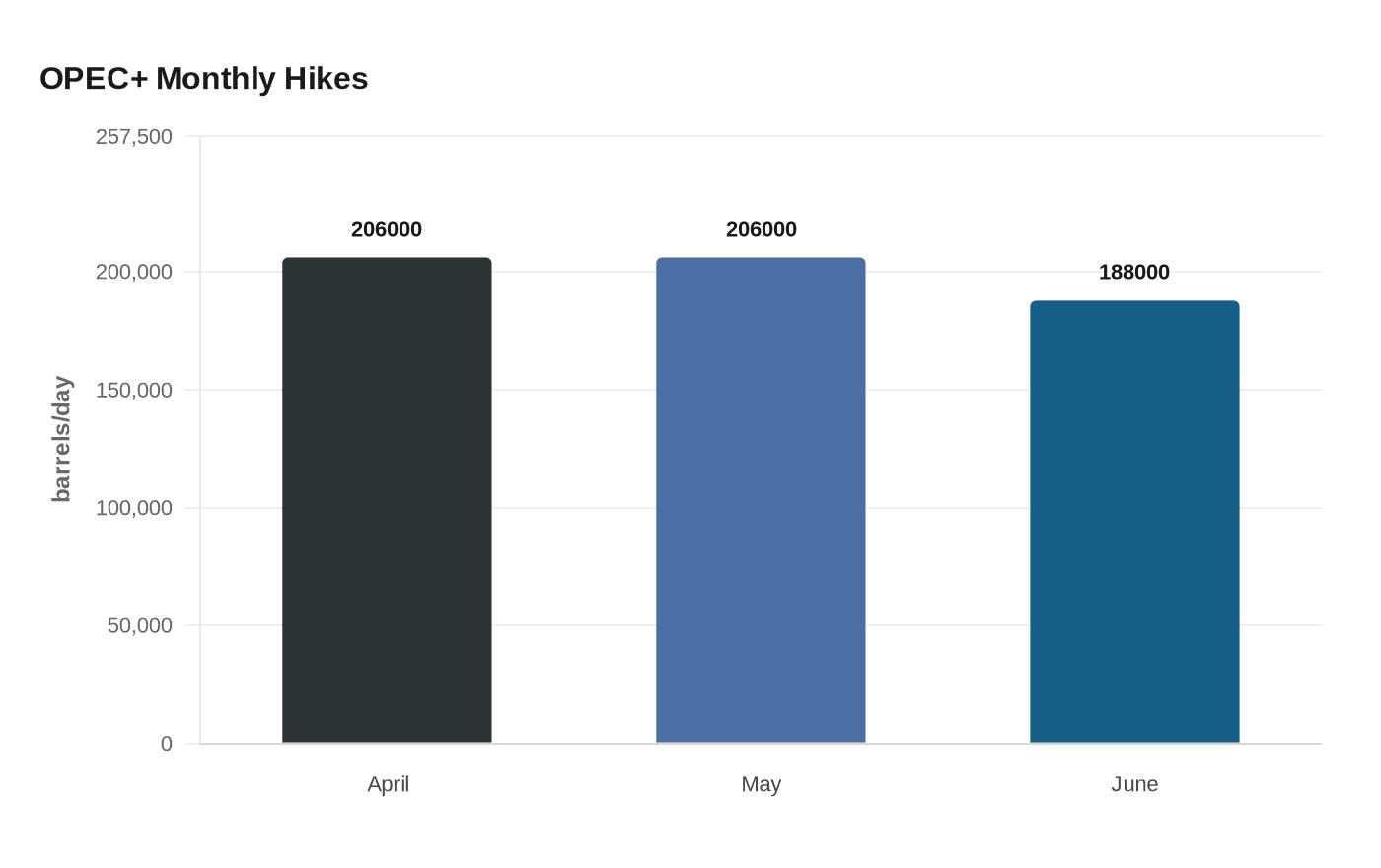
OPEC+ approved a modest 188,000-barrel-a-day increase for June, a move that barely shifts global supply but sharply underscores how fragile the cartel’s cohesion has become after the United Arab Emirates left the group effective May 1. The decision came at the first OPEC+ meeting without the UAE, which had been one of the eight major producers coordinating voluntary cuts, and it landed as Gulf oil flows were already being disrupted through the Strait of Hormuz.
The June increase was smaller than the 206,000-barrel-a-day adjustment OPEC+ announced for May, continuing a pattern of incremental, reversible moves rather than a decisive flood of crude. OPEC has repeatedly framed those steps as support for market stability, citing healthy market fundamentals and low inventories. But the latest move was widely seen as more symbolic than market-moving, because the actual effect on supplies is limited while shipping disruptions continue elsewhere.
The announcement follows a series of carefully managed production changes. On March 1, the eight OPEC+ countries agreed to resume unwinding 1.65 million barrels a day of additional voluntary cuts with a 206,000-barrel-a-day adjustment for April. On April 5, they approved another 206,000-barrel-a-day increase for May. OPEC’s recent statements said those eight countries were also extending 2.2 million barrels a day of voluntary adjustments announced in November 2023, with monthly increases that could be paused or reversed depending on market conditions.
That balancing act now looks more complicated without the UAE in the room. The Gulf producer had spent nearly six decades in the oil exporters’ cartel before its exit, and its departure intensified questions about how much authority Saudi Arabia can still exert over the wider alliance. Reuters reporting said Saudi Energy Minister Prince Abdulaziz bin Salman faced a major test of leadership at the same time as one of the largest ever disruptions to global oil supplies.
For markets, the near-term implication is modest. The June increase is unlikely to meaningfully alter fuel prices on its own, especially if Gulf export routes remain constrained. But politically, the symbolism is large: OPEC+ is still opening the taps in small steps, yet the UAE’s departure exposed the strain beneath the alliance’s collective discipline and raised fresh doubts about how long that discipline can hold.
This article was produced by Prism’s automated news system from verified source data, official records, and press releases, then run through automated quality and moderation checks before publishing. The system is built and supervised by the people who set the standards it runs under. Read our full AI policy.
Did this article answer your question?

