Oracle Cuts Up to 30,000 Jobs, Notifying Workers by Pre-Dawn Email
Oracle fired up to 30,000 workers via a 6 a.m. email signed only "Oracle Leadership," with Slack and system access cut within minutes of delivery.

Thousands of Oracle employees across the United States, India, and dozens of other countries woke on March 31 to find the same message in their inboxes: their jobs were gone. The email, signed "Oracle Leadership" with no individual name attached, read in part, "After careful consideration of Oracle's current business needs, we have made the decision to eliminate your role." Slack accounts went dark within minutes. Corporate email access followed. Severance details, employees were told, would arrive by DocuSign.
Analysts at TD Cowen estimate the cuts reached between 20,000 and 30,000 employees, representing roughly 18% of Oracle's global workforce of approximately 162,000 people, a reduction that would rank among the largest in the company's history. Oracle declined to comment on the specifics of the headcount reductions.
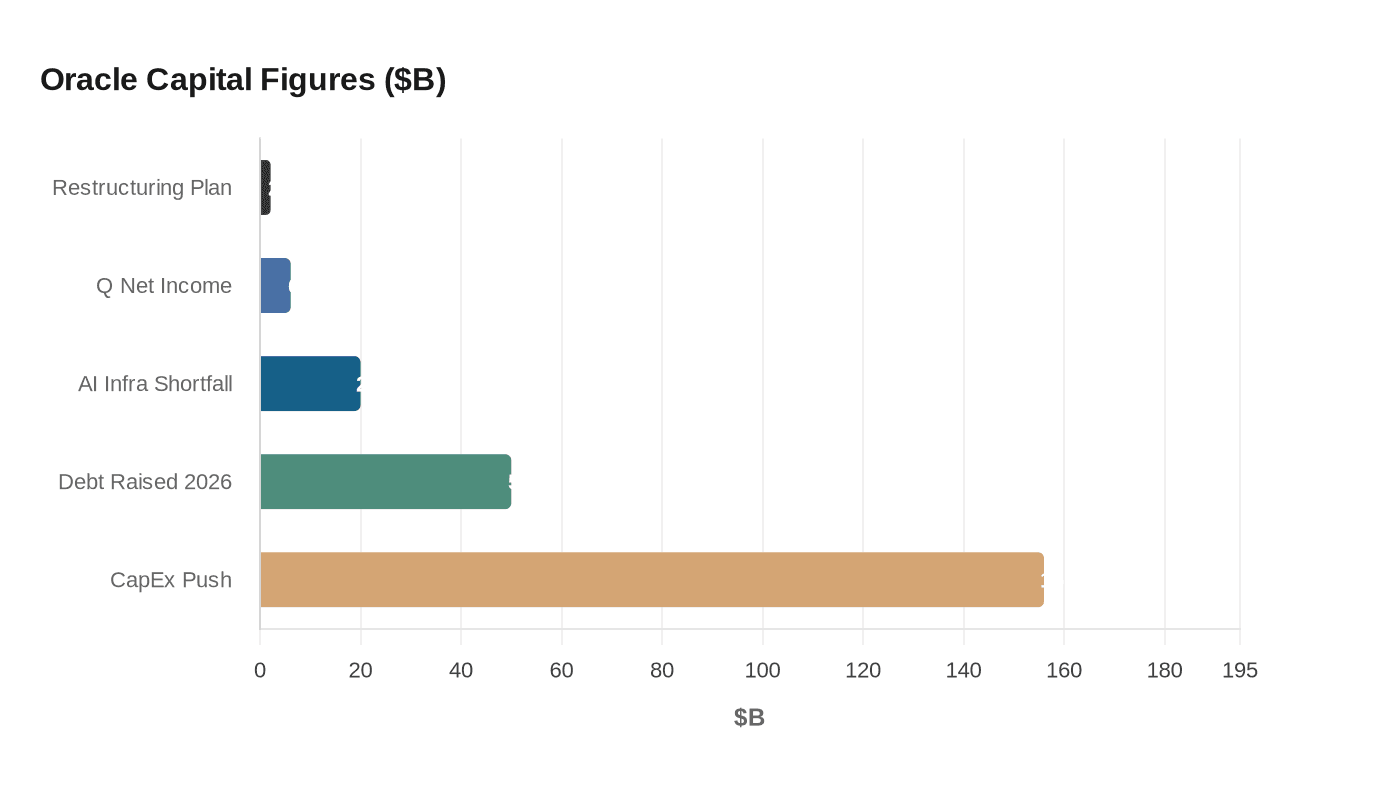
The financial logic is stark. TD Cowen projects the layoffs will generate between $8 billion and $10 billion in cash flow, money Oracle urgently needs to fund an estimated $156 billion capital spending push tied to Oracle Cloud Infrastructure. The company has already raised approximately $50 billion in debt in 2026 to finance data-center construction and reportedly faces a $20 billion shortfall for AI infrastructure this fiscal year alone. Oracle's stock has dropped 25% since January. Bloomberg had first signaled the coming cuts in early March, when sources described plans to eliminate positions in the "thousands," specifically including roles the company expected artificial intelligence to replace.
Oracle formally disclosed a $2.1 billion restructuring plan in its March 2026 10-Q SEC filing, with $982 million already recorded through the first nine months of fiscal 2026, primarily for employee severance. The figures exist alongside a paradox: Oracle posted a 95% jump in net income last quarter, reaching $6.13 billion, and its remaining performance obligations stood at $523 billion, up 433% year over year. The company is, in effect, cutting its workforce at a moment of record profitability, accelerating a cash redirection toward infrastructure rather than headcount.
The notification method intensified the criticism. No HR representative called. No manager delivered the news in person or over video. The pre-dawn email arrived from a nameless sender, and system access vanished almost simultaneously across time zones. Industry observers noted that coordinated mass emails have become a preferred tool for large multinationals executing global reductions because they allow firms to sever system access at once, but Oracle's execution underscored the reputational and human costs of that efficiency.
The fallout extended immediately into legal and immigration territory. Approximately 12,000 of the affected workers were reportedly on H-1B visas, raising acute questions about transition timelines and immigration status. For Oracle's enterprise customers and partners, the sudden churn in sales, engineering, and customer-success roles risks disrupting support commitments and product roadmaps tied to those $523 billion in future performance obligations. Plaintiffs' lawyers, immigration advocates, and lawmakers have all taken notice, and WARN Act filings are among the regulatory threads being tracked in the aftermath.
Oracle's bet is legible even if its execution was brutal: absorb the reputational and human cost now, redirect billions in labor savings toward data-center capacity, and stake a position at the infrastructure layer of the AI economy before rivals extend their leads further. Whether that calculation pays off will depend on whether the company can execute a data-center buildout of historic scale while managing the operational disruption of having eliminated nearly one in five of its employees overnight.
This article was produced by Prism’s automated news system from verified source data, official records, and press releases, then run through automated quality and moderation checks before publishing. The system is built and supervised by the people who set the standards it runs under. Read our full AI policy.
Did this article answer your question?