Trump's Credibility on Oil Markets Erodes as Iran War Drags On
Iran denied Trump's peace talk claims as "fakenews," and WTI crude still surged 11% to $111.54/barrel after his April 2 speech; analysts say his market credibility is spent.
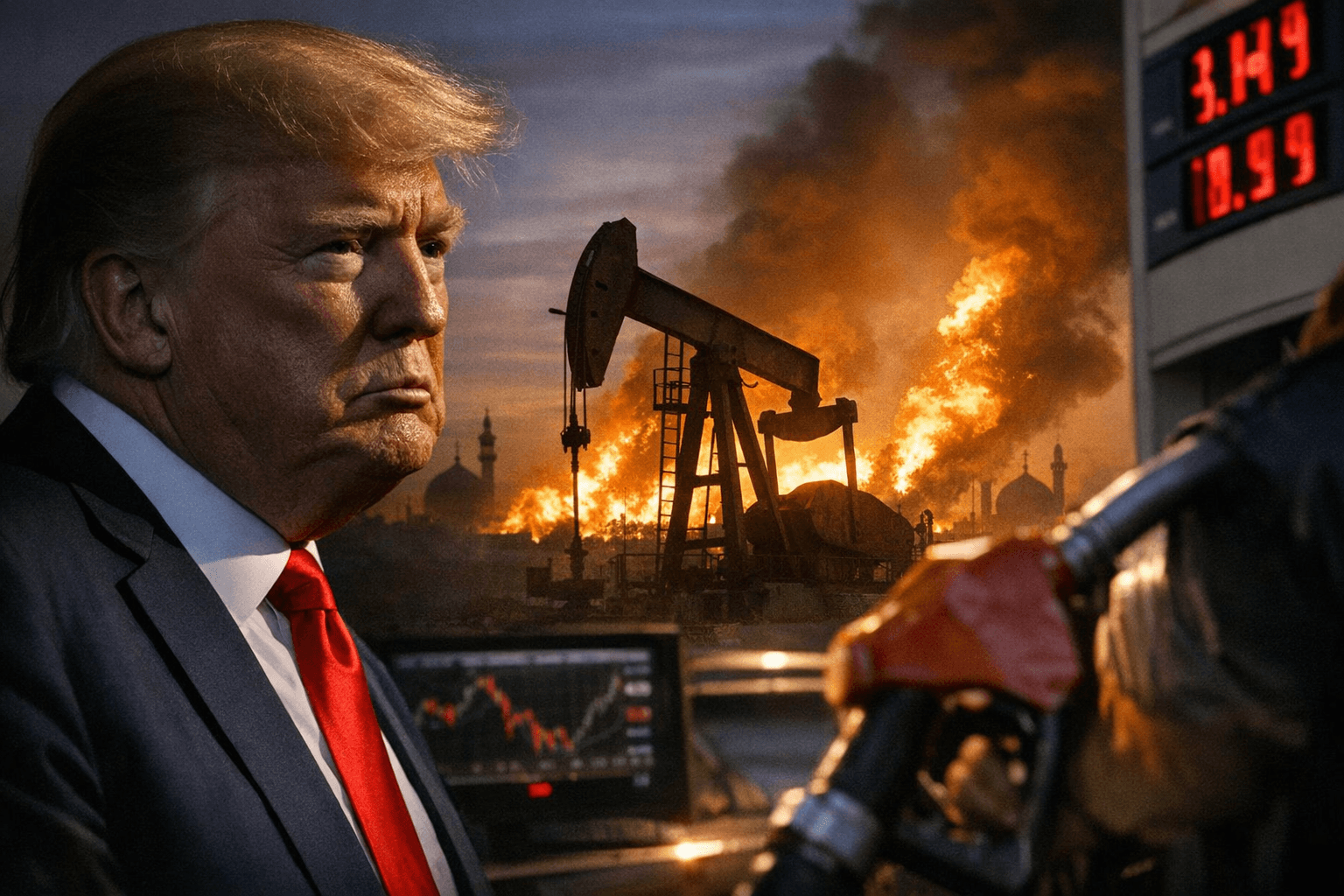
Five weeks into the U.S.-Iran war, the White House's most-used tool for managing energy markets — the presidential statement — has stopped working.
WTI crude surged more than 11%, or $11.42, to close at $111.54 per barrel on April 2, the biggest one-day gain for U.S. crude in six years, after President Trump delivered a war address that simultaneously promised the conflict would end "shortly" and pledged "extremely hard" strikes over "the next two to three weeks." Brent crude gained nearly 8%, settling at $109.03. The Dow Jones Industrial Average fell roughly 600 points, while the S&P 500 and Nasdaq shed 1.3% and 1.7%, respectively.
The market's violent reaction crystallized what energy analysts and traders have been watching build for weeks: Trump's attempts to talk oil prices lower have cost him his credibility. Brent crude entered the war priced around $70 per barrel and has since surged nearly 80% for the year, with a 60%-plus gain in March 2026 alone, a record monthly move for the contract dating back to its 1988 inception.
The credibility problem has a specific origin point. Roughly two weeks into the conflict, Trump declared that "productive" talks with Iran were underway. Iran's parliament speaker, Mohammad Bagher Ghalibaf, publicly denied that any negotiations had taken place, calling the claim "fakenews" used to "manipulate the financial and oil markets." On March 31, Trump simultaneously posted that "great progress" had been achieved on peace talks while threatening Iran's civilian infrastructure, including desalination plants. His April 2 address deepened the pattern, with Trump suggesting the Strait of Hormuz would "open up naturally. It'll just open up naturally," phrasing that critics noted echoed his 2020 prediction that COVID would, "like a miracle, disappear." Iran dismissed the ceasefire claim outright, saying the waterway would not be reopened based on Trump's "absurd displays."
Gene Sperling, who served as a top economic adviser across the Clinton, Obama, and Biden administrations, called the strategy "simplistic jawboning," arguing it is insufficient for Americans paying elevated prices at the pump and that "most advisers would say the president has to speak directly to the American people and fully acknowledge the economic pain."
Those Americans are feeling it acutely. The national average price of gasoline crossed $4 per gallon for the first time since Russia's invasion of Ukraine in 2022, with unleaded averaging $4.08 and diesel reaching $5.51 nationwide. California's average hit $5.87 per gallon by March 31.
The underlying supply picture explains why verbal interventions carry so little weight. Iran's effective closure of the Strait of Hormuz, through which approximately 20% of the world's oil transits, prompted Goldman Sachs to label the disruption the "largest-ever supply shock," estimating a loss of roughly 14 million barrels per day. Rapidan Energy president Bob McNally offered a pointed critique of the military response: "I can't believe the U.S. military didn't start degrading Hormuz interdiction capabilities on day one. Just as you wouldn't imagine a parachutist diving out of a plane without putting on the parachute." Rapidan forecasts a total net loss of 630 million barrels of oil and products by the end of June.
Goldman Sachs warned that prices will remain supported even after the war ends, driven by new stockpiling demand, elevated insurance and freight costs, and a geopolitical risk premium that could keep prices elevated through 2027. Ben Emons, CIO at Fed Watch Advisors, distilled the political stakes: Trump "could be forced to wave the white flag to control gas prices and thereby inflation before midterms." British Prime Minister Keir Starmer has separately convened world leaders in a videoconference on the Hormuz crisis, underscoring that the supply shock has grown far too large to be managed by a presidential post.
This article was produced by Prism’s automated news system from verified source data, official records, and press releases, then run through automated quality and moderation checks before publishing. The system is built and supervised by the people who set the standards it runs under. Read our full AI policy.
Did this article answer your question?

