Orchid breeders race to create the next blockbuster flower
Orchid breeding is a decade-long, secretive race where Phalaenopsis dominates, tissue culture strains the limits of speed, and permits shape global trade.
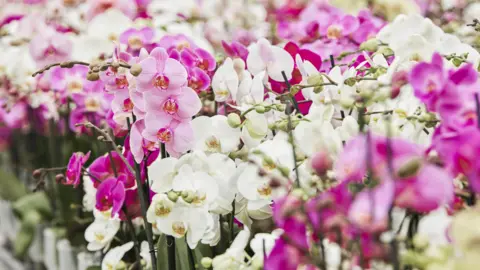
A new orchid is less a flower than a long-term bet. Breeders can spend a decade turning one cross into something saleable, which is why the process is guarded so closely: the winner may be a plant with a new color, a sharper form, or better disease resistance that can command real money in a market worth hundreds of millions of dollars.
The business model behind a bloom
Orchid breeding sits at the intersection of biology and commerce. The BBC report says it can take ten years of hard work to bring a new orchid to market, and that timeline explains why breeders treat their methods like trade secrets. The reward is not just a beautiful plant, but a commercial product that can compete in a crowded ornamental market where the next standout flower can become a major revenue driver.
That pressure has intensified because orchids are not niche curiosities anymore. They are one of the most commercially important families in floriculture, and the race is increasingly about producing plants that look distinctive on a retail bench while still holding up to mass production, shipping, and consumer care.
Why Phalaenopsis dominates the trade
The center of gravity is Phalaenopsis, the moth orchid. A 2024 review describes it as the orchid genus with the highest worldwide importance as an ornamental orchid, and a Springer chapter says it is the most important exported potted orchid in trade. That helps explain why so much breeding effort has clustered around this genus rather than spreading evenly across the orchid family.
The geography of innovation matters too. According to the Springer chapter, major advances in Phalaenopsis breeding and micropropagation have come from Belgium, the Netherlands, Taiwan, and Thailand. Those countries have built the technical know-how that turns elite parent plants into commercial varieties, giving them a strong position in a market that depends on both aesthetics and scale.
How breeders actually make a new orchid
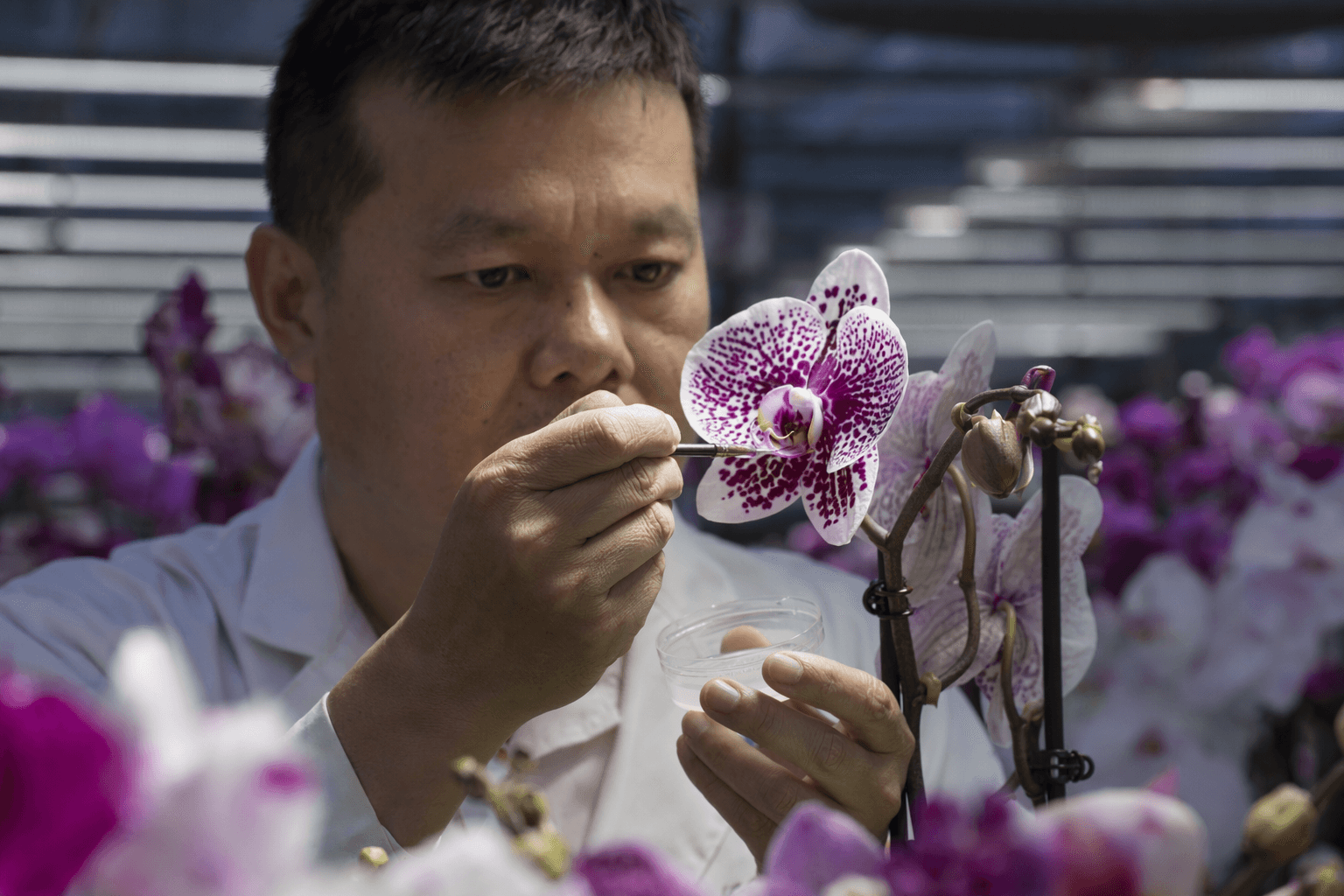
Traditional orchid breeding remains the mainstream approach, even though it is slow. A 2021 review says it is still widely used, and that makes sense in a business where breeders need predictable inheritance, stable traits, and enough volume to satisfy retailers. The newer work does not replace that model so much as extend it, with a 2024 review noting that breeders are combining conventional and biotechnological approaches to produce new cultivars.
The goals are consistent across the pipeline. Breeders want fresh visual traits, stronger resistance, and uniformity for mass-market potted plants. In practice, that means selecting parent lines, making controlled crosses, growing out seedlings, waiting for flowers, and discarding most outcomes before one plant finally matches the target. The process is slow because orchids do not reward shortcuts, and the market punishes inconsistency.
Why propagation is still a bottleneck
Even after a promising plant is identified, multiplication is not automatic. Tissue culture is widely used to clone orchids commercially, but a 2024 Frontiers paper says Phalaenopsis orchids remain among the economically significant genera that are difficult to propagate rapidly by this method. That bottleneck matters because a winning cultivar only becomes a business if breeders can scale it fast enough to meet demand.
This is where the industry’s hidden economics become clear. A breeder is not only creating a flower, but also solving a production problem: how to turn one elite specimen into thousands of uniform plants without losing the trait that made it desirable in the first place. The speed of cloning, the consistency of growth, and the stability of bloom all influence whether a new orchid becomes a temporary curiosity or a retail staple.
The rules that govern global trade
Orchids are not just a breeding story, they are a regulated international trade story. Under CITES, most orchids are listed in Appendix II, while more endangered species are in Appendix I. In practical terms, that means trade is controlled so it does not threaten wild populations, and exports generally require permits.
The U.S. Fish and Wildlife Service adds a useful operational detail: Appendix II species need an export permit or re-export certificate from the country of export or re-export. CITES also notes that, with some exemptions, trade in all orchid species and their parts and derivatives, including finished products containing these species, requires a permit. For breeders and exporters, that makes paperwork part of the production line.
What makes the next blockbuster flower
The next big orchid will probably not be the rarest one. It will be the cultivar that combines novelty with reliability: a flower that looks fresh enough to stand out, resists disease well enough to survive the supply chain, and propagates well enough to reach garden centers at scale. That combination is hard to engineer, which is why the process takes years and why successful breeders tend to protect their methods.
The broader market logic is simple. Hundreds of millions of dollars are at stake in the global orchid trade, and recent industry estimates put the Phalaenopsis market in the billions. In that environment, a breeder’s advantage comes from patience, technical depth, and the ability to turn slow genetic experimentation into a plant that looks effortless on the shelf.
This article was produced by Prism’s automated news system from verified source data, official records, and press releases, then run through automated quality and moderation checks before publishing. The system is built and supervised by the people who set the standards it runs under. Read our full AI policy.
Did this article answer your question?

