U.S. retail sales rise for third month as inflation lifts prices
Retail sales climbed for a third month, but higher prices did much of the work as import fuel costs surged 16.3% in April.
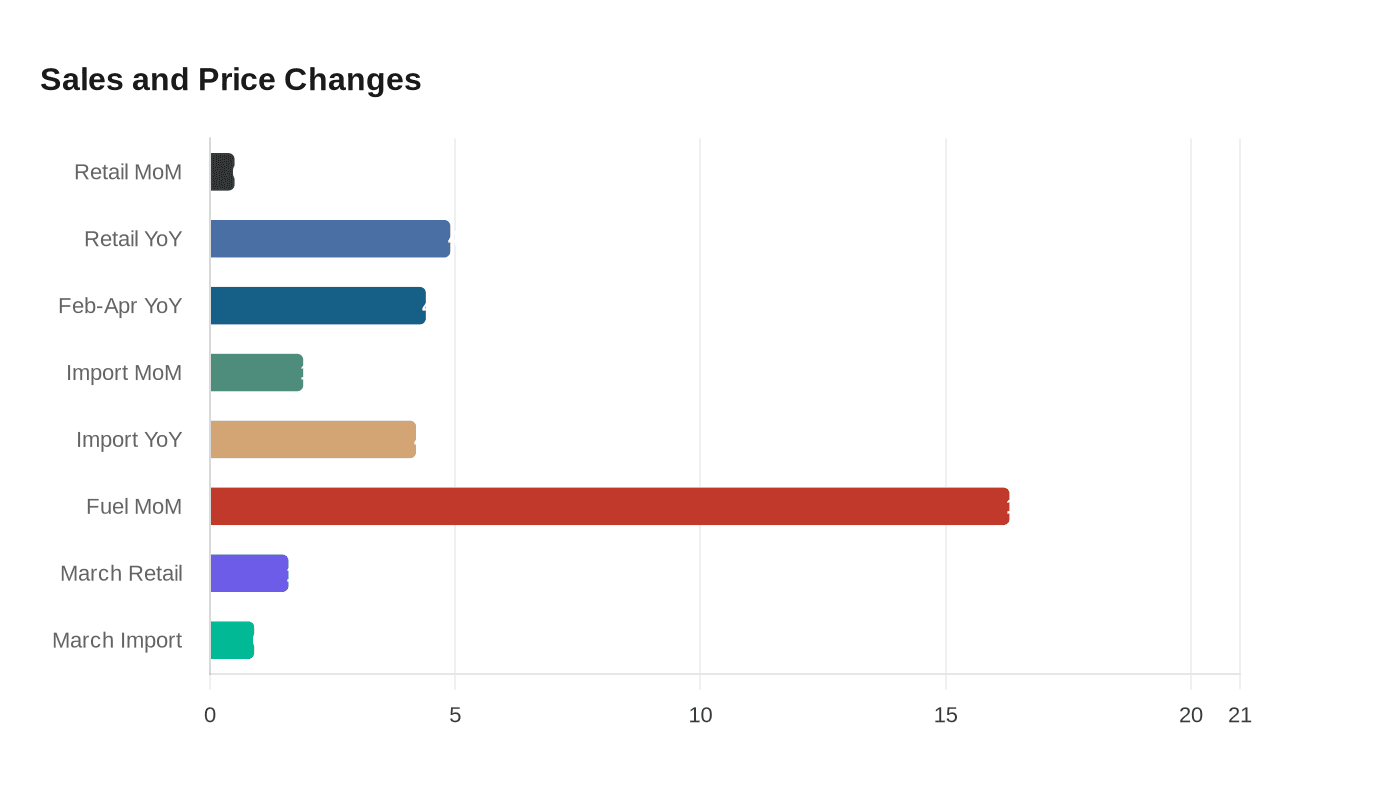
Retail sales kept climbing in April, but the latest increase looked driven as much by higher prices as by stronger demand. Advance U.S. retail and food services sales reached $757.1 billion, up 0.5% from March and 4.9% from a year earlier, the U.S. Census Bureau said. March’s gain was also revised up to 1.6%, extending a three-month run of solid nominal sales growth.
The headline figures pointed to resilience, yet they also carried a warning: the sales data are adjusted for seasonal patterns and holiday timing, but not for price changes. That means households can spend more dollars even when they are buying the same amount, or less, of goods and services. The February-April period was up 4.4% from a year earlier, reinforcing the picture of consumers still opening their wallets, even as inflation erodes the value of each purchase.

That inflation pressure showed up again in import prices. The U.S. Department of Labor said import prices rose 1.9% in April after a revised 0.9% increase in March. Import fuel and lubricants prices jumped 16.3% in the month, the biggest monthly advance since March 2022, while import prices were up 4.2% over the 12 months through April, the strongest yearly rise since October 2022. Those gains matter because higher import costs can filter through supply chains and keep a floor under prices paid by U.S. shoppers and businesses.
The April retail figures suggested that tax refunds and strong stock market gains were helping some households absorb the squeeze. But the cushion is thinning. Price increases have been outpacing wage gains, tax-filing season is over and the saving rate has fallen to near a 3-1/2-year low, conditions that point to softer spending later in the quarter. The result is a split consumer picture, with higher-income households better protected than lower-income families facing a sharper hit from fuel and other essentials.
For policymakers, the data underscored a difficult balance. Consumer spending remained strong enough to support growth, but the inflation push from higher import costs leaves the Federal Reserve with less room to ease policy. For retailers and investors, the message was mixed: sales are still rising, but much of the gain may reflect pricing power and pass-through costs rather than a broader improvement in household demand.
This article was produced by Prism’s automated news system from verified source data, official records, and press releases, then run through automated quality and moderation checks before publishing. The system is built and supervised by the people who set the standards it runs under. Read our full AI policy.
Did this article answer your question?

