Orion Crew Module Separates From Service Module After 10-Day Mission
Orion's crew module split from its service module at 7:33 p.m. ET, kicking off the most perilous 34 minutes of Artemis II's nearly 10-day lunar journey.
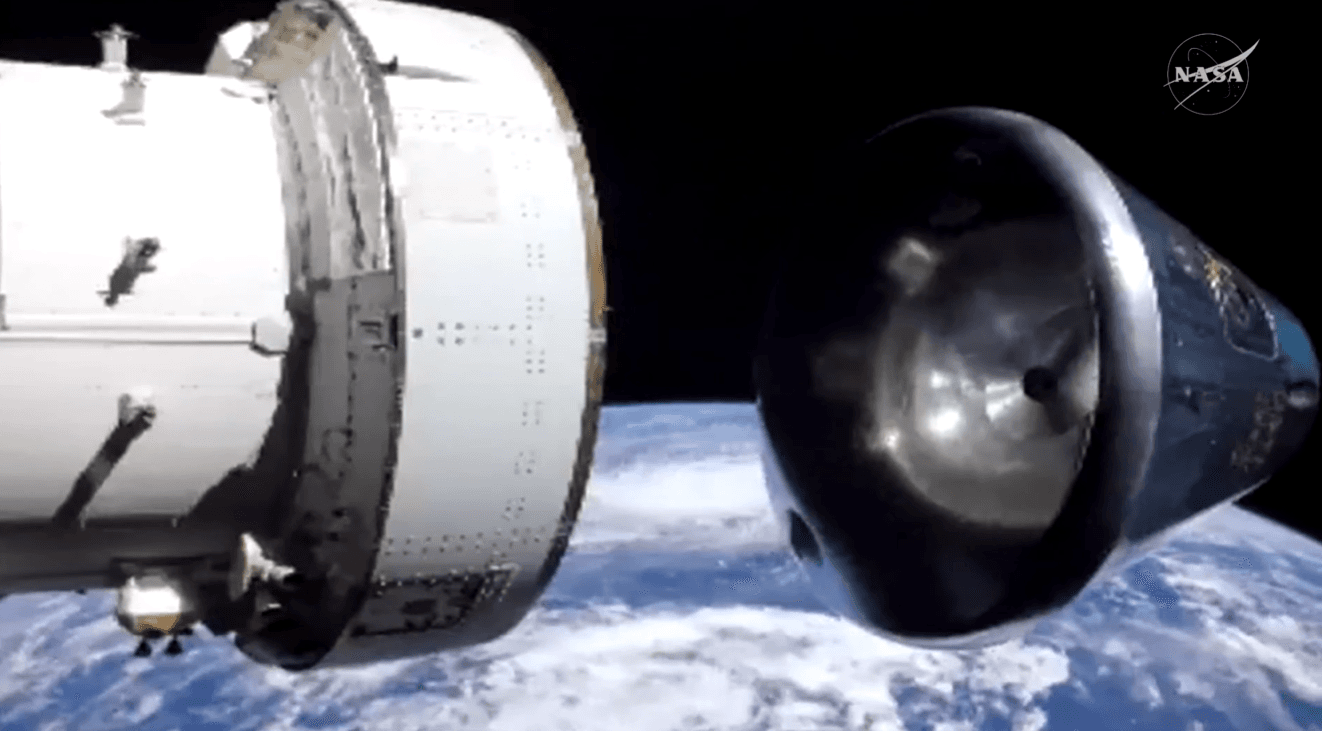
The moment Orion's crew module split from its European Service Module at 7:33 p.m. ET on April 10, it shed everything that had kept four astronauts alive and moving through deep space for nearly 10 days: 33 engines, solar arrays, and the life-support infrastructure that carried NASA astronauts Reid Wiseman, Victor Glover, Christina Koch, and Canadian Space Agency astronaut Jeremy Hansen more than 7,500 kilometers beyond the Moon and back. What separation returned to them was far narrower but essential: a clear heat shield, pointed directly into Earth's atmosphere, and the start of a countdown that NASA described as "13 minutes of things that have to go right."
The jettisoned European Service Module, composed of ESA's European Service Module and the Crew Module Adapter, would enter Earth's atmosphere and burn up harmlessly, having completed its task of carrying the crew to the Moon and home. Commander Wiseman watched it go from the window. "We got a great view of the European Service Module out the window, with the sun hitting the side," he said. "It's a beautiful looking machine."
Four minutes after separation, at 7:37 p.m. ET, the crew module fired its thrusters for 19 seconds to make a final adjustment to its return trajectory, correcting the angle of entry through Earth's atmosphere. That corridor is among the most consequential variables in the entire mission: enter too shallow and Orion skips off the atmosphere; too steep and frictional heating overwhelms the capsule. The capsule then began a series of roll maneuvers to keep it safely clear of the newly separated service module.
The heat shield had been among the most scrutinized pieces of hardware on the vehicle. Artemis I's uncrewed 2022 test flight revealed unexpected heat-shield erosion, prompting years of additional testing and analysis. NASA stated that further evaluations showed the underlying structure would remain intact under conditions exceeding those expected during reentry. In January 2026, NASA Administrator Jared Isaacman stated that he supported proceeding with Artemis II using the existing heat shield after reviewing the agency's analysis and meeting with engineers and outside experts. "We have high confidence in the system, in the heat shield and the parachutes and the recovery systems we put together," said Amit Kshatriya, NASA's associate administrator, on April 10. "The engineering supports it, the Artemis 1 flight data supports it."
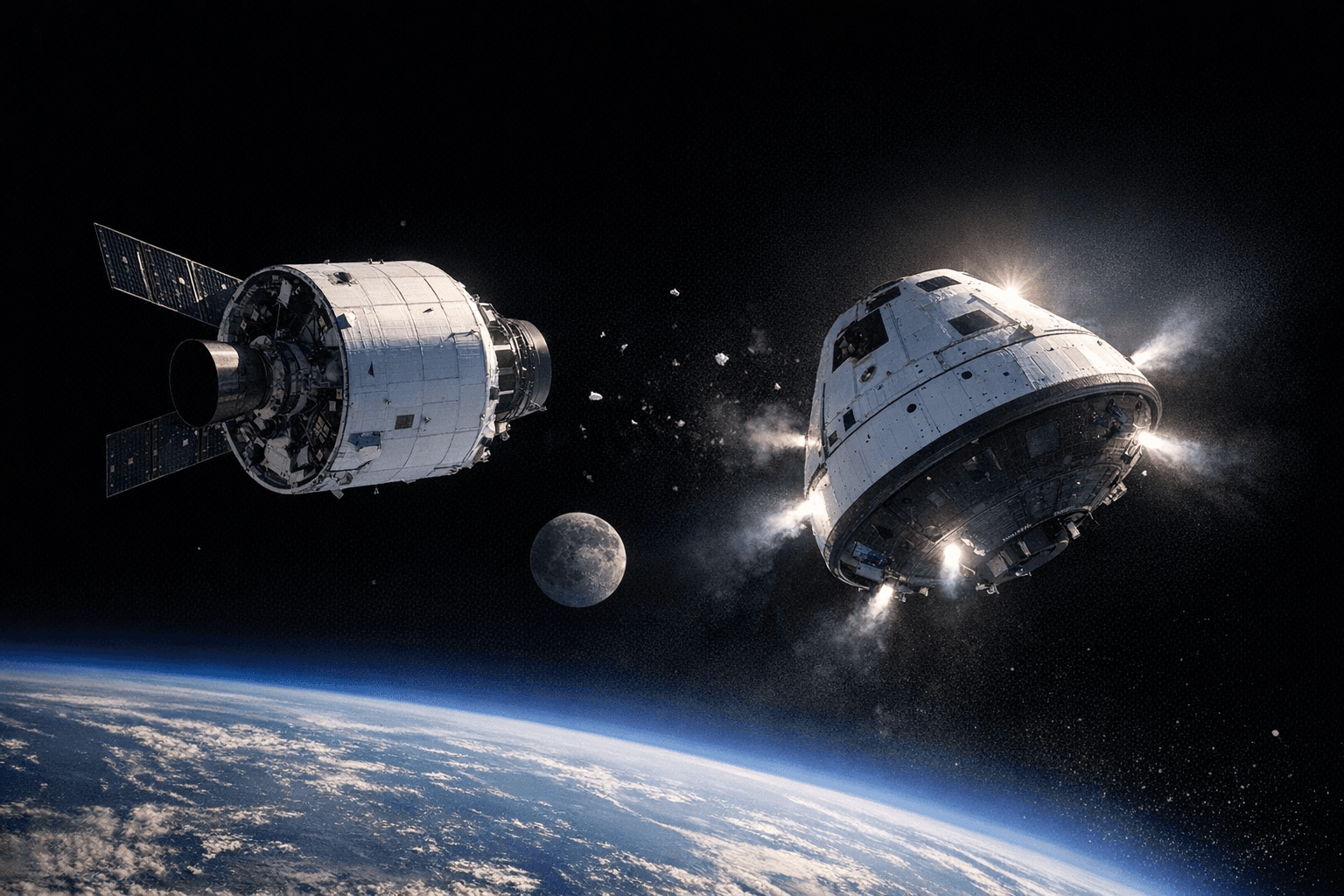
Orion's heat shield faced temperatures exceeding 2,500 degrees Celsius during reentry. The capsule, named Integrity, passed through a communications blackout before emerging at roughly 22,000 feet. At that altitude, drogue parachutes deployed to slow and stabilize the capsule, followed at around 6,000 feet by the three main parachutes. Each of the three main parachutes weighs 300 pounds and together they slowed Orion to about 19 mph before splashdown. Integrity hit the Pacific Ocean off the coast of San Diego at 8:07 p.m. EDT, where the USS John P. Murtha stood by with the recovery team.
The splashdown completed the first crewed mission to the vicinity of the Moon since Apollo 17 in 1972, more than half a century ago. But Artemis II was structured as a certification flight, not a landing. Its purpose was to confirm, with humans aboard, every system Artemis III will need to put boots on the lunar surface: Orion's propulsion, life support, manual control handling, and now the heat shield's real-world performance under crewed reentry loads. The data gathered across those 10 days will determine how quickly NASA can close the gap between proving the hardware works and proving it can carry people all the way to the surface.
This article was produced by Prism’s automated news system from verified source data, official records, and press releases, then run through automated quality and moderation checks before publishing. The system is built and supervised by the people who set the standards it runs under. Read our full AI policy.
Did this article answer your question?