Our skin is falling off and no-one can tell us why
Over a billion #TSW TikTok views and patients describing skin that falls off have prompted the UK's first scientific study into topical steroid withdrawal.
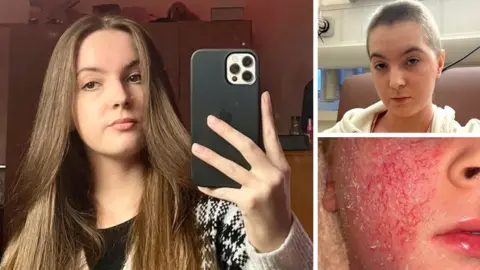
Henry Jones knew his skin problem was not eczema, yet steroid creams kept arriving with each prescription. When he shared photographs of his face, red and peeling, and his neck, sore and bleeding, he joined a digital chorus that has now surpassed a billion views under the hashtag #TSW on TikTok. That chorus prompted what researchers described as the first study of its kind in the UK into topical steroid withdrawal, a condition so poorly understood that the dermatologists treating it cannot fully explain what they are seeing.
Professor Sara Brown, a consultant dermatologist at the University of Edinburgh, secured funding from the National Eczema Society to investigate why some people develop TSW after stopping steroid cream use while others do not. Working with co-researcher Dr Alice Burleigh from Scratch That, a patient group dedicated to TSW sufferers, Brown recruited hundreds of people across the UK. The study analysed their symptoms alongside saliva samples and skin biopsies, searching for biological answers to questions that social media surfaced long before clinical medicine caught up.
"We're seeing patterns in TSW that cannot be explained by what is known about eczema," Brown said. "Symptoms like thickening and laxity of the skin, so-called 'elephant skin', extreme shedding and sharply defined areas of redness next to normal skin."
While TSW is viewed as relatively rare, the volume of people documenting their conditions publicly was striking enough to move a senior academic to act. Brown described being affected by the "unexplainable" symptoms in her own patients and by the desperation in posts on her social feeds, which ultimately drove her to pursue funding.
For those living through it, the condition is not a social-media abstraction. A 32-year-old who stopped using steroid creams five years ago described an experience that reshaped every corner of her life. "TSW took everything away from me. I had to hide from the world for so long, my skin was so bad, the pain, the lack of sleep, just not recognising myself," she said. Her skin has since mainly healed, but the psychological weight has not lifted. "My social anxiety is huge," she added.

Jones's photographs tell a parallel story of physical recovery. Images from across his TSW journey show his face covered in red, peeling skin and his neck sore and bleeding, followed by a final image in which his complexion is clear and he is smiling. He said he was prescribed steroid creams throughout, despite knowing his condition was not eczema.
Andrew Procter of the National Eczema Society acknowledged the tension at the heart of the debate. "We know that steroids work for the many millions who use them, but we also have a condition that at the moment, can't be explained," he said. "Which is causing real fear and that is completely understandable. That is why more research is desperately needed." Procter noted that patients suspected of having TSW are caught between continuing a treatment that may be causing harm and abandoning one that still lacks a proven alternative.
No trial registration, timeline for results, or grant amount has been made public. What is clear is that hundreds of people have already given samples, answered questionnaires, and submitted to biopsies in the hope that medicine will finally catch up with what they have been posting about for years.
This article was produced by Prism’s automated news system from verified source data, official records, and press releases, then run through automated quality and moderation checks before publishing. The system is built and supervised by the people who set the standards it runs under. Read our full AI policy.
Did this article answer your question?


