Outdoor smart lighting turns backyards into colorful, secure gathering spaces
Outdoor smart lights are winning by doing something practical: turning backyards into safer, more social spaces that feel worth using every night.
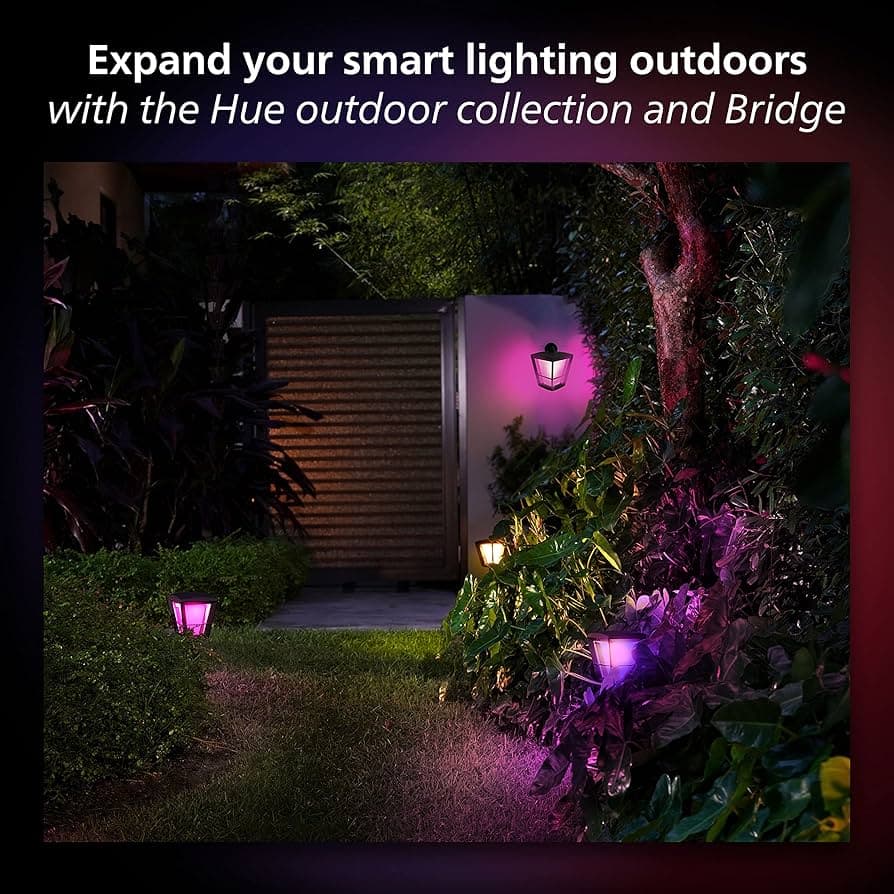
Smart-home products often stall when they feel like tricks. Outdoor lighting is different: it solves a visible problem, improves the mood of a space, and gives a backyard an immediate reason to exist after sunset.
Why the backyard is where smart lighting converts
The strongest case for smart-home adoption is no longer inside the house, where novelty can fade quickly. Outdoors, colored lighting does more than decorate a patio; it helps define where people gather, guides guests along walkways, and makes a yard feel finished rather than unused. That is why outdoor smart lights are increasingly pitched as a practical upgrade, not a gadget, with uses that range from curb appeal to security.
Philips Hue leans directly into that shift. Its outdoor lighting line is built around weatherproof products meant to illuminate yards, patios, and pathways, while also helping deter unwanted visitors with lights that can turn on automatically. The appeal is straightforward: one system can make a house look more welcoming, safer to cross at night, and more lively for dinners, parties, and seasonal gatherings.
From porch bulb to backyard design category
Outdoor smart lighting is no longer a narrow accessory category. Philips Hue now markets a broad lineup that includes spotlights, bollards, wall lights, floodlights, string lights, and PAR38 smart bulbs, which shows how far the market has moved beyond the single porch fixture. That wider mix matters because it lets homeowners think in zones, with one set of lights for the entryway, another for pathways, and another for the social center of the yard.
Recent review roundups tell the same story. Products such as the Philips Hue Calla Outdoor Bollard, Govee Outdoor String Lights, Govee Outdoor Ground Lights, and Ring Smart Spotlight Battery reflect a category that now spans ambiance, pathway lighting, and security. In other words, smart outdoor lighting is being judged less like a novelty and more like a backyard infrastructure choice.
Why outdoor use cases beat indoor novelty
Indoor smart lights can impress on day one, but they often struggle to prove long-term value. Outdoor lighting has a more durable job: it has to help people use the space better, not just admire it from across the room. A well-placed bollard or string light can change how a patio functions, while motion-activated lighting paired with cameras can make the same area feel less exposed after dark.
That combination of beauty and utility is the conversion moment for consumers. Philips Hue explicitly promotes backyard lighting as a way to set the mood and support peace of mind, and it pairs that pitch with motion sensor compatibility for added deterrence. Bob Vila’s 2025 smart outdoor lights roundup lands on the same conclusion, framing these products as tools that can make any yard, garden, or patio more functional, secure, and inviting.
The market signal behind the glow
The category is also being supported by broader industry growth. The outdoor lighting market was valued at $39.4 billion in 2024 and is projected to grow at a 5% compound annual rate through 2034. That trajectory points to a market that is being pulled by more than aesthetics alone, with energy efficiency and urbanization helping expand demand.
Philips Hue’s own product evolution shows how manufacturers are responding. Its outdoor lineup includes multiple weatherproof lights that work with Hue Bridge control, and some products support white-and-color light modes, low-voltage systems, and app or voice control. Those features matter because they lower the friction of adoption: the lighting has to be easy to manage, resilient outside, and flexible enough to serve both everyday security and occasional entertaining.
What consumers are really buying
The broader lesson is that smart-home traction comes where the value is visible and shared. Outdoor lighting succeeds because it can be enjoyed by everyone in the yard, whether the goal is a brighter walkway, a more polished facade, or a gathering space that feels more intentional after dark. It is practical enough to justify the purchase and social enough to make the payoff obvious.
That is why colorful backyard lighting is emerging as one of the clearest success stories in the consumer smart-home market. It turns a familiar feature, lighting, into a multi-use upgrade that improves how a home looks, how it feels, and how it works once the sun goes down.
This article was produced by Prism’s automated news system from verified source data, official records, and press releases, then run through automated quality and moderation checks before publishing. The system is built and supervised by the people who set the standards it runs under. Read our full AI policy.
Did this article answer your question?