Over 1 million Lebanese displaced as Israel-Hezbollah war intensifies
More than 1 million Lebanese fled their homes as Israeli airstrikes spread from the south to Beirut, overwhelming schools, shelters and basic services across the country.
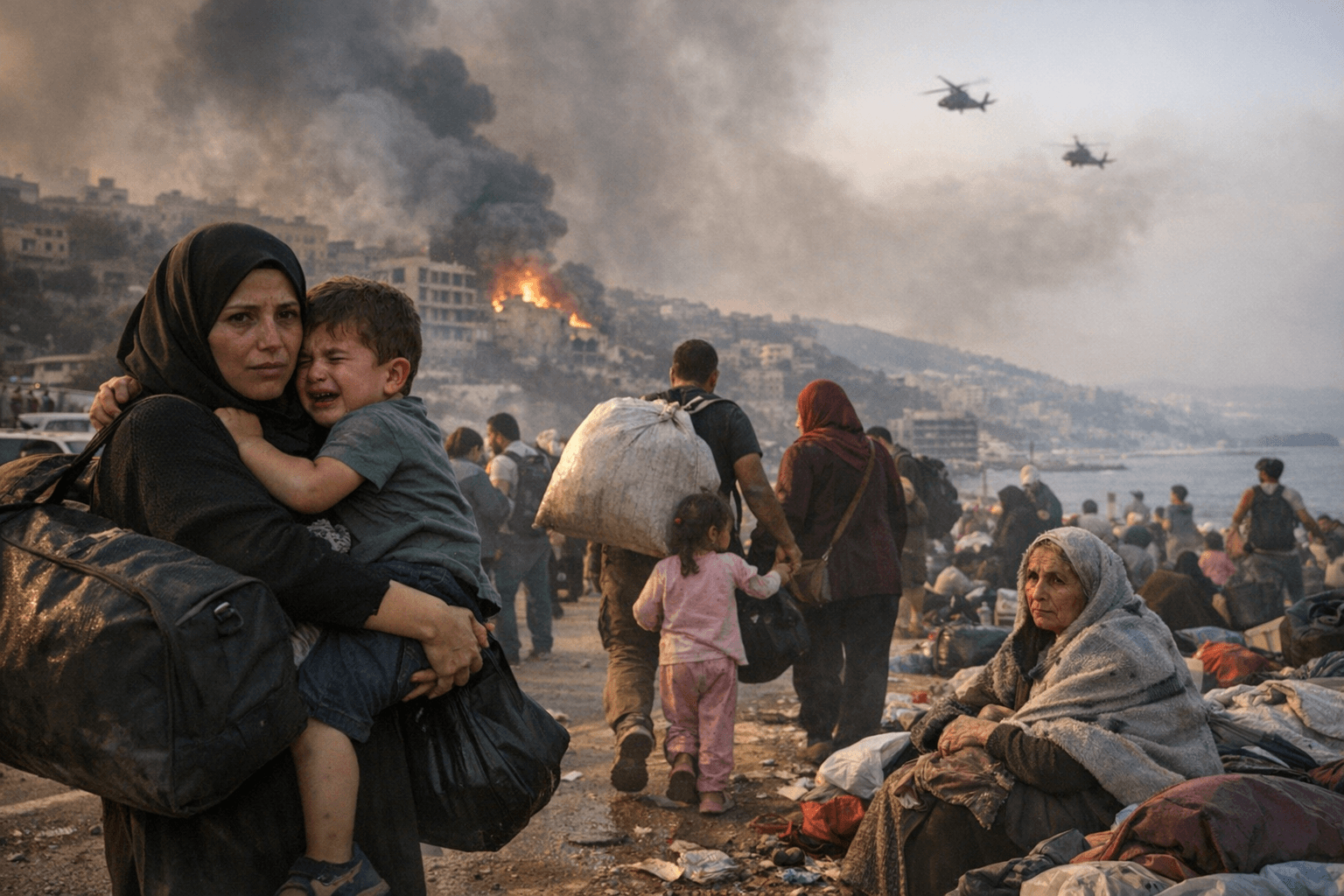
More than 1 million people were forced from their homes in Lebanon as the war between Israel and Hezbollah tore through neighborhoods, villages and towns that had already been strained by months of escalating fire. Lebanese authorities said 1.2 million people were affected inside the country, a scale that turned displacement into a national emergency rather than a borderland crisis. By late October 2024, UNHCR and IOM tracking had counted 833,391 internally displaced people, after figures of 746,584 on 14 October and 809,000 on 20 October showed how quickly the exodus was accelerating.
The collapse spread far beyond the south. Families fled from South Lebanon and the Bekaa Valley into Beirut, Mount Lebanon, Tyre, Nabatieh and the north, and many were displaced more than once as airstrikes widened from the Blue Line into densely populated districts, including Beirut’s southern suburbs and the Dahiyeh area. UNHCR said the rapid and sustained escalation since mid-September 2024 had displaced hundreds of thousands, surpassing the 2006 Lebanon war in scale. By March 2026, more than 1 million people had been forced to flee their homes, a figure that reflected how the conflict had become one of the largest waves of displacement Lebanon had seen in decades.
The human cost was not limited to empty apartments and damaged buildings. Lebanon’s health ministry reported thousands killed and injured, with UNHCR citing 2,350 deaths and 10,924 injuries in mid-October 2024. The fighting also damaged infrastructure, agriculture, livestock, healthcare centers, water facilities and schools, deepening the risk of food insecurity and long-term psychological harm, especially for children. More than 136,000 displaced people were staying in 660 collective shelters by March 2026, most of them schools pressed into emergency use, as the education system itself became part of the emergency response.
The strain on aid systems exposed a widening gap between need and capacity. Lebanon’s humanitarian Flash Appeal sought $425.7 million to assist 1 million people over three months, while UNHCR estimated its share at $111 million. At the same time, more than 425,000 people crossed from Lebanon into Syria by 21 October 2024, including about 70 percent Syrians and 30 percent Lebanese, and more than 53,000 refugees were secondarily displaced inside Lebanon. Destroyed bridges in the south cut off entire districts and isolated more than 150,000 people, making it harder for convoys, medics and food supplies to reach communities already living through a breakdown of housing, schooling, healthcare and basic public services.
This article was produced by Prism’s automated news system from verified source data, official records, and press releases, then run through automated quality and moderation checks before publishing. The system is built and supervised by the people who set the standards it runs under. Read our full AI policy.
Did this article answer your question?