Pakistan again seeks to mediate U.S.-Iran talks, backing fragile cease-fire
Pakistan is betting that its ties to both Washington and Tehran can extend a two-week cease-fire, with Asim Munir now carrying the message to Tehran.
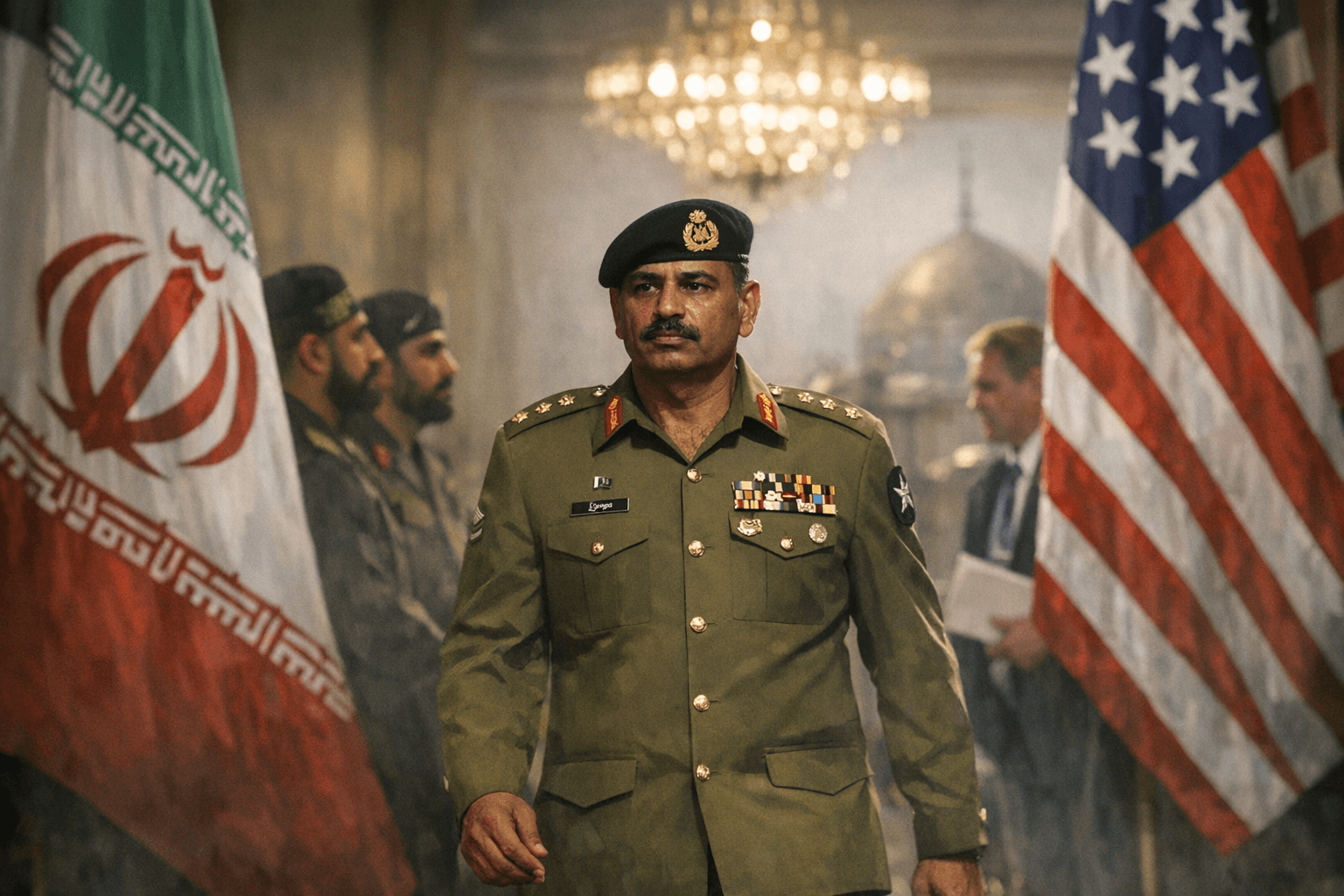
Pakistan is trying again to position itself as the bridge between Washington and Tehran, offering to host another round of talks after discussions in Islamabad last weekend helped produce a two-week cease-fire. The push has put Field Marshal Asim Munir, Pakistan’s army chief, at the center of a high-stakes diplomatic opening that Islamabad says could keep fragile peace efforts alive as the truce nears its end.
Munir traveled to Tehran on Wednesday, April 15, 2026, leading a high-level delegation, and met Iranian Parliament Speaker Mohammad Bagher Ghalibaf there on Thursday, April 16, 2026. Pakistani officials are presenting the trip as part of a broader effort to extend the cease-fire and preserve direct dialogue between the United States and Iran. The White House has signaled optimism about the arrangement as Pakistan’s envoy presses the case in Tehran.
Pakistan’s argument is built on access. Officials say the country has working ties with both Washington and Tehran, a rare combination in a region where alignment often comes at the expense of credibility with the other side. Islamabad has also been quietly building trust with the Trump administration while preserving its relationship with Iran, and it is now trying to convert those parallel relationships into real leverage. That makes Pakistan an unusual intermediary, but not necessarily a permanent one. It is still more often described as a spoiler than a broker, despite receiving substantial U.S. aid since 2001.
The stakes are larger than one cease-fire. The wider regional conflict has already fed fears over energy, trade and food security, and any breakdown could send more pressure through Pakistan itself. A sustained role in mediation would give Islamabad a way to claim regional relevance at a moment when it is rarely seen as a convening power. It could also strengthen ties with the United States if Washington sees Pakistan as a useful channel during a volatile pause.
For Pakistan, the bet is clear: if the cease-fire holds and talks continue, Islamabad can argue that it is more than a bystander to Middle East crises. If the effort fails, its role may look like little more than a temporary conduit in a fragile calm.
This article was produced by Prism’s automated news system from verified source data, official records, and press releases, then run through automated quality and moderation checks before publishing. The system is built and supervised by the people who set the standards it runs under. Read our full AI policy.
Did this article answer your question?