Pakistan conducts deadly cross-border strikes into Afghanistan after bombings
Pakistan says its strikes targeted militant sites in eastern Afghanistan in retaliation for recent suicide bombings; the action risks a broader regional escalation.
Pakistan's military says it carried out deadly cross-border strikes into eastern Afghanistan today, targeting sites it identified as linked to recent suicide bombings inside Pakistan. Islamabad framed the strikes as retaliation and said they were aimed at disrupting militant networks it blames for a string of attacks that have shaken security and politics at home.
The attacks mark one of the most direct uses of force by Pakistan across the porous frontier since the Taliban returned to power in Kabul in 2021. Pakistan has described the strikes as necessary self-defense; Afghan authorities have not yet released a full public accounting of casualties or the specific locations struck. Local humanitarian actors and aid groups operating in border areas warn the action is likely to worsen civilian suffering in a region already coping with poverty, drought and displaced populations.
The Pakistani government’s move is likely to complicate fragile ties with Kabul’s de facto rulers. Taliban leaders, who hold effective control of Afghanistan, will face immediate pressure to either clamp down on militant groups operating near the frontier or absorb domestic criticism at home for failing to restrain those groups. The dynamic creates a fraught choice for the Taliban: confront armed actors inside Afghanistan and risk internal splits, or allow cross-border militancy to provoke further Pakistani strikes.
Under international law, cross-border military operations raise contested questions about sovereignty and the scope of lawful self-defense. Scholars of state practice say a party mounting such strikes must demonstrate imminence or linkages that justify the use of force; absent clear consent from the host government, the action can be interpreted as a violation of territorial integrity. Diplomats in Islamabad, Kabul and capitals in Washington, Beijing and Brussels are expected to scrutinize Pakistan’s legal and factual case, even as regional leaders call privately for de-escalation.
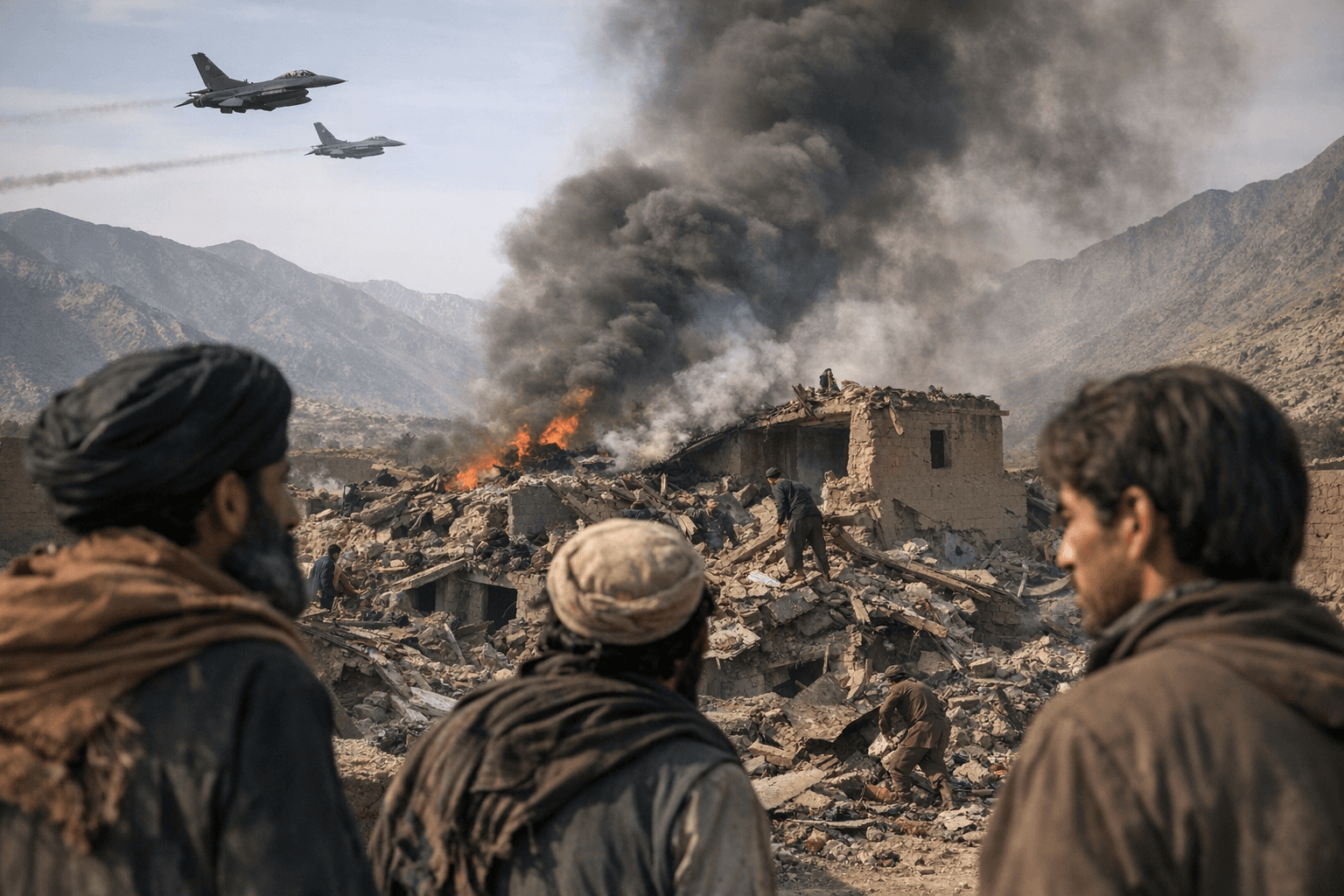
The immediate practical consequences are both humanitarian and strategic. Border communities, where families and trade flow daily across lines drawn during the 19th century, risk fresh displacement and economic disruption. Cross-border trade and truck convoys that sustain markets in both countries could see interruptions, and international investors already wary of regional instability may reassess projects that depend on a predictable security environment.
Politically, Islamabad’s decision will resonate domestically, where successive governments have faced furious public demand for security after high-profile attacks. The strikes are likely to be framed by Pakistani authorities as decisive action to protect citizens. Internationally, however, they open Pakistan to criticism that military responses sidestep intelligence and law-enforcement cooperation that many analysts argue is essential for durable counterterrorism results.
The strikes arrive against a backdrop of uneven diplomacy: the U.S. withdrawal from Afghanistan and the shifting geopolitical competition involving China, India and regional powers has left thin institutional channels for crisis management. That thinness increases the risk that tomorrow’s tit-for-tat incidents could spiral into broader confrontation unless back-channel diplomacy and third-party mediation move quickly to stabilize the frontier.
This article was produced by Prism’s automated news system from verified source data, official records, and press releases, then run through automated quality and moderation checks before publishing. The system is built and supervised by the people who set the standards it runs under. Read our full AI policy.
Did this article answer your question?


