Pakistan says 145 militants killed after coordinated Balochistan attacks
Pakistan officials say security forces killed 145 militants after a wave of coordinated attacks in Balochistan; casualty tallies and responsibility claims differ across sources.
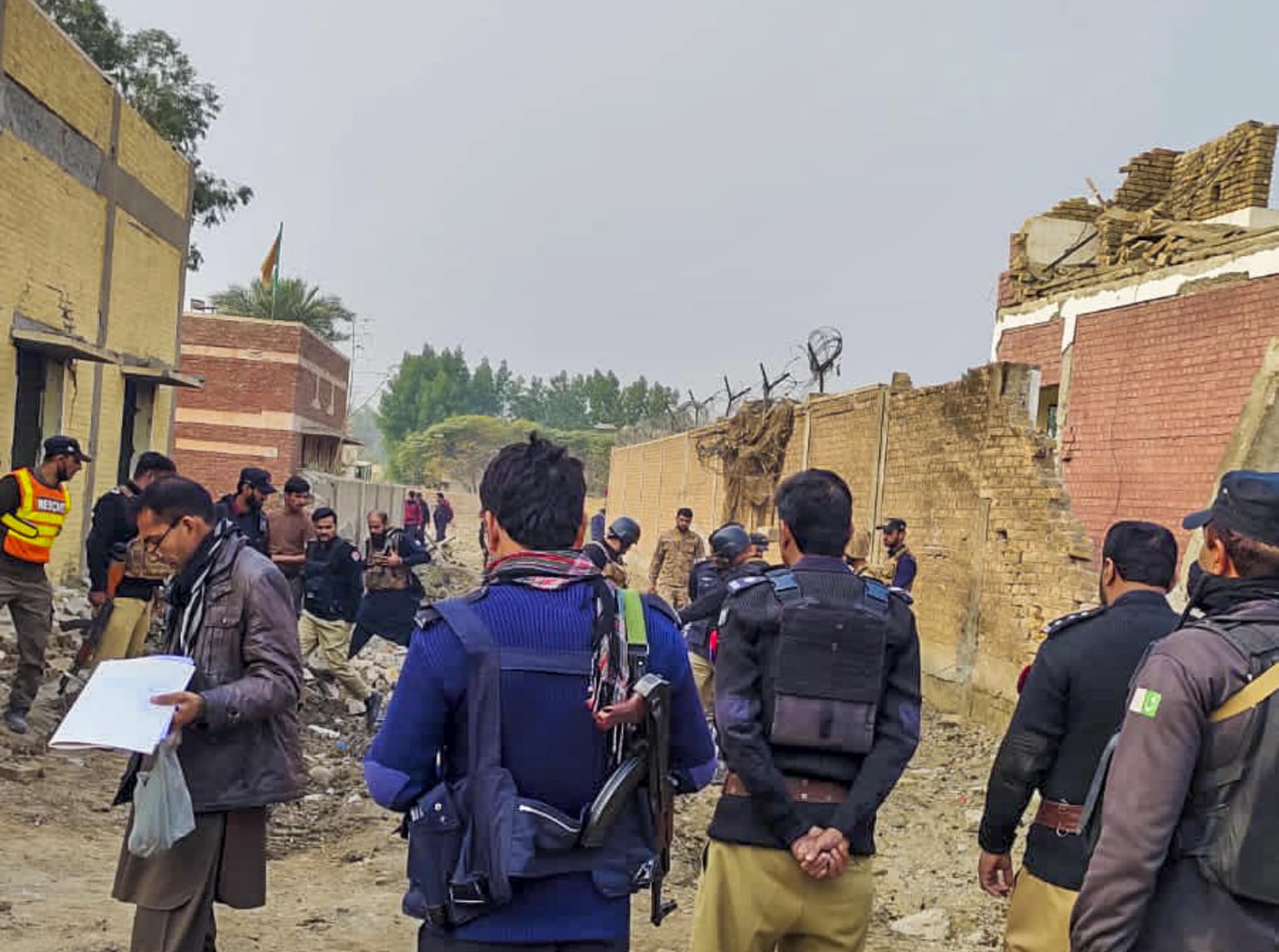
Pakistan’s authorities said security forces killed 145 militants over a roughly 40-hour counteroffensive after coordinated assaults across Balochistan, a provincial official and military statements said, in one of the deadliest flare-ups in years in the restive southwest.
"We managed to kill 145 terrorists in 40 hours," Balochistan Chief Minister Sarfaraz/Sarfraz Bugti said at a press conference in Quetta, attributing the consolidated total to raids carried out on Friday and Saturday and to additional militants killed during ongoing clearance operations. The military’s media wing, the Inter-Services Public Relations, issued two separate statements saying 41 militants were killed in Panjgur and Harnai on Friday and 92 were killed on Saturday in Quetta, Gwadar, Mastung, Nushki, Dalbandin, Kharan, Panjgur, Tump and Pasni. That ISPR two-day breakdown totals 133 militants, a difference officials say stems from later clearance operations.
Casualty figures for security personnel and civilians remain contested. Bugti said 17 law enforcement personnel and 31 civilians were killed. Australian broadcaster SBS, citing ISPR, reported 15 security personnel and 18 civilians dead and said 92 militants killed on Saturday included three suicide bombers. Other outlets published differing tallies, with some earlier counts running as low as 67 militants or aggregated headlines saying "over 120 people dead." Journalists and officials have urged verification from provincial health and police records to reconcile the discrepancies.
The attacks struck more than a dozen locations, according to state broadcaster Pakistan Television and military statements, including the provincial capital Quetta, Nushki, Dalbandin, Pasni, Gwadar, Mastung, Kharan, Panjgur, Tump and Harnai. Local reporting described a powerful explosion in Quetta followed by sustained gunfire and multiple blasts that lasted nearly two hours, while authorities sealed sensitive areas, suspended train services to and from Quetta and reported internet disruptions in affected districts. Pakistan also closed border crossings for trade with Afghanistan after exchanges of fire at the Chaman crossing, adding immediate humanitarian and commercial disruptions.
Responsibility for the attacks is contested. The banned Baloch Liberation Army claimed the operation under the names "Herof" and "Operation Herof 2.0" and described it as a coordinated strike against security targets. Pakistan’s military and Interior Minister Mohsin Naqvi accused "Indian-sponsored militants" of mounting the attacks, language that India denied and called a deflection from internal problems. An unnamed senior military official characterized the assaults as "coordinated but poorly executed" and said they "failed due to poor planning and rapid collapse under effective security response." Prime Minister Shehbaz Sharif praised security forces for "foiling" the attacks.
Beyond the immediate human toll, the assault and its aftermath pose economic and strategic risks. Balochistan is Pakistan’s largest and resource-rich province and a linchpin of major infrastructure corridors and port projects; repeated instability can raise security costs, depress investor confidence and disrupt trade flows through Gwadar and border crossings. Short-term shocks include suspended rail links, internet blackouts and halted cross-border commerce at Chaman. Over the longer run, recurrent violence risks increasing the fiscal burden of security spending, raising risk premia on sovereign debt and complicating foreign investment in energy and infrastructure projects concentrated in the province.
Official tallies remain in flux. Pakistan’s ISPR releases for Friday and Saturday, the transcript of Bugti’s Quetta briefing, and provincial health and police casualty lists will be central to confirming final counts and clarifying the scope of ongoing clearance operations.
This article was produced by Prism’s automated news system from verified source data, official records, and press releases, then run through automated quality and moderation checks before publishing. The system is built and supervised by the people who set the standards it runs under. Read our full AI policy.
Did this article answer your question?