Panasonic sees battery unit rebounding after quarterly loss, profits to double
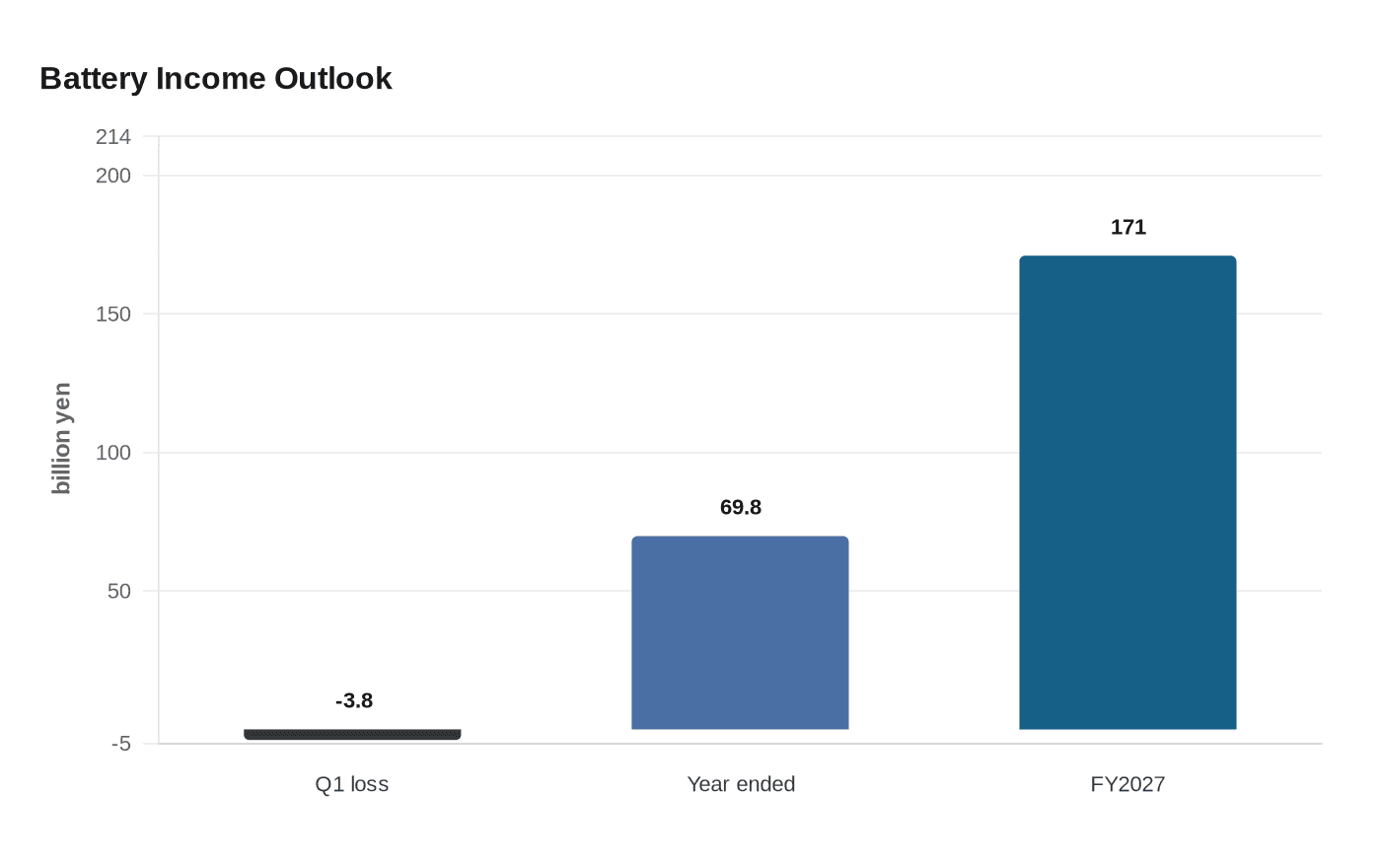
Panasonic said its battery unit would more than double profit to 171 billion yen next year, even after a 3.8 billion yen quarterly loss.

Panasonic Holdings said its energy unit, which supplies batteries to Tesla, was set to rebound sharply in fiscal 2027, projecting operating income of 171 billion yen for the year ending March 2027, more than double the 69.8 billion yen it earned in the year just ended. The outlook came after the unit posted a 3.8 billion yen loss in the January-March quarter, underscoring how volatile battery margins remain even as Panasonic expands capacity.
The latest forecast matters beyond Panasonic’s own earnings. Its battery business sits at the center of the EV supply chain, where tariffs, plant ramp-ups and uneven demand can quickly move profits. Panasonic said the quarterly hit reflected U.S. tariffs, startup costs at its Kansas plant and lower sales at a factory in Japan. For Tesla, a key customer, the numbers point to a supplier still working through short-term disruptions while trying to stabilize output and costs.
The Kansas factory in De Soto began mass production on July 14, 2025, and Panasonic has said it is designed for about 32 GWh of annual capacity. The company has described the site as one of North America’s largest automotive battery plants, with plans that could create about 4,000 jobs and involve roughly $4 billion of investment. That makes the plant a major test of whether U.S. battery localization can reduce exposure to trade risk without creating too much near-term cost pressure.
Panasonic’s latest outlook also followed a difficult stretch for the broader group. The company had already cut its fiscal 2026 operating profit forecast to 320 billion yen from 370 billion yen, citing weakness in the energy unit. But the battery business had shown signs of strength earlier, with first-quarter operating profit rising 47% year on year to 31.9 billion yen in July 2025, helped by AI-related battery demand. The swing from that gain to a later quarterly loss and then a strong fiscal 2027 forecast suggests a business being pulled in different directions by EV softness, AI demand, tariffs and factory costs.
For the EV industry, Panasonic’s forecast is a useful gauge of whether battery demand is truly recovering or whether the company is simply moving past a weak quarter. If the rebound holds, it would signal better utilization at Kansas and a healthier manufacturing base for Tesla-linked production in North America. If it does not, the pressure from tariffs, pricing and ramp-up costs may remain a central feature of the battery market into the next fiscal year.
This article was produced by Prism’s automated news system from verified source data, official records, and press releases, then run through automated quality and moderation checks before publishing. The system is built and supervised by the people who set the standards it runs under. Read our full AI policy.
Did this article answer your question?
%3Amax_bytes(150000)%3Astrip_icc()%2FCertificate-of-deposit-2301f2164ceb4e91b100cb92aa6f868a.jpg&w=1920&q=75)