Parents Push Back on School Tech, Demand More Control Over Classrooms
Parents from New York City to Salt Lake City are pushing back on school tech, forcing states to rethink phones, laptops, monitoring software and AI in classrooms.
From New York City to Salt Lake City, parents have been pushing schools and lawmakers to pull back on classroom technology and return more control over children’s digital lives to families. What began as a phone fight has widened into a national challenge to school-issued laptops, monitoring software, and AI tools, with legislators in at least 16 states introducing bills in April 2026 to limit education technology in public schools.
New York has become one of the clearest battlegrounds. The state’s Distraction-Free Schools law requires bell-to-bell smartphone restrictions in K-12 districts statewide starting in the 2025-2026 school year, and districts were required to finalize and publish their policies by August 1, 2025. New York City Public Schools, the nation’s largest school system, prepared to vote on its own policy on July 23, 2025, as the city rolled out a version meant to reflect input from school communities, union partners, elected officials, school staff and students. Governor Kathy Hochul cast the change as a way to restore classroom focus, but the debate quickly moved beyond phones to broader questions about who gets to decide how much screen time children face at school.
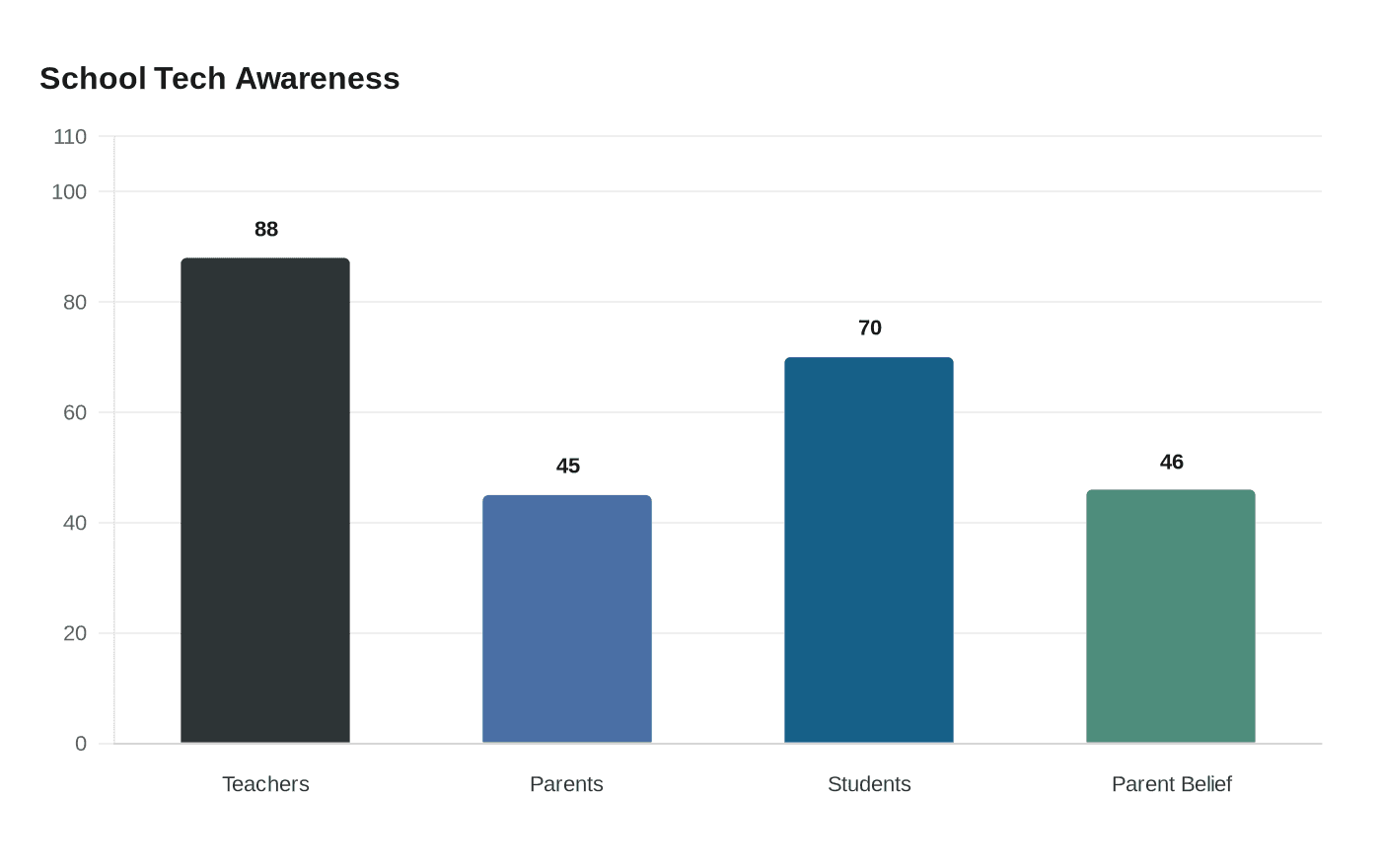
That fight has been fueled by signs that schools adopted digital surveillance faster than parents understood it. In January 2025, the Center for Democracy & Technology said 88% of teachers reported that their schools used student activity monitoring software, while only 45% of parents knew about it. Nearly one in four teachers said their school had experienced a large-scale data breach in the previous school year, and 70% of high school students reported using generative AI, compared with 46% of parents of high schoolers who believed their child had used it.
Utah lawmakers have moved in a similar direction. Reporting in March 2026 said public schools were poised to be required, starting July 1, 2026, to give parents access through an online portal to their children’s screen time and browsing history. Separate legislation also targeted personal devices and sought tighter oversight of online content on school-issued devices, reflecting a deeper demand for transparency after years of rapid ed tech expansion.
The backlash has produced unusual alliances. NBC News reported in March 2026 that Moms for Liberty and some teachers unions were joining forces to press districts and state lawmakers to limit screen time and laptop use in schools. Vermont lawmakers introduced H.830, which would give a student, parent or guardian the right to opt out of electronic device use. In Iowa, House File 2451 and House File 2685 would set daily digital instruction limits for elementary grades and require district technology-use policies.
The split now runs through nearly every public school system in the country: whether digital tools improve learning, erode privacy, or shift classroom decisions from teachers and parents to software companies.
This article was produced by Prism’s automated news system from verified source data, official records, and press releases, then run through automated quality and moderation checks before publishing. The system is built and supervised by the people who set the standards it runs under. Read our full AI policy.
Did this article answer your question?