Parents revive landlines for kids, citing screen-free communication benefits
Parents are dusting off landlines to give kids a screen-free way to call and learn phone manners, even as 86.9% of U.S. children live in wireless-only homes.
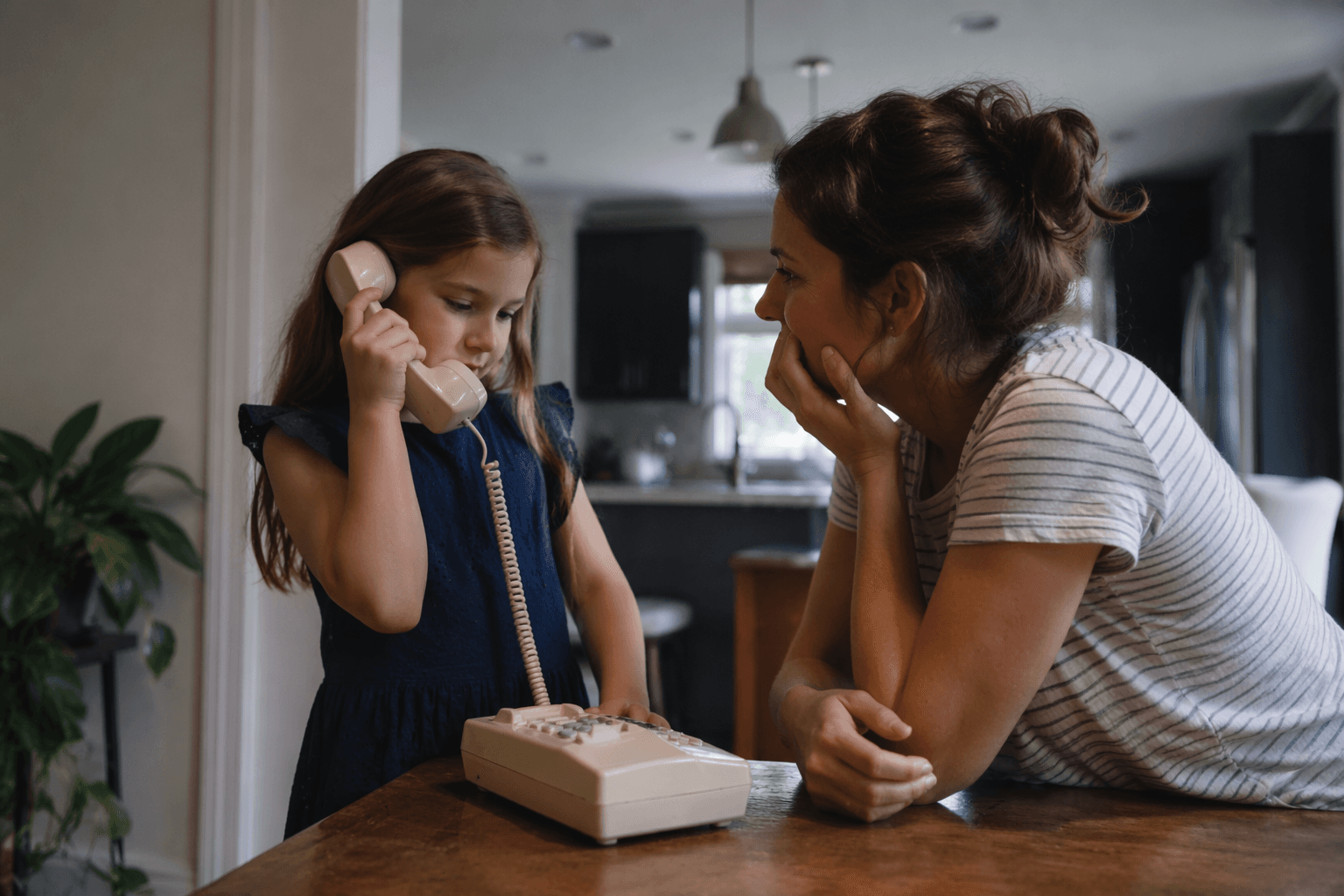
Parents are bringing landlines back into children’s lives as a low-tech alternative to smartphones, betting that a simple voice call can teach independence without a screen attached. The timing is striking: the Centers for Disease Control and Prevention said 86.9% of U.S. children lived in wireless-only households in the second half of 2024, while Federal Communications Commission data showed wireline technologies made up just over 18% of the nation’s 471 million retail voice telephone service connections as of June 30, 2024.
For many families, the appeal is practical as much as nostalgic. A landline gives children a way to call friends, arrange playdates and reach relatives without the pull of apps, notifications or social media. Parents who are reviving the old household phone say it also helps children learn how to answer politely, leave messages and speak with more confidence, small skills that can be hard to practice in a text-first home.
Some researchers and educators see that benefit as more than a throwback. Koeun Choi of Virginia Tech said landlines can help adolescents focus on the conversation and build active-listening and genuine communication skills. Kathy Hirsh-Pasek and Sherri Hope Culver of Temple University have framed landlines as one option parents are using to support healthy social and cognitive development in a world saturated by screens.
The public-health backdrop has only sharpened the debate over when children should get smartphones. A December 2025 Pediatrics study of 10,588 participants in the Adolescent Brain Cognitive Development Study found that smartphone ownership at age 12 was associated with higher odds of depression, obesity and insufficient sleep. The same study found that a younger age of smartphone acquisition was linked to obesity and insufficient sleep, findings that help explain why some families are delaying smartphones and turning to lower-tech alternatives.
That shift has also created a market. Seattle startup Tin Can, founded by Chet Kittleson with Max Blumen and Graeme Davies, sells a Wi-Fi-enabled, screen-free landline-style phone for kids. The company said it began in West Seattle and now serves families in more than 30 states. It has also launched a bulk-order program called Communities for schools, sports teams and neighborhoods.
The revival stands out because it runs against the long decline of the home phone. The CDC has tracked wireless substitution since 2003, and the federal data show how decisively mobile service has overtaken wireline connections. That makes the renewed interest in landlines less a return to the past than a deliberate choice by parents looking for one of the few remaining tools that lets children talk, listen and practice real-world communication without a screen in hand.
This article was produced by Prism’s automated news system from verified source data, official records, and press releases, then run through automated quality and moderation checks before publishing. The system is built and supervised by the people who set the standards it runs under. Read our full AI policy.
Know something we missed? Have a correction or additional information?
Submit a Tip