Parliament approves national gun buyback and tougher hate‑crime laws
The House of Representatives has approved a national gun buyback and expanded hate‑crime measures after the Bondi Beach massacre; bills head to the Senate for final votes.

The House of Representatives has approved legislation establishing a national gun buyback, tighter firearms licence checks and expanded hate‑crime penalties in direct response to the December 14 massacre at a Hanukkah celebration on Bondi Beach. The package, recalled to parliament by Prime Minister Anthony Albanese for a special two‑day sitting, now moves to the Senate where its fate will hinge on crossbench and Green support for the gun measures and on Liberal backing for the hate‑speech laws.
The legislative framework creates a government‑backed buyback for surplus firearms and sets the legal basis for states and territories to cooperate with the Commonwealth in a two‑year collection period. Government sources characterise the scheme as the largest national buyback since the post‑Port Arthur program that followed the 1996 massacre, when 35 people were killed. Officials noted Australia had a record 4.1 million firearms last year, including more than 1.1 million in New South Wales, figures that underscore the scale of the undertaking.
New rules included in the package would tighten background checks by enabling state licensing authorities to draw on information held by the Australian Security Intelligence Organisation and other security agencies when assessing applications and renewals. Prime Minister‑led urgency reflects a determination to address both "the motivation and the method" behind the Bondi attack, a point emphasised by Home Affairs Minister Tony Burke who said the attack was carried out by people with "hate in their hearts and guns in their hands" and said the government must "do everything we can to counter both the motivation and the method."
The Bondi assault killed 15 people, most of them Jewish, and investigators have named the suspected attackers as Sajid Akram and his son, Naveed, saying they were inspired by ISIL. The assailants were later subdued by a bystander identified in reporting as Ahmed al‑Ahmed. The massacre intensified pressure on Canberra to act; political manoeuvring led the government to split its original omnibus bill and drop proposed new criminal offences for racial vilification to secure a clearer parliamentary path.
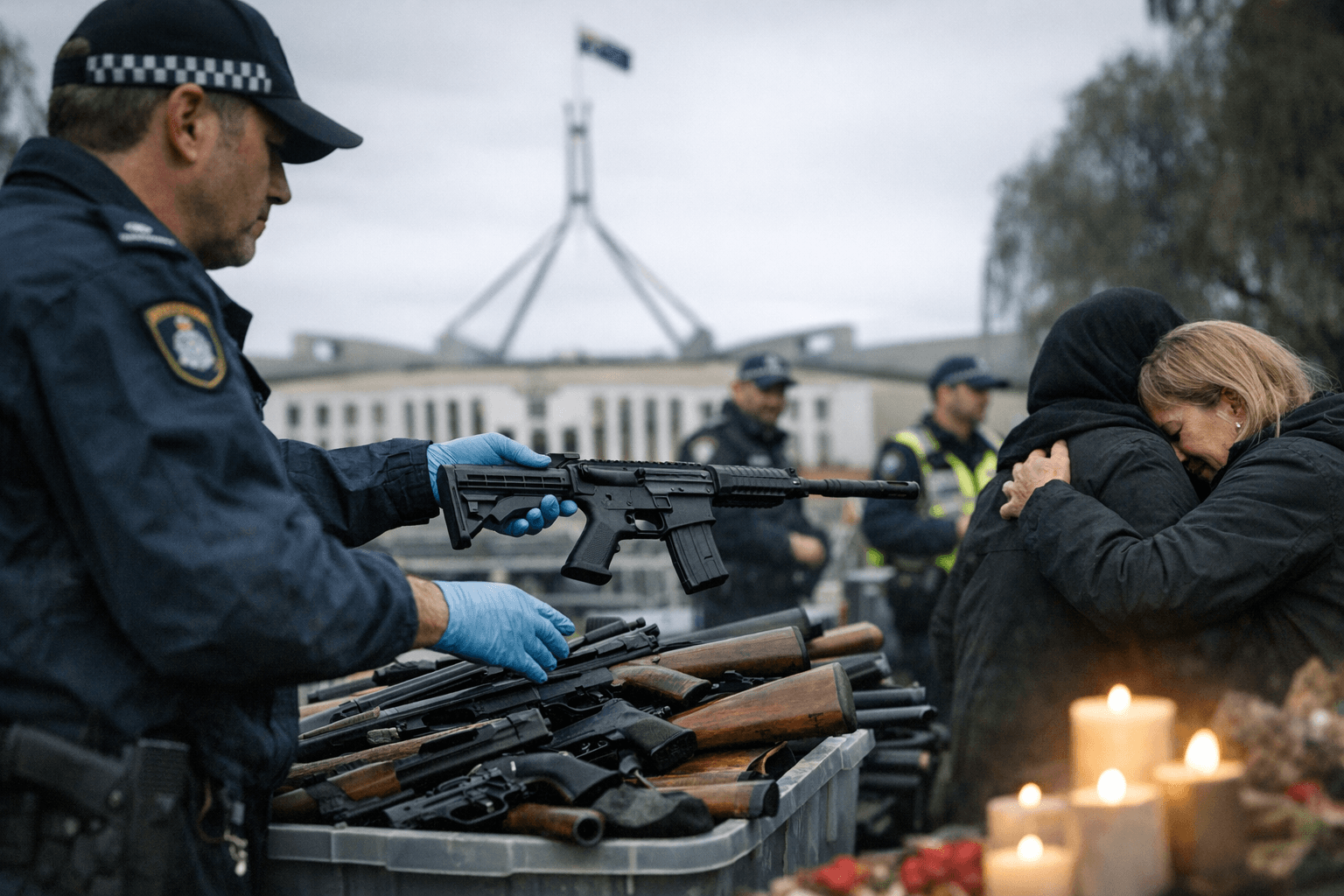
New South Wales has already moved independently, passing laws that cap the number of firearms per individual at four (10 for farmers) and shortening licence renewal intervals from five years to two. The federal package would build on those state measures, while separate hate‑crime legislation debated in the House lowers the threshold for prosecuting hate speech and expands penalties for hate crimes. Future debates in the Senate are expected to consider additional measures including tougher penalties for threats against protected groups, proscription of hate groups and new ministerial powers over visas.
Opposition and crossbench dynamics will determine the bills' final shape. The Greens have signalled support for federal gun reforms while the Liberal‑National Coalition is broadly opposed to the buyback; Shadow Attorney‑General Andrew Wallace criticised the bill, saying it revealed "the contempt the government has for the million gun owners of Australia." Critics warn owners could face substantial losses in private property value and that tighter checks might strip licences without adequate recourse. With Senate votes expected later today, passage would mark a significant policy shift in Australia's post‑Port Arthur gun control trajectory and reshape the domestic firearms market and security framework for years to come.
This article was produced by Prism’s automated news system from verified source data, official records, and press releases, then run through automated quality and moderation checks before publishing. The system is built and supervised by the people who set the standards it runs under. Read our full AI policy.
Did this article answer your question?