Pasteur Institute finds no new traits in Andes hantavirus aboard MV Hondius
Sequencing from a French passenger on the MV Hondius found no new viral traits, sharpening focus on how Andes hantavirus spread on a cruise carrying 147 people from 23 countries.
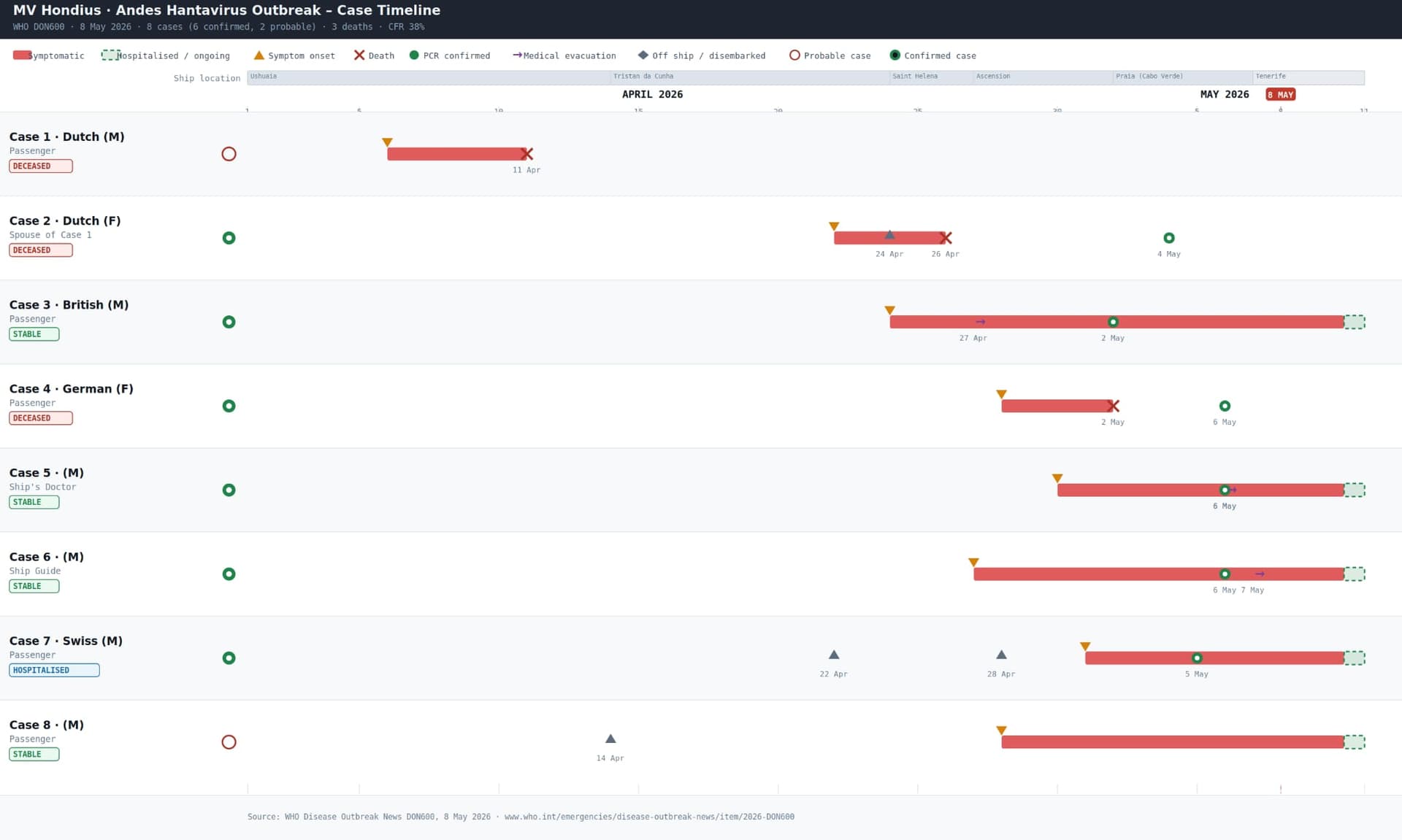
The genomic readout from the MV Hondius outbreak has eased fears that the Andes hantavirus behind the cluster picked up a more dangerous form. What it has not done is explain how the infection moved in the first place, leaving investigators focused on source, spread and the limited but real risk to travelers exposed in close contact.
France’s Pasteur Institute said it fully sequenced the virus detected in a French passenger and found it matched Andes hantaviruses already known in South America, with no evidence of new characteristics that would make it more transmissible or more severe. Jean-Claude Manuguerra, who heads the institute’s Environment and Infectious Risk unit, said the remaining variation appeared to reflect normal viral diversity and did not seem to change the virus’s behavior. The sequencing, health officials said, helps sharpen monitoring even as it rules down fears of a novel mutation.
The French passenger developed symptoms during repatriation and was treated in Paris. French authorities had previously said she was in serious condition. Molecular work by French specialists had already identified the pathogen as an Andes-type hantavirus on May 6, a finding that matters because Andes virus is the only hantavirus documented to spread person to person, usually after close, prolonged contact.
The World Health Organization said that as of May 13, 11 cases had been linked to the cruise ship event, including three deaths. Eight were laboratory-confirmed Andes virus infections, two were probable, and one remained inconclusive while retesting continued. WHO said the first case likely acquired the infection before boarding, through exposure on land, which keeps attention on the voyage’s early chain of exposure rather than on a single obvious transmission event aboard ship.
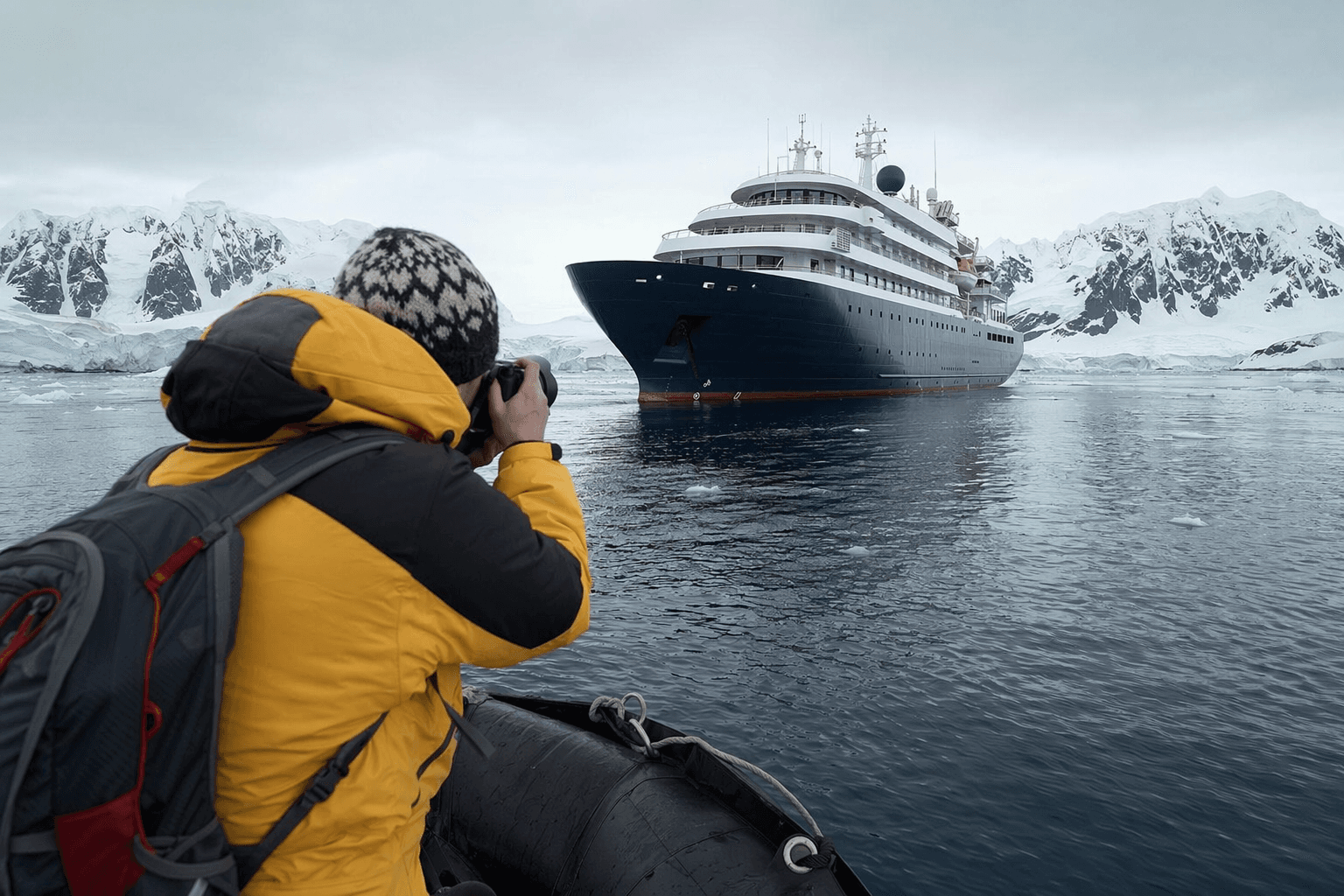
The Dutch-flagged MV Hondius left Ushuaia, Argentina, on April 1 with 147 passengers and crew from 23 countries, including nine EU and EEA countries. The expedition itinerary carried the vessel through Antarctica, South Georgia Island, Tristan da Cunha, Saint Helena and Ascension Island. Cape Verde initially refused the ship permission to dock on May 3, and passengers and crew were later received in Tenerife on May 10 as authorities organized care and repatriation.
The response has stretched across agencies and continents. The European Commission activated coordination through the EU Early Warning and Response System and the Health Security Committee, with repatriation flights, quarantine and testing guidance, and follow-up sequencing. France’s Ministry of Health and the Pasteur Institute said there was no evidence the virus was circulating in France, and President Emmanuel Macron said the situation in France was under control. In the United States, the Centers for Disease Control and Prevention warned clinicians on May 8 to watch for imported cases but said broad spread was considered extremely unlikely. The European Centre for Disease Prevention and Control said the risk to the EU and EEA general population remains very low.
This article was produced by Prism’s automated news system from verified source data, official records, and press releases, then run through automated quality and moderation checks before publishing. The system is built and supervised by the people who set the standards it runs under. Read our full AI policy.
Did this article answer your question?