Pentagon preps USS Gerald R. Ford to join carriers near Iran
Pentagon orders preparations to send USS Gerald R. Ford to the Middle East, potentially creating two carrier strike groups as U.S. pressure on Iran coincides with high-level diplomacy.
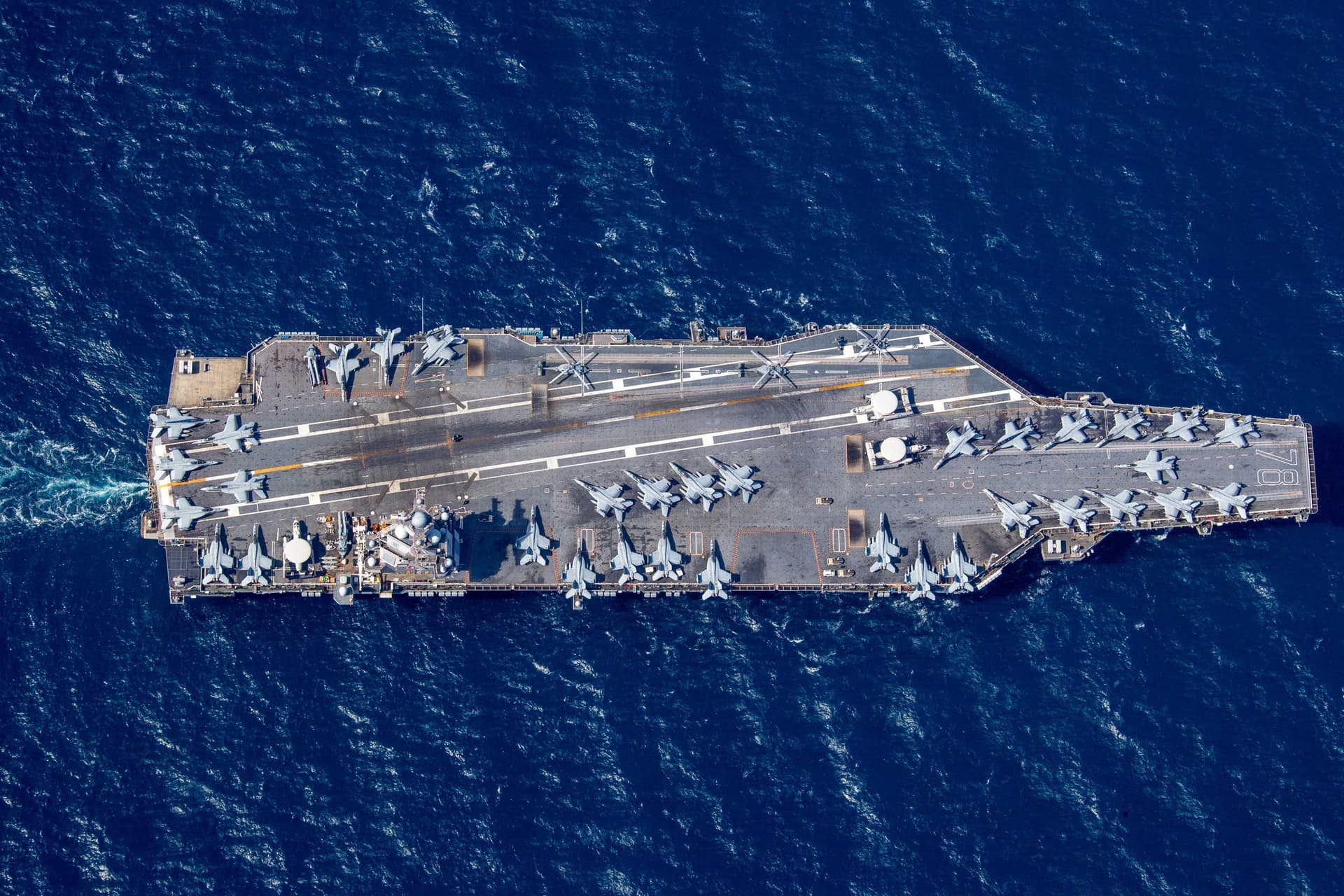
The Pentagon has ordered preparations to deploy the nuclear-powered aircraft carrier USS Gerald R. Ford to the Middle East to join the USS Abraham Lincoln and other U.S. warships, U.S. defense officials said, a shift that would place two carrier strike groups in the region amid rising tensions with Iran. The move has been framed by analysts and naval specialists as a demonstration of increased strike capacity and deterrence even as diplomacy between Washington and Tehran continues.
The USS Abraham Lincoln, already operating in the region, arrived more than two weeks ago accompanied by three guided-missile destroyers, U.S. and international reporting shows. One early account said the Ford would join the Lincoln and, “along with nine other warships operating in the Middle East,” expand the American surface force present there, though it is not clear whether that nine-ship figure overlaps with the destroyers already reported in theatre.
The carrier’s last reported departure point is disputed in open accounts. A person familiar with the plans told the Associated Press, speaking on condition of anonymity, that “the world’s largest aircraft carrier has been ordered to sail from the Caribbean Sea to the Middle East.” Separate naval reporting described the Ford as repositioning from Crete toward waters near Israel. That discrepancy has not been resolved by an official U.S. Navy statement.
President Donald Trump publicly tied the military move to concurrent diplomacy. Hours after hosting Israeli Prime Minister Benjamin Netanyahu, Trump wrote, “There was nothing definitive reached other than I insisted that negotiations with Iran continue to see whether or not a Deal can be consummated,” and, “If it can, I let the Prime Minister know that will be a preference. If it cannot, we will just have to see what the outcome will be.” He also shared a Wall Street Journal article on Truth Social about the carrier preparations without additional comment.
Specialist outlets and analysts have characterized the step as part of a mixed strategy of pressure and dialogue. Naval commentary says the repositioning enhances American strike capacity and deterrence in the Eastern Mediterranean at a time of heightened regional volatility. Independent analysis argues the deployment forms part of a broader posture that pairs military signalling with indirect talks, sanctions pressure, and heightened readiness across bases and maritime routes.
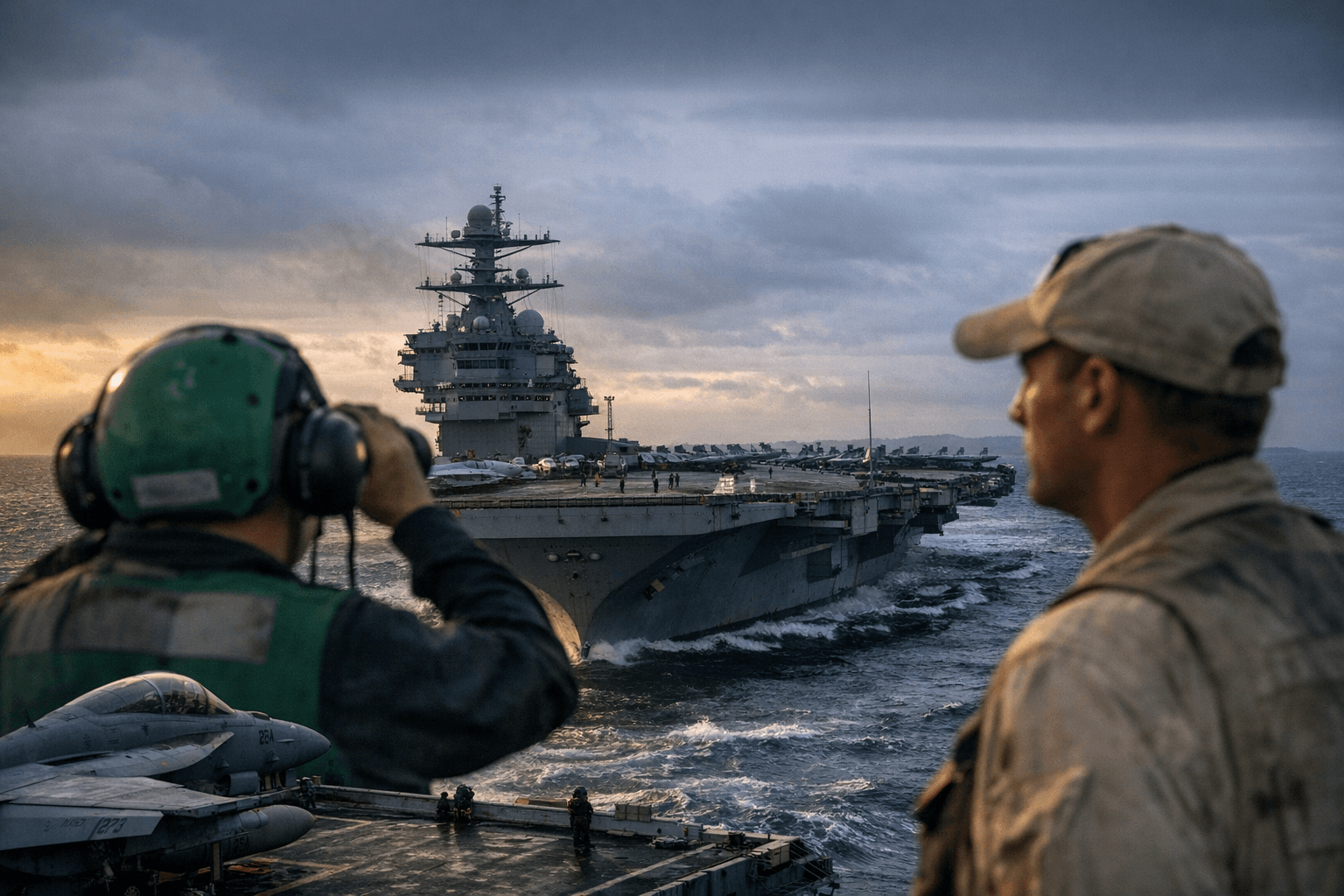
Some accounts cite U.S. defense officials preparing for the possibility of sustained operations if ordered, though no public Pentagon release has outlined specific operational triggers, rules of engagement, or an exact roster of the accompanying vessels. That lack of official confirmation leaves key details unresolved: the carrier’s precise route and current location, the definitive count and identity of escort ships, and whether allied navies will augment the U.S. presence.
Speculation in one original report raised the possibility that the United Kingdom’s HMS Prince of Wales could be deployed to protect British interests, a scenario the U.K. Ministry of Defence has not confirmed. Absent formal statements from the Pentagon or U.S. Naval Forces, ship-tracking logs and direct military briefings will be required to reconcile the conflicting accounts and to clarify whether the preparation evolves into an active deployment.
The introduction of a second U.S. carrier strike group into an already tense maritime environment would materially increase the operational stakes, deepening U.S. exposure to Iranian countermeasures and complicating the narrow diplomatic path that negotiators in recent days have described as inconclusive.
Know something we missed? Have a correction or additional information?
Submit a Tip