Peru election count drags on as Fujimori leads runoff race
Peru’s slow count deepened fraud claims as Keiko Fujimori took the lead, turning the runoff race into a test of electoral trust.
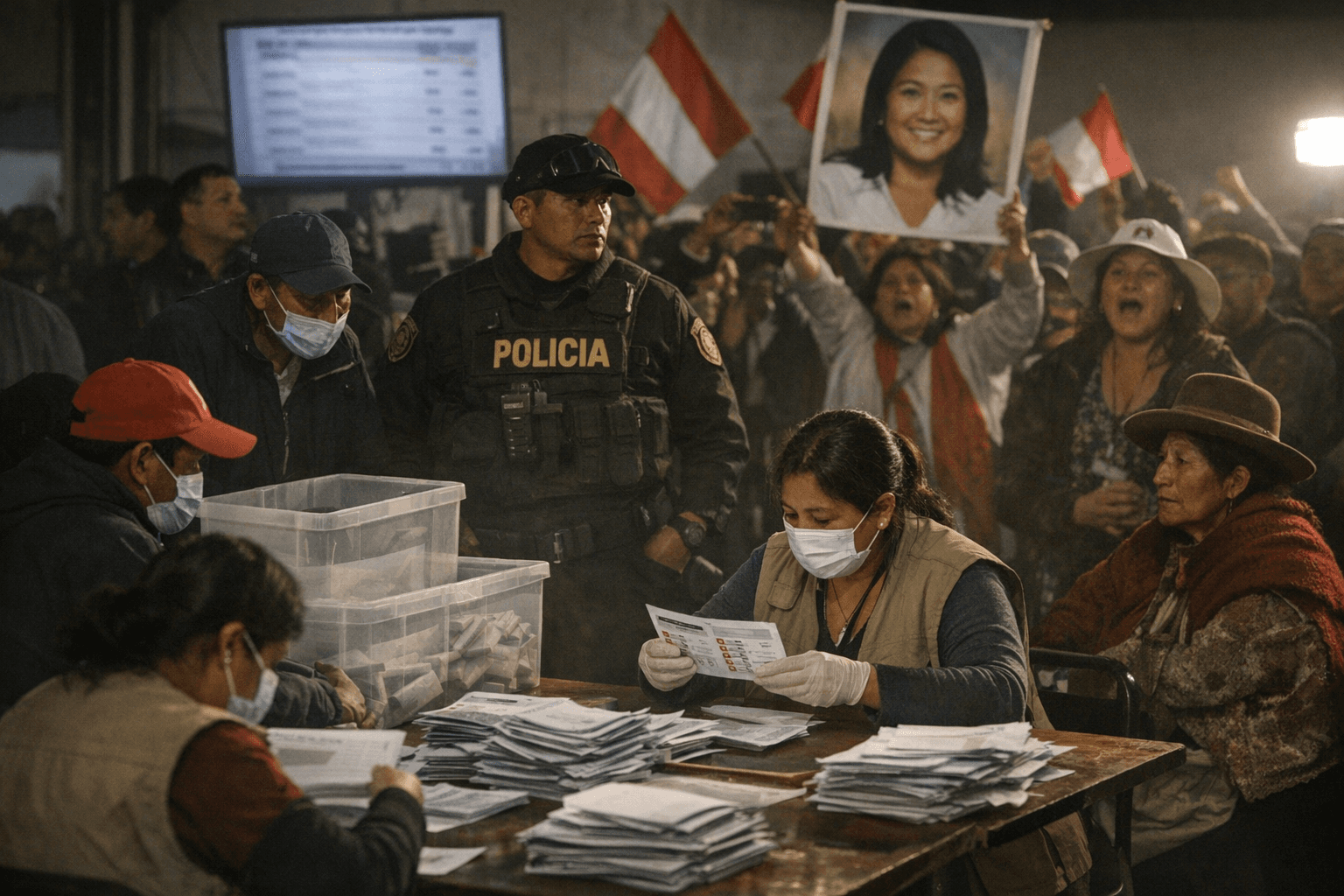
Peru’s delayed vote count has turned the country’s presidential race into a test of electoral legitimacy, with fraud allegations spreading even as Keiko Fujimori moved into first place and the fight for a June 7 runoff remained unsettled.
With roughly 80% of ballots counted, Fujimori, the conservative former congresswoman and daughter of ex-president Alberto Fujimori, led with 16.8% of the vote. Under Peru’s rules, no candidate is anywhere near the 50% needed to win outright, making the first round a struggle to survive into the runoff rather than a finish line. Behind Fujimori, the race for second place was still tight among right-wing former Lima mayor Rafael Lopez Aliaga, center-left candidate Jorge Nieto and left-wing congressman Roberto Sanchez.
The slow tally fed a familiar cycle of suspicion in a country that has endured repeated electoral disputes. Lopez Aliaga accused the process of a brutal fraud, and Sanchez later raised concerns about the integrity of the count. European Union observers said they had found no objective evidence to back the fraud claims, while also acknowledging serious problems in election administration that helped fuel the backlash.
Those problems were visible on the ground in Lima, where logistical failures in the delivery of electoral materials forced authorities to extend voting into Monday for more than 52,000 voters. Some reporting said 211 polling mesas in the capital were never installed because materials did not arrive on time. The National Office of Electoral Process, known as ONPE, said the delays stemmed from an isolated distribution error, not a systemic irregularity. Piero Corvetto, who heads Peru’s electoral authority, was called before Congress to explain the breakdown.
The European Union had sent an Election Observation Mission to Peru after invitations from Peruvian authorities and the Jurado Nacional de Elecciones. The mission deployed 50 long-term observers across the country in mid-March and planned to expand to more than 150 observers on election day. It said it would stay through a possible runoff and issue a preliminary statement two days after election day, part of an effort to bolster public trust and provide an impartial account of the process.
The broader election has been unusually crowded and fragile, with 34 registered presidential candidates and an electorate of about 27.3 million people. As the count dragged on, the argument over ballots and fraud was already shaping the credibility of whichever candidate survives to the June runoff, and whether Peru’s voters will accept the result.
This article was produced by Prism’s automated news system from verified source data, official records, and press releases, then run through automated quality and moderation checks before publishing. The system is built and supervised by the people who set the standards it runs under. Read our full AI policy.
Did this article answer your question?