PEZ transformed from anti-smoking mint into global pop-culture collectible
PEZ’s value lies in engineered scarcity, early character heads, and a collector culture that turned a peppermint dispenser into a grail market.
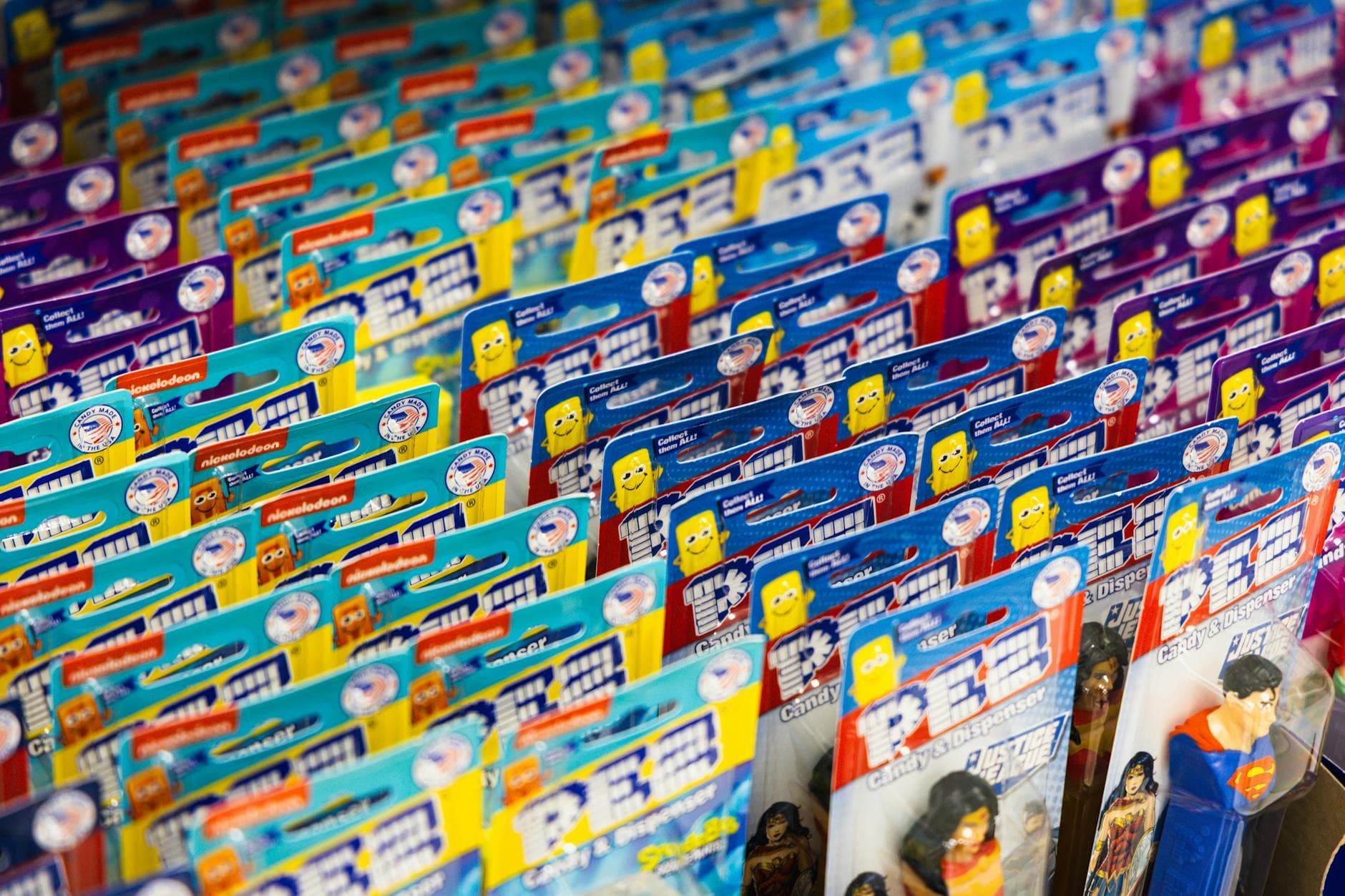
From smoking alternative to collectible icon
PEZ began as a compressed peppermint candy in Vienna, Austria, first marketed in 1927 as an alternative to smoking. The product reached the United States in 1952, but its real break came later, when the dispenser stopped being a plain object and became a miniature canvas for characters, franchises, and nostalgia.
That evolution matters because PEZ’s collector economy is built on transformation. A candy invented for adults became, over decades, a childhood artifact, a licensed character product, and finally a market where rarity and firsts carry real weight.
The dispenser changed everything
The earliest PEZ dispensers were plain regulars, without character heads. That design was functional, but it did not create the emotional attachment that fuels collecting. The first traditional dispenser with a character head was Witch A, introduced in 1957, and one year later Popeye became one of the first licensed characters to appear on a PEZ dispenser.
Those two developments established the template that still drives demand today. Collectors do not just chase dispensers for their candy value or novelty. They chase recognizable characters, early examples, and pieces that mark a turning point in the brand’s visual history. In collector culture, the objects that matter most are often the ones that prove a shift happened first.
Why scarcity becomes the story
PEZ’s collectibles market is powered by scarcity that is partly planned and partly discovered over time. The company highlights rare and limited pieces as especially sought after, and that language reflects how the market works: a piece becomes valuable when it is tied to a small release, a first appearance, or a character that resonates far beyond the candy aisle.
The first limited-edition collector set, the Star Wars Collectors Set in 2005, showed how far the brand had moved from its origins. By then, PEZ was no longer simply a dispensary for mint candy. It was part of a larger pop-culture economy, where franchise tie-ins create instant collector demand and where the fan base can treat a dispenser the way another market might treat a limited-edition toy, sneaker, or trading card.
For collectors, the appeal is not only nostalgia. It is also the logic of the chase. The older, scarcer, and more visibly tied to a milestone the piece is, the more likely it is to become a grail.
The collector market took shape in the 1990s
PEZ says collecting took off in the early 1990s, and a key marker came in 1991, when the first PEZ collecting convention was held in Mentor, Ohio. That kind of gathering does more than celebrate the brand. It creates a market infrastructure: collectors meet, compare variations, establish reference points, and assign prestige to specific dispensers and sets.
Once a hobby develops conventions, it stops being casual in the economic sense. It gains rules, hierarchies, and a shared language for scarcity. Pieces that might once have been saved out of nostalgia start to be evaluated like assets, with condition, rarity, character, and era all influencing desirability. The result is a collector culture that treats childhood memory as a form of capital.
PEZ’s scale makes the rarity stand out
The company’s global reach makes the collectible angle even more striking. PEZ says its operations in Orange, Connecticut and Traun, Austria distribute approximately 70 million dispensers and 5 billion candies per year, and its products are available in more than 80 countries worldwide. That is mass production on a huge scale, which means the pieces that rise to collector status stand out against an enormous stream of ordinary product.
This is the central paradox of PEZ collecting: the brand is everywhere, yet the most desirable items are the ones least likely to be common. When a company produces at this scale, the average dispenser is easy to find. What becomes valuable are the exceptions, the early runs, the limited editions, and the characters that connect PEZ to a specific cultural moment.
Inside the Orange, Connecticut showcase
The PEZ Visitor Center in Orange, Connecticut turns that collecting story into a physical destination. The site says it has more than 4,000 square feet dedicated to the brand, including the world’s largest PEZ dispenser, a viewing area into production, and what it describes as the largest, most comprehensive collection of PEZ memorabilia on public display in the world.
That combination of factory visibility and museum-style display reinforces the brand’s dual identity. PEZ is still a working consumer product, but it is also curated heritage. Visitors are not only seeing how the candy is made. They are seeing how a mass-market item becomes an object of memory, display, and trade.
What grail status really means in PEZ culture
In PEZ collecting, grails are usually defined by a few clear traits: early character heads, licensed characters, limited-edition releases, and pieces tied to landmark moments in the company’s history. Witch A and Popeye matter because they sit near the beginning of the character era. The Star Wars Collectors Set matters because it shows how the brand crossed fully into pop-culture licensing.
That is why PEZ has endured where many novelty products fade. It offers a clean collector narrative: origin, transformation, scarcity, and fandom. The candy may be simple, but the market built around it is not. What started as a mint meant to replace smoking has become a global collectible language, and its rarest dispensers now sit at the intersection of nostalgia, branding, and the economics of desire.
This article was produced by Prism’s automated news system from verified source data, official records, and press releases, then run through automated quality and moderation checks before publishing. The system is built and supervised by the people who set the standards it runs under. Read our full AI policy.
Did this article answer your question?