Philippine VP Sara Duterte Faces Impeachment Hearings Over Threats, Fund Misuse
Sara Duterte skipped her own impeachment hearing as the House Committee on Justice opened proceedings today, with her 2028 presidential bid and her freedom at stake.

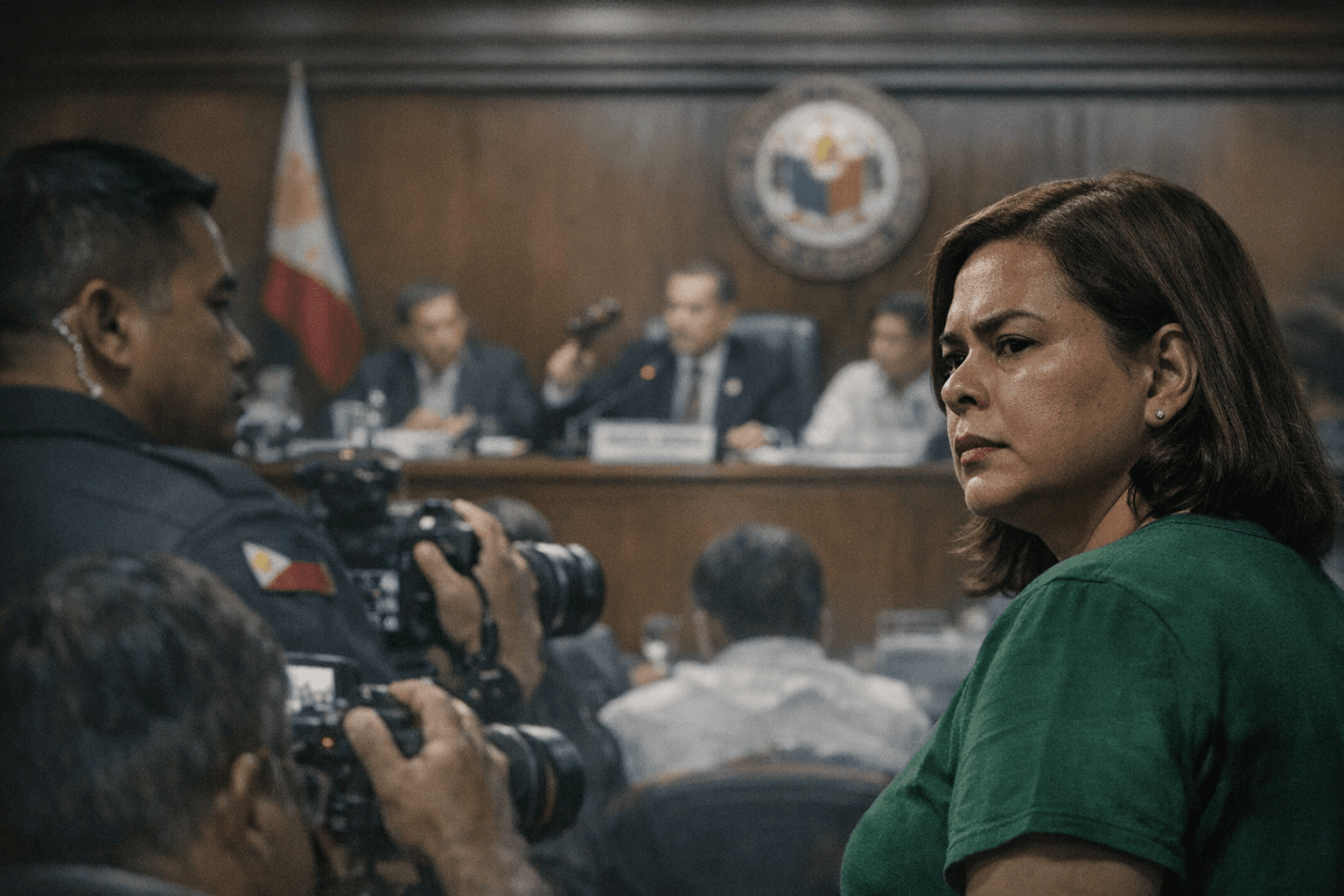
The House of Representatives' Committee on Justice proceeded Wednesday with the hearing on impeachment complaints against Vice President Sara Duterte even after she announced she would skip the proceedings and called on lawmakers to dismiss the case against her.
The impeachment proceedings escalated into what leaders of the House Committee on Justice described as a "full-scale legal battle," ushering in a high-stakes political confrontation with Duterte's 2028 presidential ambitions directly in the crosshairs. The alleged offenses include her misuse of confidential funds, fabrications of submissions to the Commission on Audit, bribery of education officials, unexplained wealth, and apparent threats to the life of President Marcos and his family.
Legal team spokesperson Michael Poa confirmed in a message that "counsel for the Vice President submitted a letter today to the Committee on Justice stating that the Vice President will not be attending the hearing, in light of the constitutional objections raised therein." The Vice President hired 16 lawyers to represent her in the impeachment trial.
Committee chair Batangas Rep. Gerville Luistro said at the start of the hearing that "regardless of the participation of the Vice President and even in her absence, this committee will proceed. We will do our duty with resolve, without hesitation, and without delay." Luistro had warned that skipping the hearing would risk Duterte losing the chance to convince lawmakers that the complaints have no probable cause, and that if she chose not to attend, allegations against her would remain unchallenged and committee members "might vote in favor of the existence of probable cause." She can still appear at subsequent hearings set for April 14, 22, and 29.
The committee is conducting the hearing to determine whether there is probable cause to impeach Duterte, who faces charges of culpable violation of the Constitution and betrayal of public trust over the alleged misuse of intelligence funds from the Office of the Vice President and the Department of Education, where she served briefly as secretary before resigning.
The impeachment is the latest move in an explosive feud between two of the Philippines' most powerful political dynasties. Duterte was earlier impeached by the House on February 5, 2025, transmitting the articles of impeachment to the Senate for trial, but the Senate convened as an impeachment court in June 2025 only to remand the articles back to the lower house; the Supreme Court then declared the complaint unconstitutional in July 2025 after earlier complaints triggered a one-year constitutional ban. Following the lapse of that one-year ban, at least two new complaints were filed against Duterte, formally initiated on February 23, 2026 after referral to the House Committee on Justice.
On March 4, 2026, the House Committee on Justice ruled that two impeachment complaints were sufficient in substance, allowing proceedings to advance, and Duterte was formally notified on March 5 and required to submit her response within 10 days. On March 18, 2026, the two complaints were found sufficient in grounds, authorizing Congress to proceed to a hearing proper.
Representative Ferdinand Hernandez framed the sufficiency vote in deliberate terms before it was cast: "Our vote today is not a verdict of guilt nor an act of condemnation. It's simply a decision on whether the constitutional process should move forward."
University of the Philippines political science professor Jean Franco warned that every House member who votes will carry that decision into the next election cycle. "The political context will be very different, especially now that Sara declared her candidacy," Franco said, adding that a vote for impeachment would effectively see a lawmaker's career "marked for death."
The stakes are severe. If the committee report favors impeachment, a one-third vote in the House plenary will send the case to the Senate for a full trial, and only a Senate conviction can result in Duterte's removal and disqualification from public office. That outcome would end her declared 2028 presidential campaign. A Pulse Asia survey in March showed Duterte with a 55% approval rating compared to President Ferdinand Marcos Jr.'s 36%, numbers that make the political calculus for every House member all the more fraught.
Duterte, in a statement, said the hearings represent "yet another third fishing expedition" and that "politics is being prioritized over the welfare of millions of Filipinos who are struggling deeply due to the high cost of commodities." The committee proceeded regardless, with the next scheduled sessions set to continue through April.
Know something we missed? Have a correction or additional information?
Submit a Tip