Philippines drills credited with saving lives in deadly 7.8 quake
Teachers and students who had drilled for earthquakes were among the reasons Philippine officials said a 7.8 quake did not kill even more people.
The quake hit before the school day had fully started, shaking classrooms, homes and roads across southern Mindanao as teachers and children tried to follow the same safety routines they had practiced in drills. Philippine officials said that preparation likely helped limit casualties when a magnitude 7.8 offshore earthquake struck Sarangani province at 7:37 a.m. on June 8, one of the strongest to hit the region in 50 years.
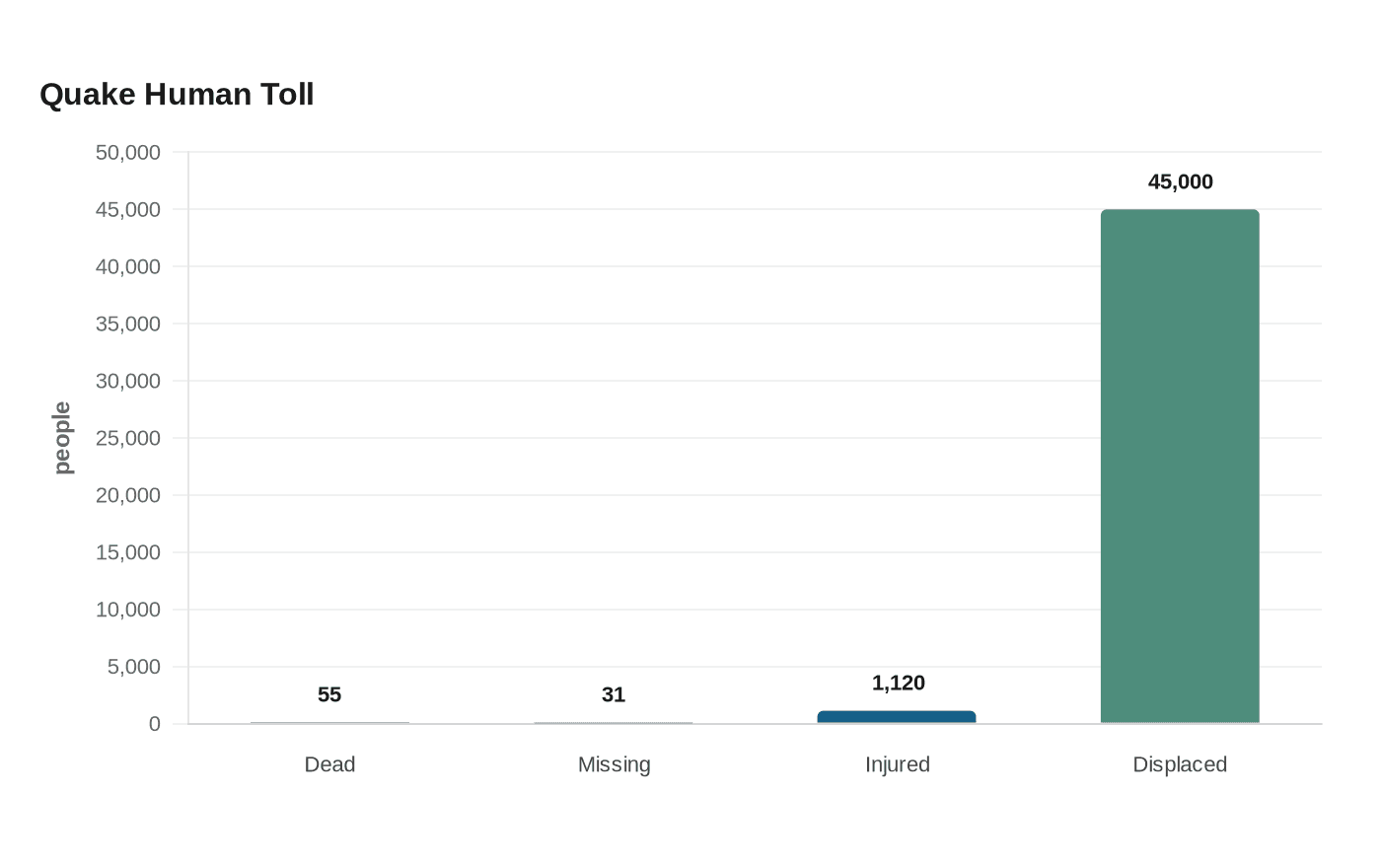
By Friday, the toll had climbed to 55 dead, with 31 people still missing. About 1,120 people were injured, more than 45,000 residents were displaced, and roughly half of them were still in emergency shelters. More than 12,600 houses were damaged across farming towns and cities, while strong aftershocks kept many families from returning home.
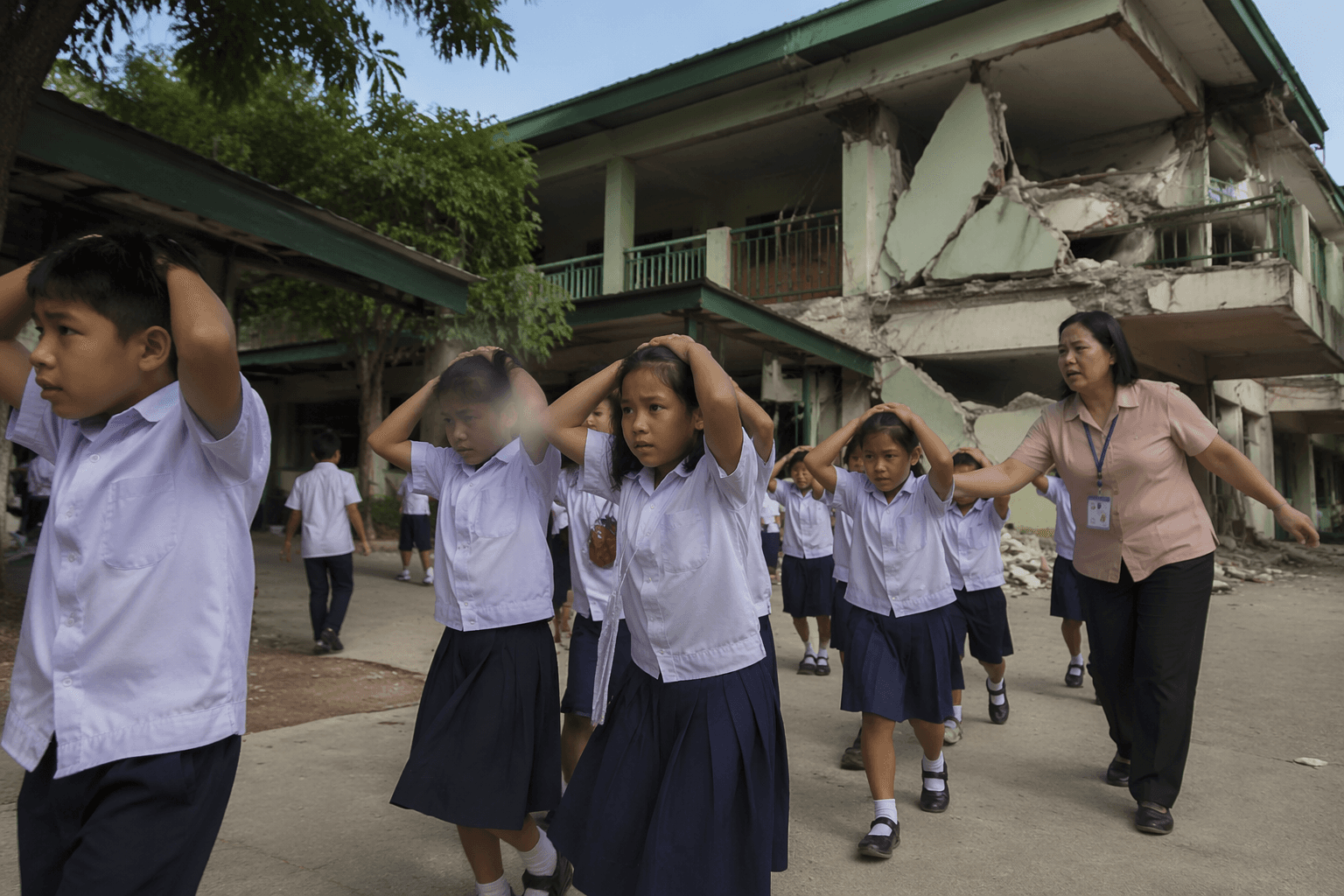
The hardest scenes unfolded in schools, where the quake struck on the first day of classes in Mindanao. United Nations reporting said roughly 3.2 million learners and more than 128,000 teachers and school personnel were affected, with more than 6,200 schools across five regions exposed to the shaking and the aftershocks that followed. Videos circulating after the quake showed children screaming, covering their heads and trying to stay calm as roofs and small structures failed nearby. Teachers repeatedly told students to remain seated or move carefully away from collapsing structures. Officials and school authorities said that response reflected repeated drill training, not luck.
The Philippine Institute of Volcanology and Seismology said the epicenter was about 32 kilometers offshore west of Maasim in Sarangani province, along the Cotabato Trench. The agency said the quake’s focal mechanism and the pattern of aftershocks pointed to subduction on that trench, and the Office of Civil Defense said the strongest reported shaking reached Intensity 8. PHIVOLCS recorded 138 aftershocks within hours, with later updates pushing the count into the thousands, including several above magnitude 6.

The humanitarian response moved quickly. The Department of Social Welfare and Development deployed quick-response teams to evacuation sites in Sarangani on June 8, and Secretary Rex Gatchalian ordered Mindanao field offices to coordinate immediately with affected local governments. DSWD later reported cash aid, food packs and temporary shelters, including family tents and evacuation-center support. UNICEF said it was ready to assist children and families in Sarangani Province, General Santos City and nearby areas.
The quake also exposed the broader stakes of preparedness in a region that lives with seismic risk. PHIVOLCS linked the event to the active Cotabato Trench, the same tectonic structure associated with the 1976 Moro Gulf earthquake and tsunami. The Philippines conducts quarterly Nationwide Simultaneous Earthquake Drills through the Office of Civil Defense, and this disaster showed why those routines matter: when the ground moves, practiced reflexes can save lives even when they cannot prevent destruction.
This article was produced by Prism’s automated news system from verified source data, official records, and press releases, then run through automated quality and moderation checks before publishing. The system is built and supervised by the people who set the standards it runs under. Read our full AI policy.
Know something we missed? Have a correction or additional information?
Submit a Tip