Philippines Raises Mayon Alert to Level 3, Orders 6‑Km Evacuations
The Philippine volcanology agency on January 6 raised Mayon Volcano to Alert Level 3, citing magmatic dome growth and repeated collapses that increase the risk of deadly pyroclastic density currents and lava flows. Authorities ordered immediate evacuation of the 6-kilometre Permanent Danger Zone, warning that explosive activity could occur "within days or weeks" and urging residents and foreign nationals to follow evacuation instructions.
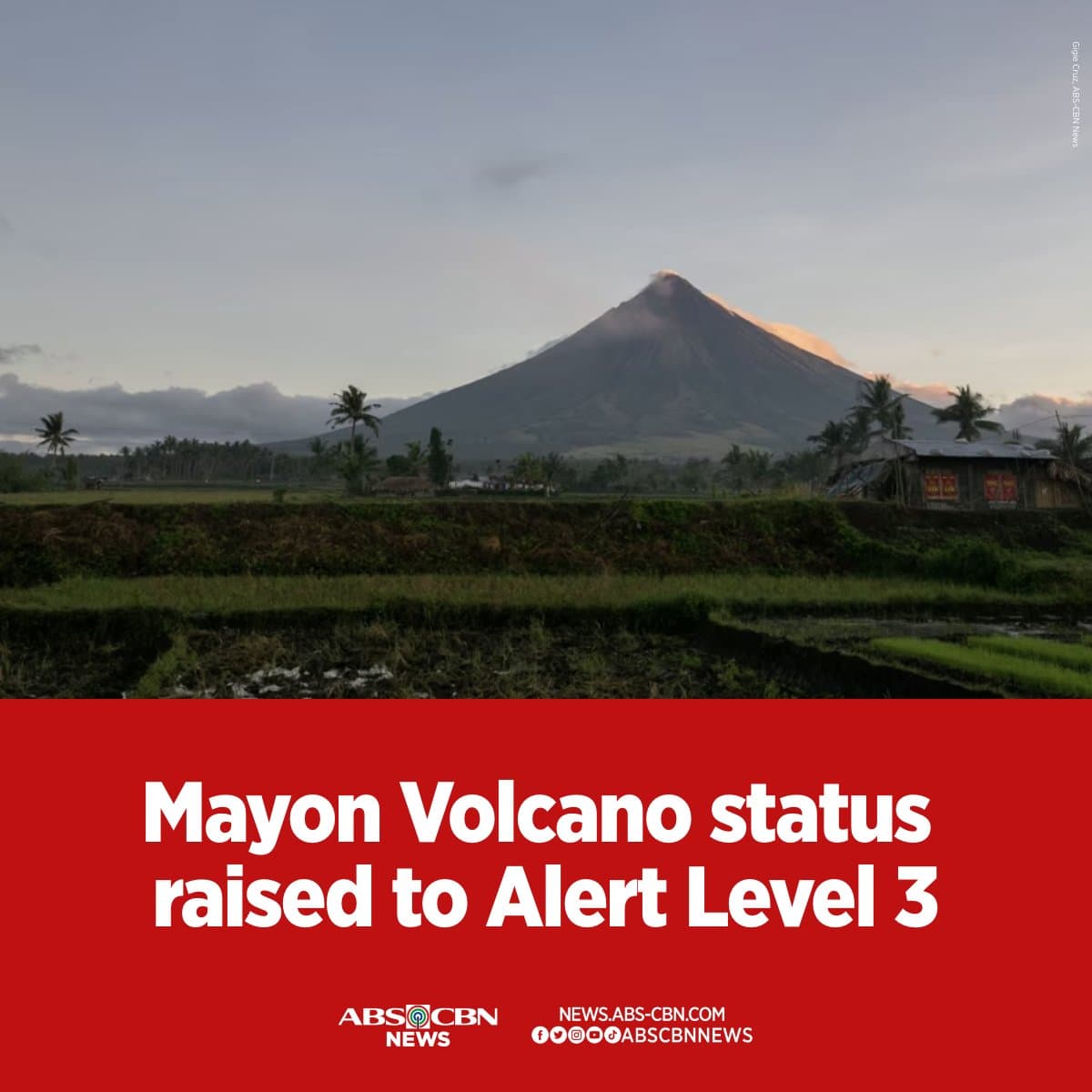
On January 6 the Philippine Institute of Volcanology and Seismology (PHIVOLCS) raised Mayon Volcano’s alert level from 2 to 3, notifying the public at 01:20 p.m. that mounting magmatic unrest and active summit dome growth have intensified the risk of a hazardous eruption. The agency described a buildup of lava at the summit and repeated dome collapses that have generated fast-moving, hot avalanches of ash and rock known as pyroclastic density currents, locally called uson.
PHIVOLCS logged 346 rockfall events and four volcanic earthquakes since January 1, 2026, data that the agency cited as a key rationale for the raise to Alert Level 3. By comparison, 599 rockfall events were recorded during November and December 2025. Many of the recorded rockfall events lasted one to five minutes and transported lava debris within roughly a one-kilometre range from the summit, PHIVOLCS reported. The agency characterized Alert Level 3 as indicating an increased tendency toward a hazardous eruption, with the possibility of explosive activity "within days or weeks."
In response to the elevated threat, PHIVOLCS and local authorities designated a 6-kilometre radius around Mayon as a Permanent Danger Zone and recommended immediate evacuation for all residents within that area. Evacuations of residents from three villages located inside the 6-kilometre PDZ began at about 4:00 p.m. on the day the alert was raised. Local officials are coordinating relocation and temporary shelter for those displaced, while emphasizing that remaining within the PDZ is extremely dangerous.
The U.S. Embassy in Manila and the U.S. Consular Agency in Cebu issued a Natural Disaster Alert on January 7, relaying PHIVOLCS’s assessment and safety guidance to American citizens in the region. The embassy reiterated the agency’s warning that pyroclastic density currents are “fast-moving, deadly clouds of hot gas, ash, and rocks,” and advised U.S. citizens to follow local evacuation instructions and to enroll in the Smart Traveler Enrollment Program for consular notifications and assistance.

Mayon sits in Albay Province in the Bicol Region, and its steep, often-populated slopes make rapid evacuations a logistical and humanitarian priority when unrest escalates. PHIVOLCS previously raised the volcano from Alert Level 1 to Level 2 on January 1; the jump to Level 3 reflects a continuing escalation in activity in the first week of January.
Officials have not provided a precise timetable for an eruption, and technical bulletins from PHIVOLCS remain the authoritative source for evolving conditions. For now, priorities are range-bound: ensuring that residents inside the PDZ evacuate promptly, maintaining clear communication with provincial disaster authorities, and monitoring dome activity that could trigger further collapses and life-threatening pyroclastic flows. The coming days will be critical in determining whether the unrest transitions to a more dangerous explosive phase.
This article was produced by Prism’s automated news system from verified source data, official records, and press releases, then run through automated quality and moderation checks before publishing. The system is built and supervised by the people who set the standards it runs under. Read our full AI policy.
Did this article answer your question?


