Philippines says cyanide found near disputed shoal, warns of sabotage
Laboratory tests found cyanide in bottles seized near Ayungin Shoal, and Manila says the toxic haul may have been meant to sabotage its outpost and the reef itself.
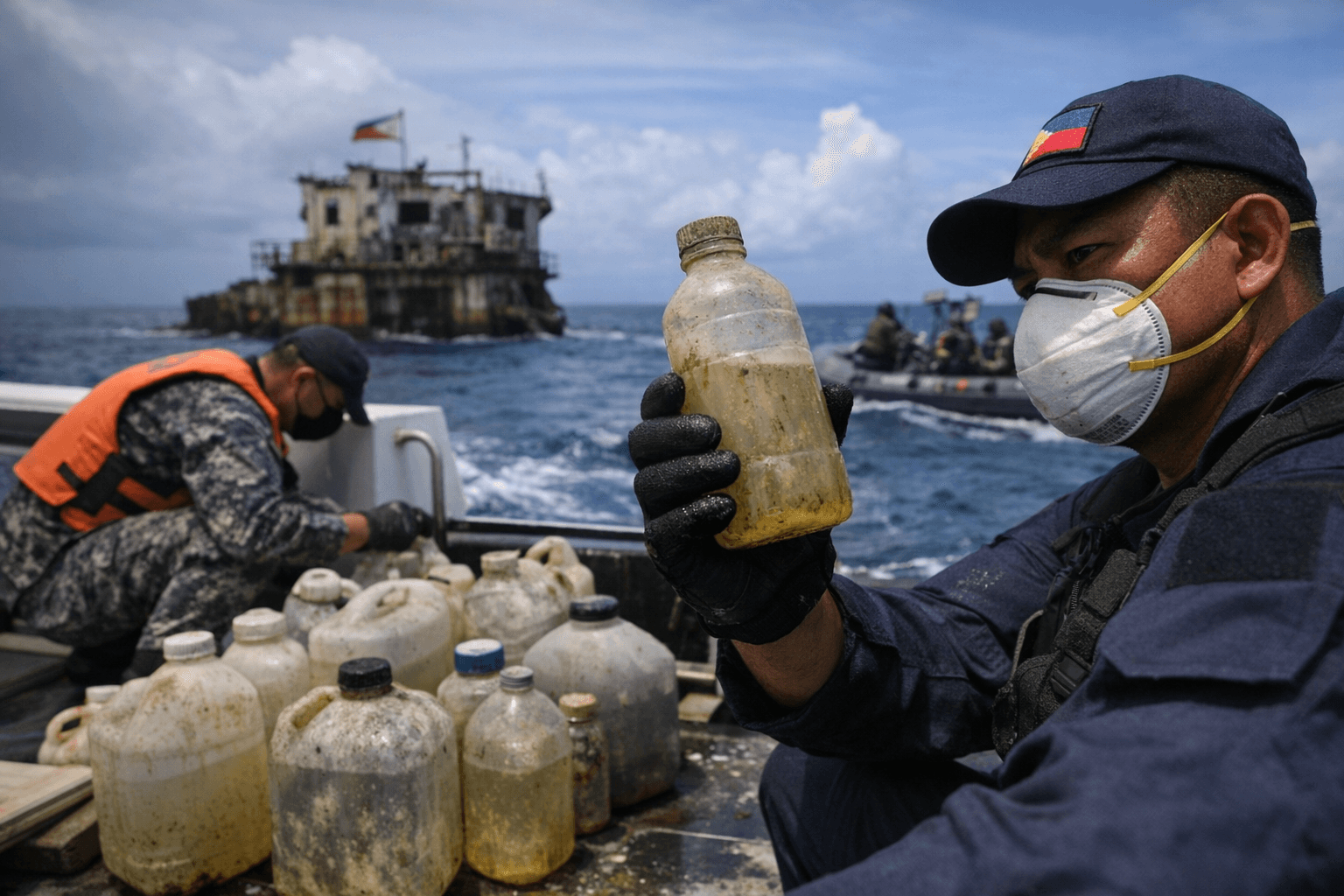
Laboratory tests confirmed cyanide in bottles recovered by the Philippine Navy from Chinese sampans near the BRP Sierra Madre at Second Thomas Shoal, giving Manila a fresh environmental case for accusing Beijing-linked crews of sabotage in the West Philippine Sea. The bottles came from separate operations in February 2025 and October 2025, and the samples were turned over to the National Bureau of Investigation for testing.
Cornelio Valencia Jr., a National Security Council spokesman, said the use of cyanide was a deliberate act that endangered navy personnel aboard the grounded warship and threatened the marine life that sustains the reef. Officials warned that the toxic substance could strip fish from the area, weaken the surrounding ecosystem and, over time, compromise the stability of the shoal itself. That matters because the BRP Sierra Madre, deliberately grounded there in 1999, remains the physical anchor of the Philippines’ claim.
Second Thomas Shoal, which Manila calls Ayungin Shoal and Beijing calls Ren’ai Reef, lies about 105 nautical miles west of Palawan and inside the Philippines’ 200-nautical-mile exclusive economic zone. The reef sits in the Spratly Islands, one of the most contested stretches of the South China Sea, where every confrontation over patrols, supplies or resource use feeds a broader sovereignty dispute. The Permanent Court of Arbitration’s July 12, 2016 ruling largely favored the Philippines, but China has not accepted the award.
The cyanide allegation also lands at a sensitive diplomatic moment. Manila and Beijing resumed the 11th Bilateral Consultation Mechanism on the South China Sea in Quanzhou, Fujian Province, on March 28, their first such meeting since January 2025. The talks covered possible oil and gas cooperation, coast guard communication and ocean-meteorology cooperation, while the Department of Foreign Affairs said any coast guard coordination would remain limited and would not extend to sensitive operational areas or joint patrols.
China’s embassy in Manila did not immediately respond to the allegation. For Philippine officials, the case strengthens an argument that the struggle over Second Thomas Shoal is not only about flags and patrols, but about whether actions at sea are inflicting lasting damage on livelihoods, fisheries and the reef that underpins Manila’s outpost.
This article was produced by Prism’s automated news system from verified source data, official records, and press releases, then run through automated quality and moderation checks before publishing. The system is built and supervised by the people who set the standards it runs under. Read our full AI policy.
Did this article answer your question?


