Pittsburgh study uses donor immune cells to reduce transplant drug dependence
Pitt researchers used donor immune cells before liver transplant, and 3 of 8 eligible patients stayed off anti-rejection drugs for more than a year.
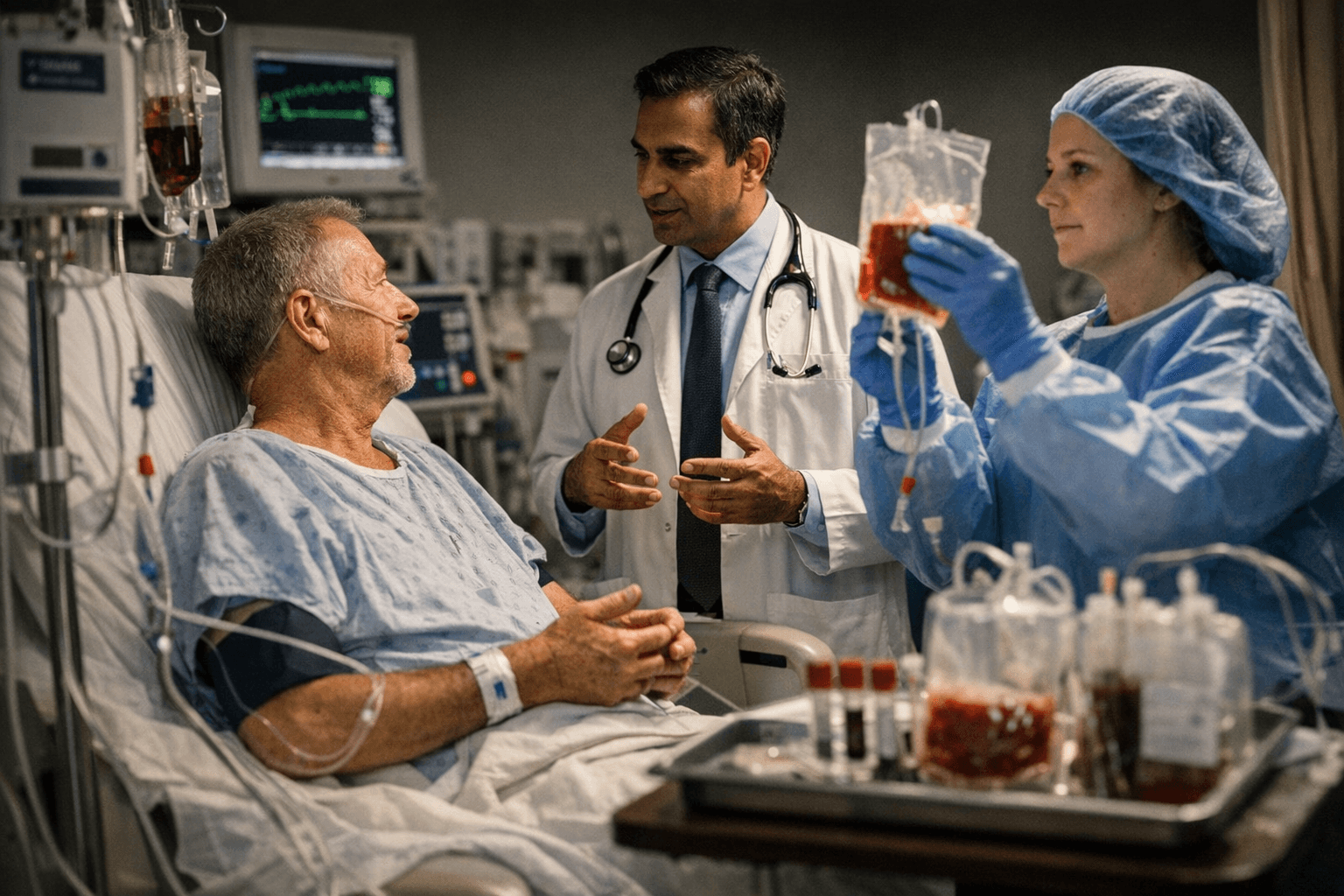
Scientists at the University of Pittsburgh took a step toward loosening one of transplant medicine’s hardest rules: lifelong anti-rejection drugs. In a first-in-human trial of living-donor liver transplantation, the team infused donor-derived regulatory dendritic cells seven days before surgery and then tried to taper immunosuppressive medication a year later in patients whose biopsies showed a quiescent or permissive pattern.
The study, published April 17, 2026 in Nature Communications, enrolled 15 prospective living-donor liver recipients over two years and followed them for 5.0 years, plus or minus 0.5 years. Two patients were excluded from analysis for reasons unrelated to the trial, leaving 13 evaluable recipients. Eight of those 13 met criteria to begin immunosuppression withdrawal one year after transplant, and four completed full withdrawal. Three patients remained off all immunosuppression for more than a year and stayed drug-free for 3.0 years, plus or minus 0.17 years, which the authors describe as a 37.5% operational tolerance rate among those eligible to try stopping medication.
That result matters because the target is not a miracle cure. It is a narrower and more practical goal: reducing, and in some cases eliminating, the long-term drug burden that follows a successful transplant. Anti-rejection medicines can protect a graft, but they also carry cumulative risks that can include cancer, diabetes, kidney failure, infection, cardiovascular complications and metabolic problems. The authors note that complete withdrawal remains uncommon even in otherwise eligible adult liver recipients, with a success rate of about 13% when doctors attempt it one to two years after transplant.
The Pittsburgh trial was small and exploratory, and the investigators say larger studies are still needed before the approach can influence routine care. Even so, the findings point to a path that could matter for living-donor liver transplant centers watching for ways to preserve graft function while easing the long-term toll of immunosuppression. The clinical trial is registered as NCT03164265.
The work builds on earlier University of Pittsburgh and UPMC research. In 2023, the same group reported that giving living-donor liver recipients a donor-cell infusion one week before transplantation was feasible and safe, and a clinical summary described 15 patients who received the infusion compared with 40 standard-of-care controls. The new paper extends that effort from safety and feasibility toward the harder question of whether donor immune cells can help some patients leave anti-rejection drugs behind.
This article was produced by Prism’s automated news system from verified source data, official records, and press releases, then run through automated quality and moderation checks before publishing. The system is built and supervised by the people who set the standards it runs under. Read our full AI policy.
Did this article answer your question?