Plaza Sale and Chiefs Departure Test Kansas City's Economic Future
Dallas-based Gillon Property Group paid $175.6M for a plaza that sold for $660M in 2016, then pitched a $1.5B rescue plan as Kansas City prepares to lose the Chiefs.

Kansas City, Missouri is confronting a simultaneous stress test of its economic identity: the country's most storied outdoor shopping district is mid-rescue after a collapse in value, and the NFL franchise that anchored the city's national brand is headed across the state line.
Dallas-based Gillon Property Group unveiled a $1.5 billion plan to revitalize the Country Club Plaza, the 15-block, 1.3 million-square-foot mixed-use district that has defined the city's retail character since 1922. The proposal arrives as Missouri officials are still absorbing the implications of losing the Kansas City Chiefs.
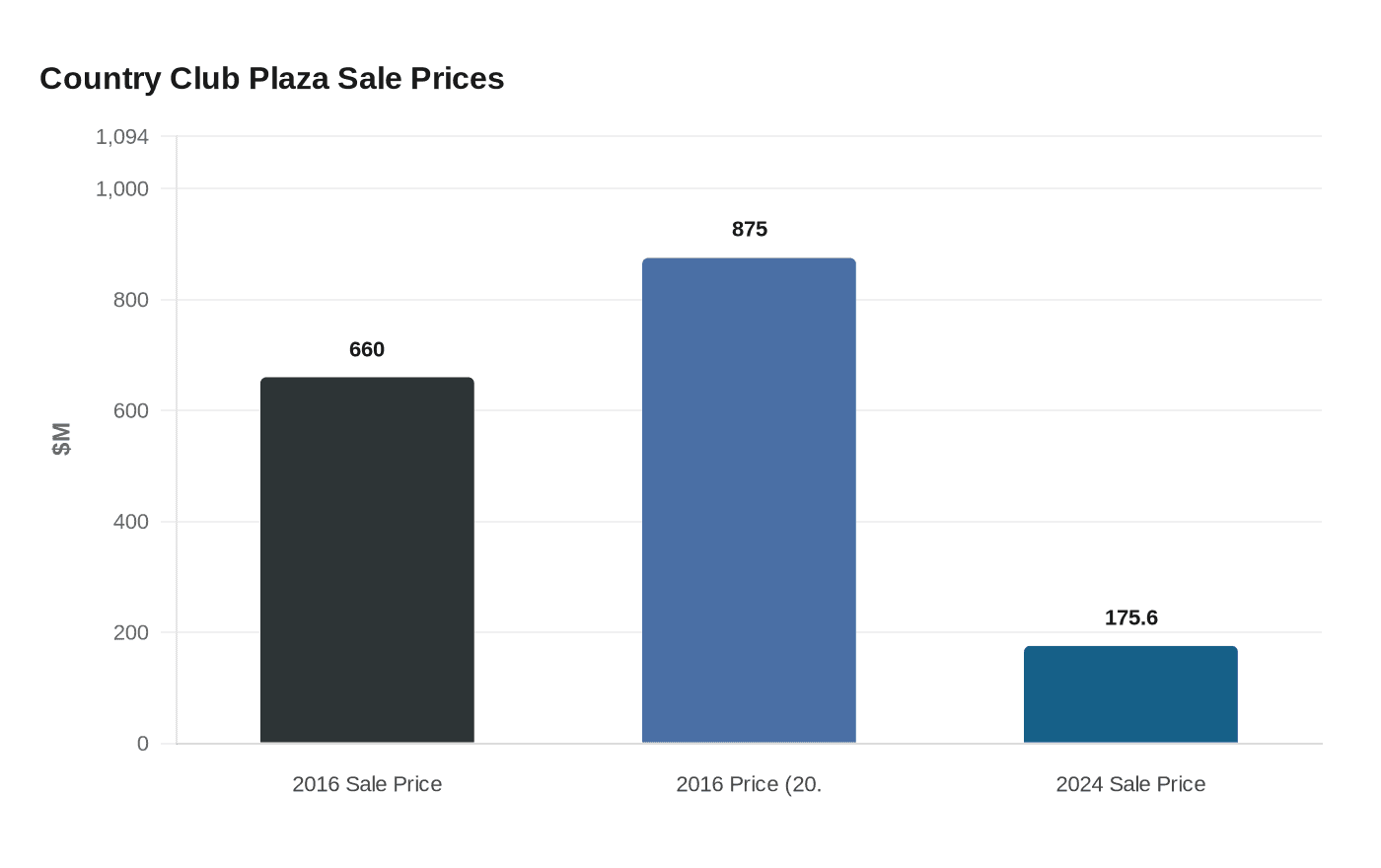
The financial arc of the Plaza tells a story about how radically commercial real estate values have reset since the pandemic. The Plaza hit a new low in June 2024 when Gillon purchased it for $175.6 million, a fraction of the $660 million that Taubman Centers and Macerich paid for the same property just eight years earlier. Adjusted for inflation, the 2016 purchase price is equivalent to about $875 million in 2024 dollars, roughly five times what the new owners paid.
Gillon's plan includes 750 new apartments and possibly condominiums, at least 645,000 square feet of office space, 278 hotel rooms, a park, and expanded walkways. The proposal also calls for significantly taller buildings, a new public square, and improvements to pedestrian and bike infrastructure. On the western edge of the Plaza, where Nordstrom announced in 2018 it would open its only Kansas City location, only to cancel that plan in 2022, a new plan is moving forward for Gillon to construct a 275-foot office tower subsidized by tax incentives from Port KC.

The financing structure Gillon needs to execute this vision has drawn fierce resistance from the city's public institutions. Gillon is seeking up to $1.4 billion in conduit bonds from Port KC to finance a 15-year redevelopment, with a tax incentive that would lock in property tax payments at 2024 levels for 30 years. New office and retail projects would pay just 10% of typical property taxes for the first decade, stepping up to 70% by years 26 through 30. Hotels and apartments would start even lower, at 5% of typical taxes. Port KC delayed the tax break vote after officials from Kansas City Public Schools and the Kansas City Public Library joined a chorus of public opposition.
The calculus for office demand grows harder with Lockton Companies, one of the Plaza's most prominent tenants, announcing it would move its headquarters from the Plaza to Kansas in 2030. That departure, compounding the Nordstrom abandonment, underscores the challenge Gillon faces in convincing office tenants to anchor a district still in the early stages of reinvention.
The broader economic backdrop became considerably more urgent on December 22, 2025, when Kansas lawmakers approved a funding package that sealed the Chiefs' departure from Missouri. The Kansas City Chiefs will build a new stadium in Wyandotte County, Kansas, in a deal struck by the team's owners and Kansas political leaders. The new $3 billion fixed-domed stadium is expected to be ready for the 2031 NFL season. Kansas City, Missouri Mayor Quinton Lucas called the announcement "a setback as a Kansas Citian, a former Chiefs season ticket-holder and lifelong Chiefs fan."
Gillon Property Group was formed in 2025 to oversee the Hunt family's commercial real estate investments, adding a notable dimension to the story: the same family that owns the Chiefs is now the primary private force behind the Plaza's revival, even as the team departs the state that housed it for decades.
The Plaza's City Plan Commission unanimously approved Gillon's Master Plan Development in December 2025, but the Kansas City Council's approval remains pending. Whether the city will ultimately grant the full scope of the tax package Gillon needs, at a moment when it is simultaneously processing the fiscal and civic costs of losing its NFL franchise, is the central economic question now hanging over Missouri's largest city.
This article was produced by Prism’s automated news system from verified source data, official records, and press releases, then run through automated quality and moderation checks before publishing. The system is built and supervised by the people who set the standards it runs under. Read our full AI policy.
Did this article answer your question?

