Police Raid Peru Election Offices After Slow Vote Count Sparks Outcry
Police entered Peru’s election offices as a slow vote count turned into a test of trust in the tally, raising fears of intimidation and interference.
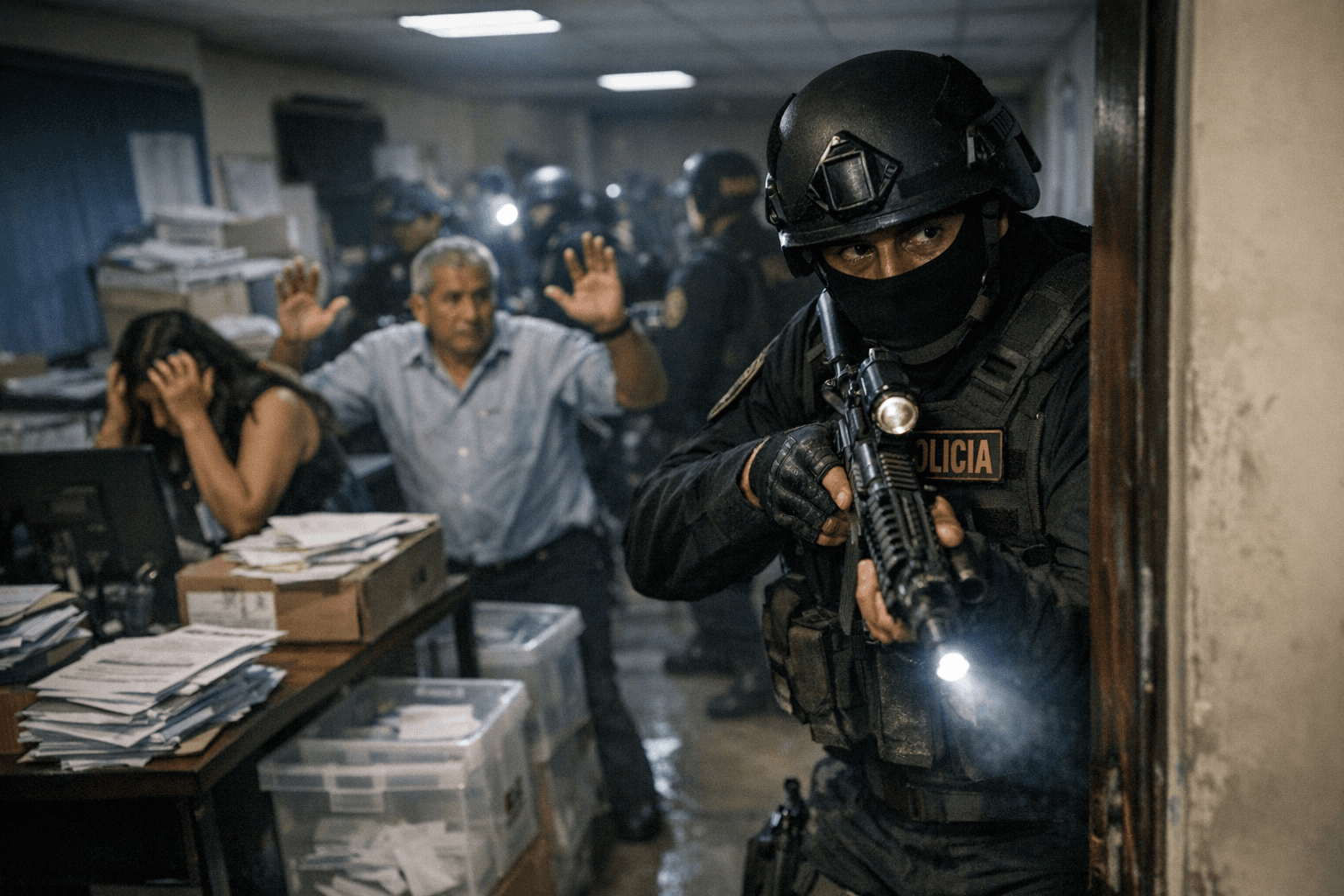
Police raided offices connected to Peru’s election authorities after a slow vote count triggered public outrage, turning a technical delay into a far bigger fight over democratic legitimacy. What began as criticism of the pace of the tally quickly became a dispute over whether state power was being used to pressure the people responsible for counting votes.
At the center of the controversy was not only speed but transparency. When results move slowly, rumors can outrun official explanations, and partisan accusations can harden before election officials have a chance to defend the numbers. In Peru, where political disputes have repeatedly strained public confidence, even a routine delay can become evidence, in the minds of critics, that the system is being managed for political ends.
The police action added a new layer of concern because it raised questions that go beyond the vote count itself. Was the raid meant to uncover wrongdoing, or was it intended to intimidate officials in the middle of a volatile count? Authorities will also face pressure to show whether any evidence was seized, whether any officials were detained or questioned, and whether the tally remains secure. Without clear answers, the raid risks becoming part of the same controversy it was supposed to resolve.
For election workers, the episode underscored how fragile the public environment becomes when every delay is read as a political signal. A slow count can feed speculation; a police presence can deepen it. Even if officials frame the operation as an accountability measure, opponents are likely to see it as interference with an independent process. That perception alone can do lasting damage, especially when trust in institutions is already strained.
The broader significance for Peru is harder to ignore. The country has lived through repeated political instability, and that history shapes how voters interpret clashes between police, prosecutors, and election administrators. If the raid leads to a clearer and more credible count, it could ease tensions. If it instead fuels new claims of manipulation, it will reinforce the suspicion that Peru’s electoral system is struggling not only with counting votes, but with preserving faith in the democratic process itself.
This article was produced by Prism’s automated news system from verified source data, official records, and press releases, then run through automated quality and moderation checks before publishing. The system is built and supervised by the people who set the standards it runs under. Read our full AI policy.
Did this article answer your question?

