Pope Leo XIV Delivers First Address to Thousands at St. Peter's Square
Pope Leo XIV broke with Vatican tradition Sunday, refusing to name specific conflicts in his Easter Urbi et Orbi, even as the U.S.-Israeli war on Iran entered its second month.
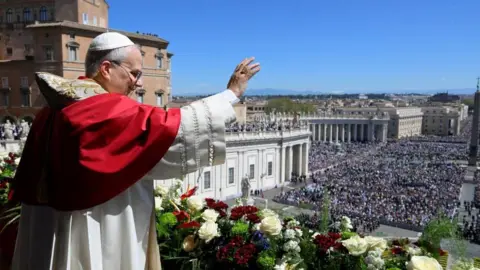
Standing at the central loggia of St. Peter's Basilica before a packed square, Pope Leo XIV issued his most urgent public appeal yet for an end to global warfare, while making a pointed departure from decades of Vatican practice: he refused to name a single specific conflict in his Easter Urbi et Orbi address.
Leo, the first U.S.-born pope, delivered his Easter Sunday homily and the traditional "Urbi et Orbi" blessing to thousands gathered in St. Peter's Square, calling on world leaders to end wars and renounce conquest, domination, and schemes for power. The address was notably brief and direct, and Leo did not mention any specific conflicts by name, breaking with the tradition of using the Urbi et Orbi to inventory the world's flashpoints.
The omission was conspicuous. With the U.S.-Israeli war on Iran in its second month and Russia's ongoing campaign in Ukraine, Leo has repeatedly called for a halt in hostilities in the weeks leading up to Easter. His Palm Sunday remarks had already drawn a sharp response from the White House. His predecessor, Pope Francis, had explicitly named Ukraine and Gaza in last year's Easter message, making Leo's generalized approach a notable strategic shift.
Leo warned the faithful that people "are growing accustomed to violence, resigning ourselves to it, and becoming indifferent to the deaths of thousands of people," and cautioned against what he called a spreading indifference to the economic and social costs that conflicts produce. He attributed the phrase "globalization of indifference" to Pope Francis, explicitly invoking his predecessor's legacy.
His call to arms was direct: "Let those who have weapons lay them down! Let those who have the power to unleash wars choose peace! Not a peace imposed by force, but through dialogue! Not with the desire to dominate others, but to encounter them!"
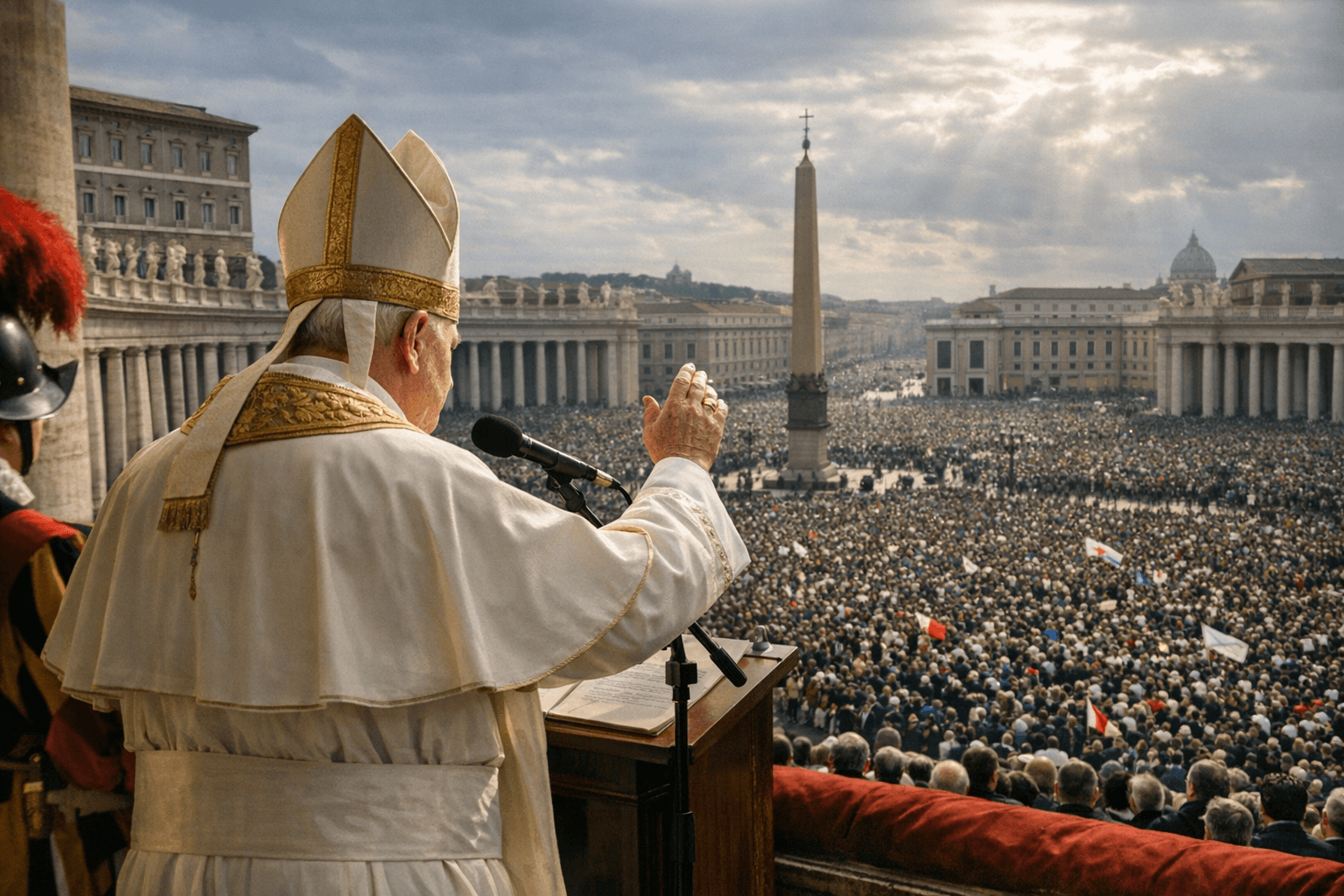
Leo also greeted the global faithful in 10 languages, including Arabic, Chinese, and Latin, reviving a multilingual practice that Francis had let lapse. He then announced a prayer vigil for peace to be held at St. Peter's Square on Saturday, April 11.
The Easter address capped a Holy Week in which Leo signaled both continuity with and departure from the Francis era. He carried the cross for all 14 stations of the Way of the Cross on Good Friday, the first pope to do so in decades, and on Holy Thursday washed the feet of 12 priests, restoring a tradition Francis had broken by including laypeople and non-Christians.
The decision not to name specific wars in the Urbi et Orbi will draw scrutiny from diplomats and theologians alike. Where Francis used the Easter address as a geopolitical ledger, cataloguing suffering by country, Leo chose a broader moral frame. Whether that reflects Vatican caution around his American identity amid the Iran conflict, or a deliberate theological posture rooted in universalism, the April 11 peace vigil may offer the next signal.
This article was produced by Prism’s automated news system from verified source data, official records, and press releases, then run through automated quality and moderation checks before publishing. The system is built and supervised by the people who set the standards it runs under. Read our full AI policy.
Did this article answer your question?


