Postal Service warns Congress it is running out of cash
Steiner told senators USPS had only $8.9 billion in cash and was borrowing from retirement funds as losses neared $31 billion.

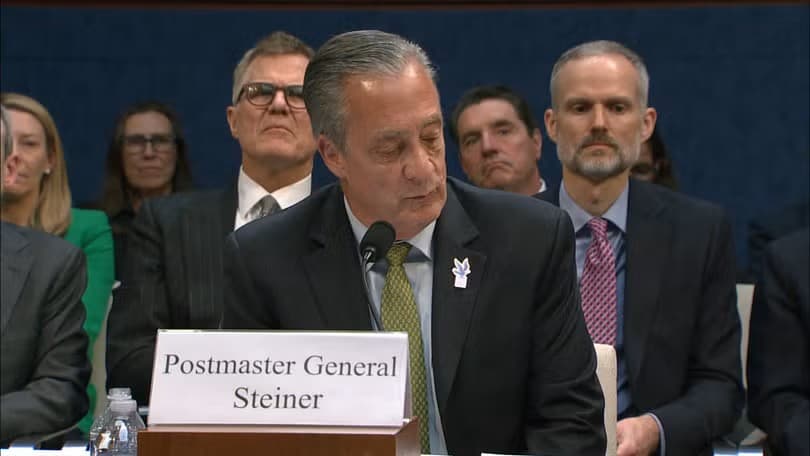
Postmaster General David Steiner told senators the Postal Service was “out of cash” and had been borrowing from employees’ retirement funds to keep operating. He delivered the warning at a June 24 hearing in SD-342 of the Dirksen Senate Office Building, where the Senate Homeland Security and Governmental Affairs Committee took up “Reforming the U.S. Postal Service’s Broken Business Model.”
Steiner’s written testimony put USPS at nearly $31 billion in cumulative defaults through the end of fiscal 2025 and $8.9 billion in unrestricted cash on hand as of May 31, 2026. Short-term deferrals of employer retirement contributions and the use of restricted cash stretched liquidity, but those steps only pushed obligations into the future. USPS has not had a profitable year in the last decade, and the Postal Regulatory Commission’s FY2025 analysis showed a $9.0 billion GAAP net loss.

USPS serves more than 170 million addresses, and its daily work supports prescription delivery, election mail, rural service and small-business shipping in places where private carriers do not fully cover the map. USPS’s fiscal 2025 results showed $80.5 billion in operating revenue against $83.5 billion in operating expenses, while First-Class Mail volume fell 5.0 percent, or 2.2 billion pieces.
The Postal Service needs lawmakers to address money-losing operations and broader structural changes, including questions about service frequency and post office closures, Steiner said. The Postal Accountability and Enhancement Act of 2006 still shapes the financial framework around those obligations.
Route structure alone costs $3.4 billion a year, and 70 percent of those routes lose money. About 58 percent of the nation’s 18,000 post offices are not profitable.
This article was produced by Prism’s automated news system from verified source data, official records, and press releases, then run through automated quality and moderation checks before publishing. The system is built and supervised by the people who set the standards it runs under. Read our full AI policy.
Know something we missed? Have a correction or additional information?
Submit a Tip