Practical Bonsai Repotting Guide: Soil Structure, Timing, and Technique
Practical repotting steps and soil advice for bonsai growers to use in early spring; balance drainage and moisture and preserve soil porosity for stronger roots.

Repotting in early spring, before shoot growth resumes for most temperate species, offers the best chance to reset root systems without shocking above‑ground growth. Choosing a pot and soil that balance drainage and moisture retention is the single most important decision for healthy bonsai; the wrong combo leaves roots waterlogged or starved between waterings.
Start with coarse, long‑lasting particles such as grit, lava, or pumice to preserve porosity and resist compaction. Those hard particles trade some nutrient holding for lasting drainage, so plan feeding and organic inputs accordingly. Local climate and your watering rhythm should inform the recipe: drier, sunnier sites need more water‑retentive mixes while humid, cool locations benefit from a more open, fast‑draining matrix.
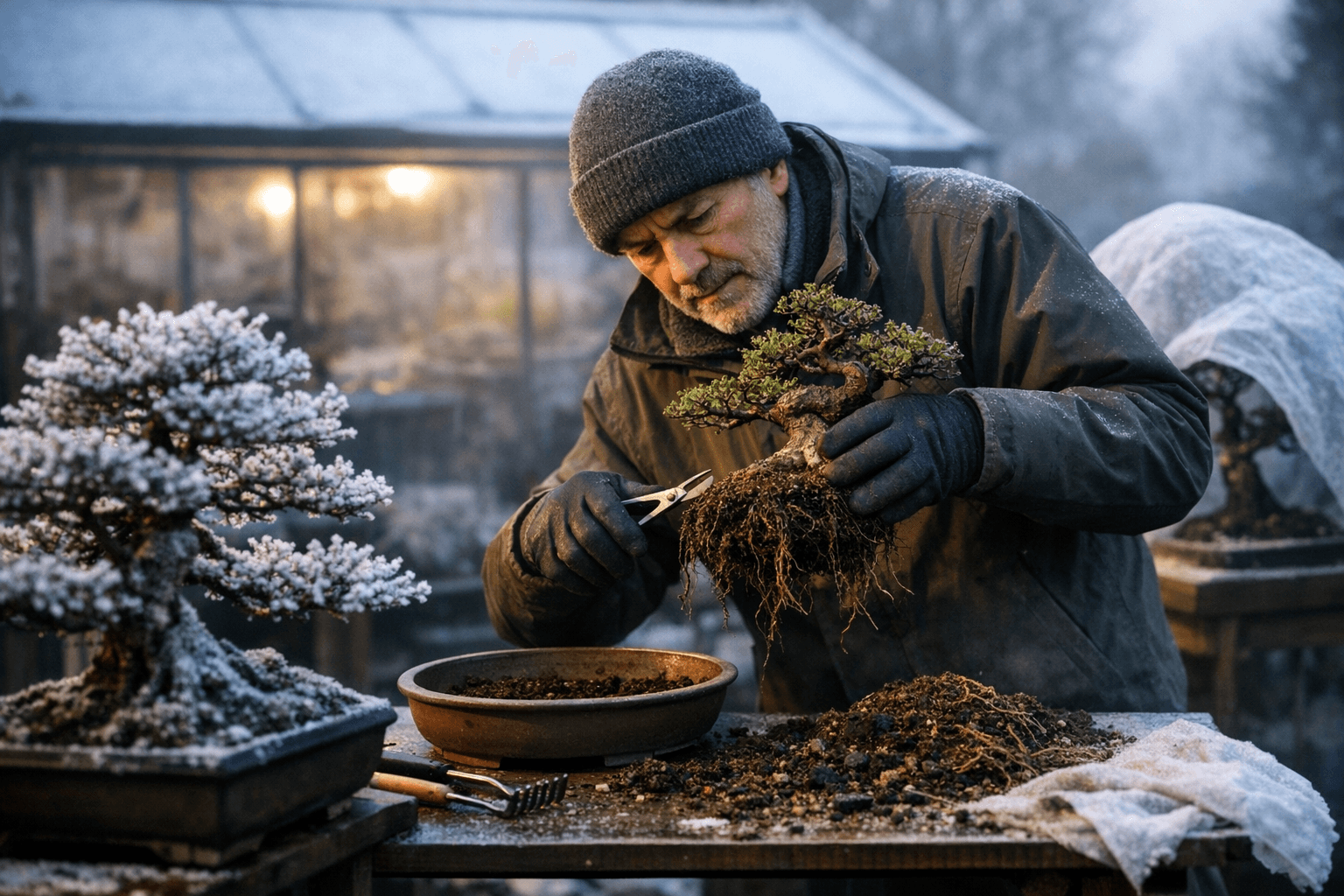
Work quickly but deliberately to preserve soil structure. Pre‑soak the new soil to help it seat around the root ball and avoid gaps. Remove the tree and clean the roots gently; use minimal force so you do not shred fine roots that supply water and nutrients. When pruning roots, be conservative: remove congested, circling roots and any long tap roots that will cause crowding, but keep plenty of fine roots to maintain uptake capacity.
Positioning matters as much as particles. Set the nebari level and angle with an eye to display, root flare, and root distribution. Backfill with the pre‑soaked soil, firming just enough to remove air pockets while keeping porosity. Water thoroughly after backfilling to settle the mix and begin rehydration. Place the repotted tree in a protected environment — out of full sun, wind, or heavy rain — until growth and root activity show the tree has reestablished.
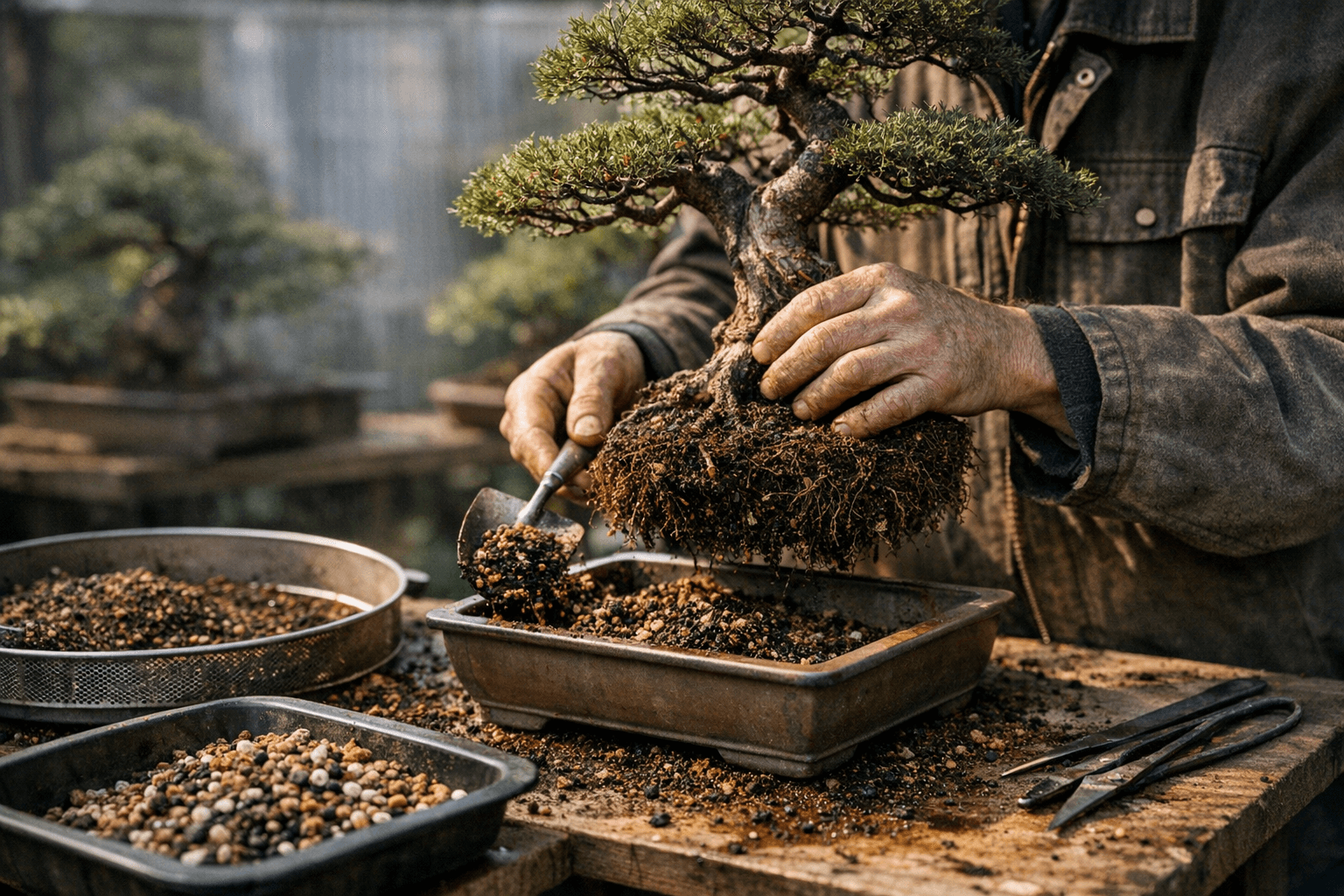
Practical tradeoffs define much of repotting: harder particles last but require more frequent or targeted fertilization; softer, organic components hold nutrients but break down and reduce porosity over seasons. Monitor the pot over the first watering cycles and adjust future mixes based on how quickly the soil dries and how the roots develop. Clubs and workshops typically demonstrate these choices hands‑on; use those sessions to test textures and recipes suited to your local conditions.
For community growers, mastering this balance prevents common failures: root rot from poor drainage, or chronic deficiency from overly free‑draining mixes. Repotting is both maintenance and design work—get the soil structure right and you set everything above the surface up to thrive.
Know something we missed? Have a correction or additional information?
Submit a Tip