Practical Field Repairs for Foul-Weather Jackets Using Tape, Adhesives, and Sewing
Practical, hands-on fixes for foul-weather jackets help sailors extend gear life with tape, adhesives, and sewing when professional repairs are impractical.
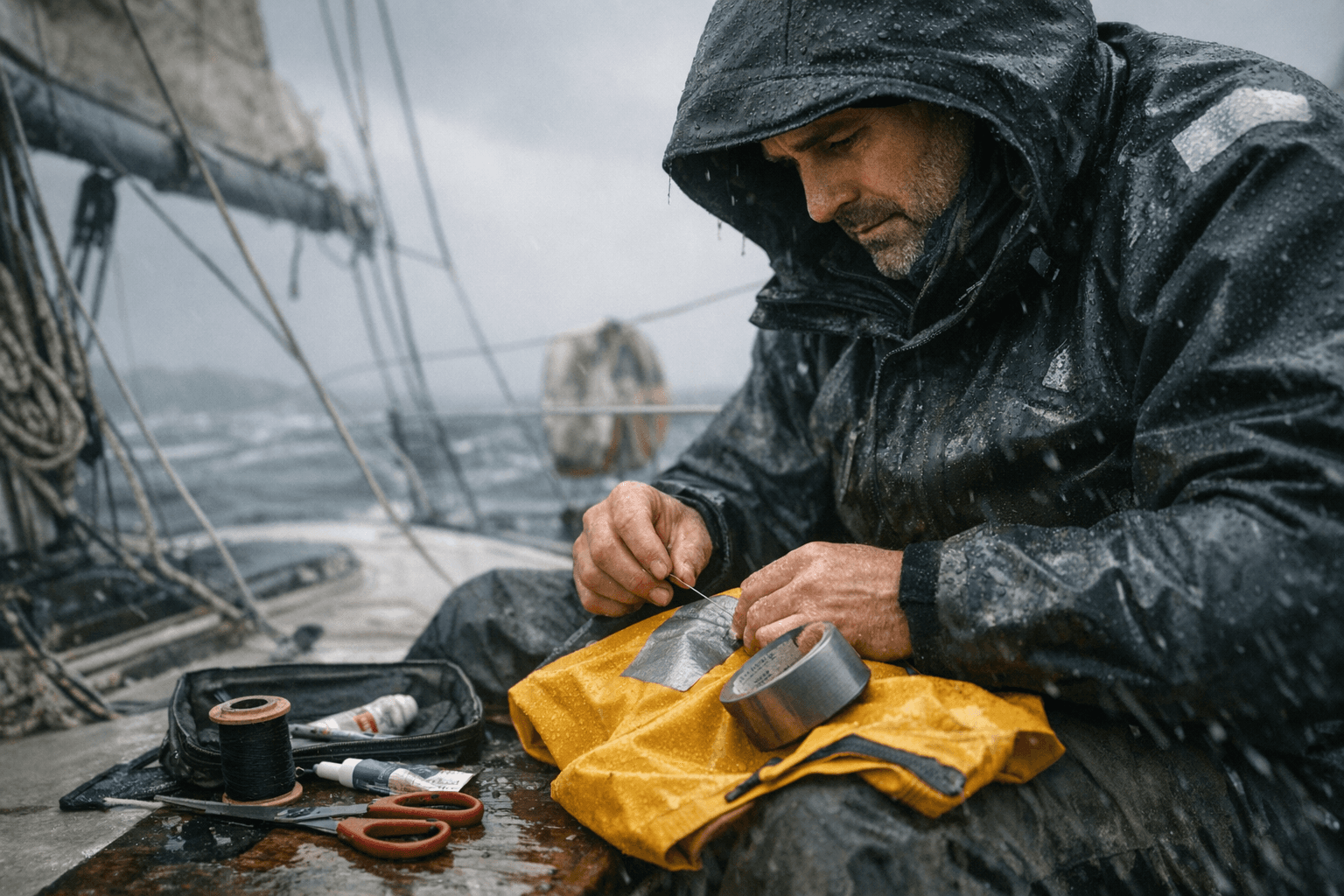
A concise, practical set of field-repair techniques will help sailors keep foul-weather jackets serviceable when shore repair is not an option. For cruisers on the move and weekend racers alike, temporary tape fixes, adhesive-bonded fabric patches, and judicious sewing can turn a ruined outer layer into reliable gear until a professional repair or replacement is possible.
Start with the decision: send gear to the manufacturer if the jacket is under warranty or if professional repair is required. Follow manufacturer guidance if warranty coverage is in play. When you are afloat or far from service, on-boat repairs can extend the useful life of well-worn garments and keep you dry during the next passage.
Use sail-repair tape for quick, short-term fixes and chafe protection on non-stretch areas such as hoods, pockets, and lower legs. Prepare the area dry and clean, round patch corners to roughly a 1/2-inch radius to reduce peel, and apply a patch on each side of the tear where possible. Use a seam rubber or roller to work the edges down, and avoid placing tape across heavily flexed or high-load seams where peel and failure are likely.
For stronger, longer-lasting repairs, use polyurethane adhesives. Products in this family include 3M Fast Cure 4200, Sika adhesives, and Aquaseal FD. Remove the durable water-repellent (DWR) finish and any surface contamination with detergent or solvent before bonding. Patches should extend at least 5/8 inch beyond the damage in all directions and have rounded corners. Allow adhesives to cure fully; many require days to reach full strength, though accelerators are available for some products. Note that many polyurethane adhesives cure more reliably on damp-but-not-soggy fabric because some cure chemistry uses ambient moisture; still, surface dryness and firm clamping or pressure during cure are important for a durable bond.
Sewing adds structural strength but usually creates leak paths. Reserve stitched repairs for structural or high-load areas and apply seam-sealer products afterwards to restore waterproofing. For many repairs, adhesive-bonded fabric patches, for example using Sunbrella or similar heavy-duty fabric, outperform sewn-only fixes because they avoid stressing old cloth with needle holes.
Clean prep is the foundation of any successful repair. Remove DWR and contaminants, use appropriate solvents sparingly, and ensure good contact and consistent pressure during adhesive cure. Use tape for quick temporary stops, adhesive fabric patches for longer-term repairs, and sewing only where structure demands it.
What this means for sailors is practical: with the right materials and prep you can keep a foul-weather jacket afloat through a season of cruising. Stock a small repair kit with tape, a polyurethane adhesive, spare fabric, a seam roller, and seam sealer, and you will be able to make repairs that are watertight and durable until you can access professional service.
Know something we missed? Have a correction or additional information?
Submit a Tip