Practical Four Corners Stargazing Guide: Timing, Sites, Respect, Photography
A new moon on January 18, 2026 created a prime dark-sky window; plan within three nights on either side and choose Chaco, Bisti/De-Na-Zin, Canyonlands, or Monument Valley pullouts while respecting permits and tribal rules.
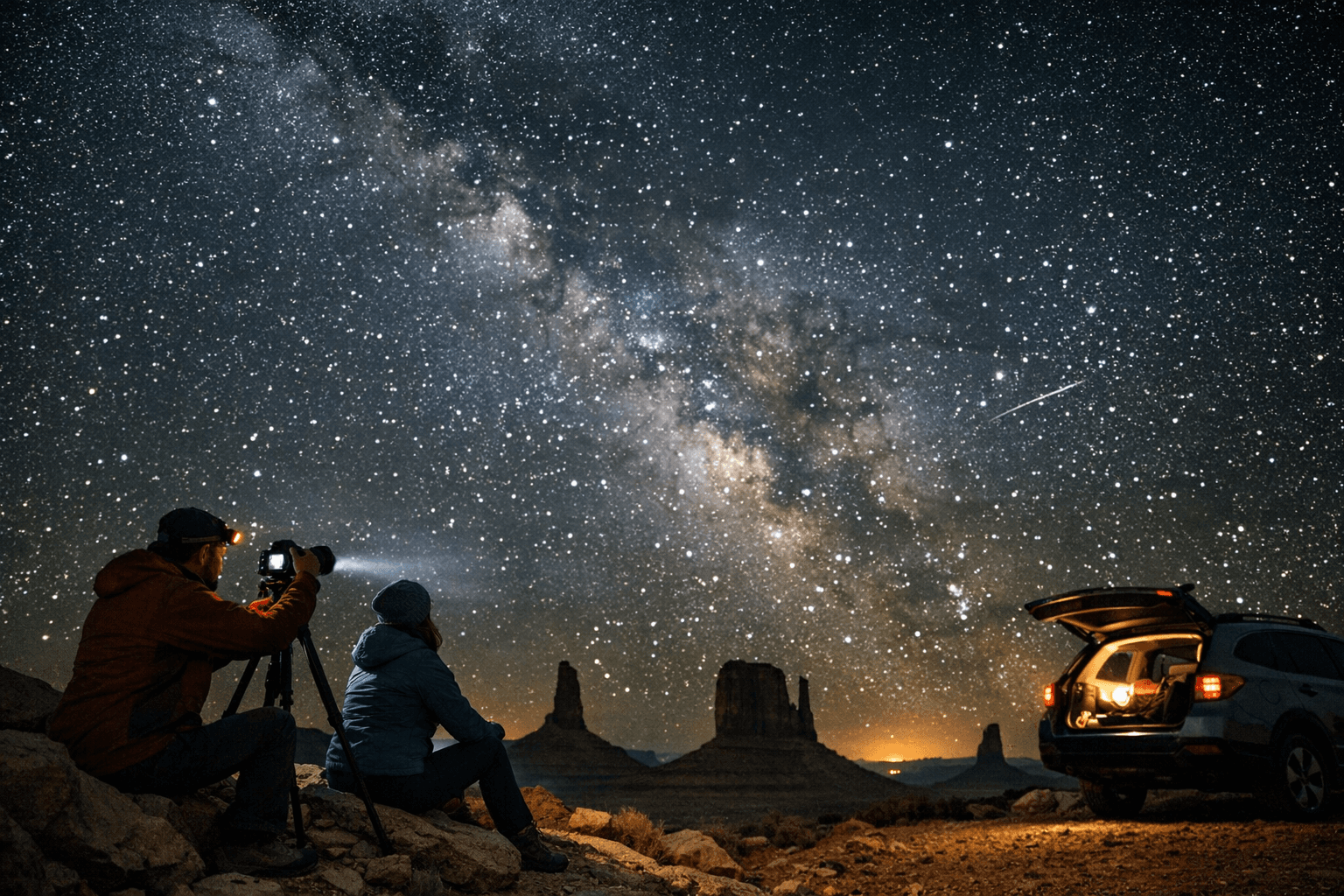
A new moon on January 18, 2026 opened one of the best recent windows for stargazing across the Four Corners. For travelers and photographers this matters because moonless nights produce the darkest skies; plan visits within three nights on either side of a new moon and avoid full moon nights to maximize visibility and milky way contrast.
Pick your site to match goals. Chaco Culture National Historical Park delivers very dark skies plus cultural programming that can enrich an evening. Bisti/De-Na-Zin Badlands offers remote, otherworldly foregrounds for silhouette work and nightscape compositions. Canyonlands National Park rewards skywatchers on the Islands in the Sky and Needles rims, where elevation and broad horizons help seeing to the horizon. Selected BLM pullouts near Monument Valley and other remote high plateaus can work well when road conditions and access rules allow.
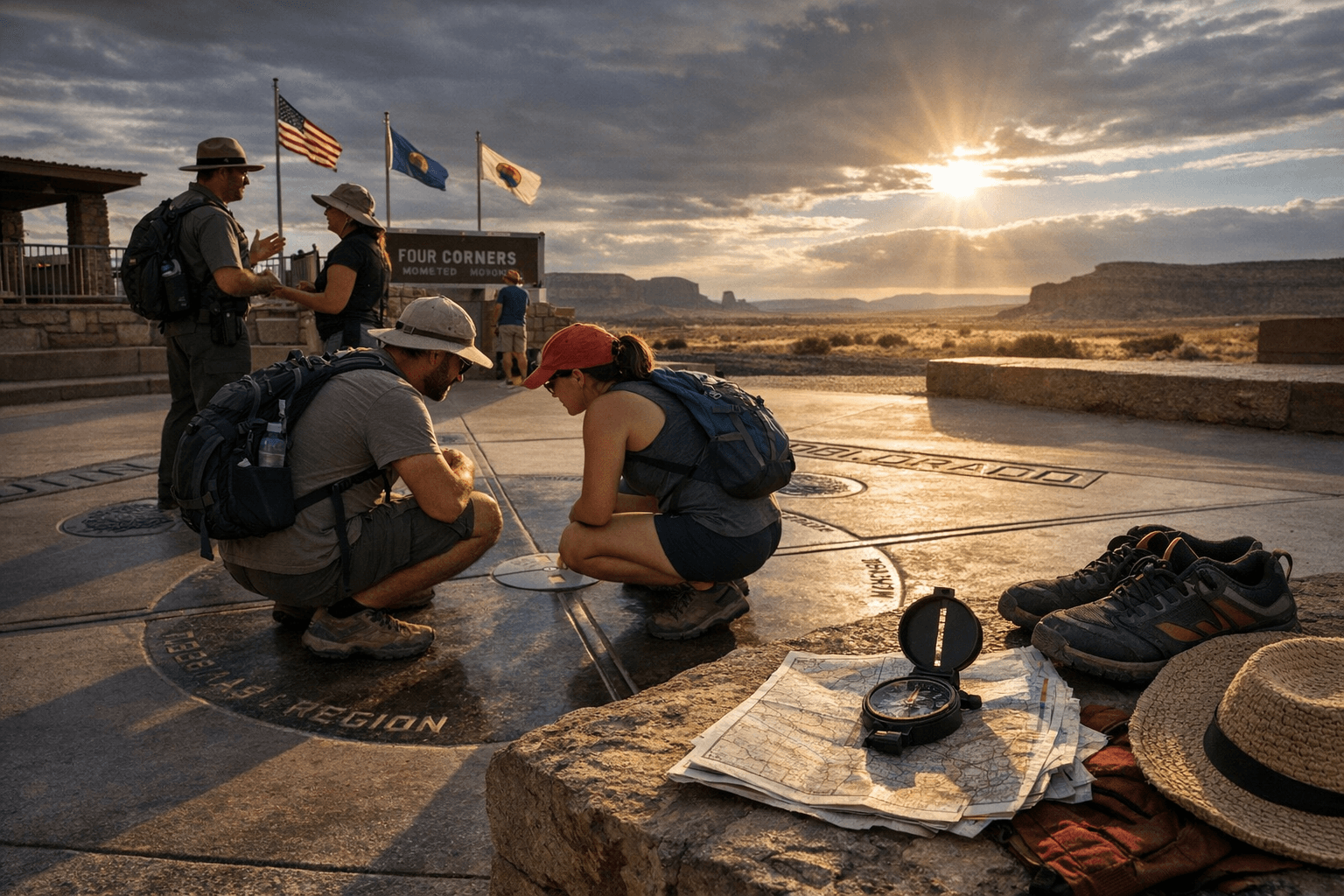
Permits and respect matter as much as optics. Check whether trailheads or parking areas require permits before you leave. Do not trespass on tribal lands; the Navajo Nation maintains specific rules and guided-access requirements in many areas around Monument Valley and other sites, so obtain permission where required. Never disturb archaeological or ceremonial sites; pack out all waste and minimize campsite impact to preserve fragile landscapes for the next observer.
Practical safety and logistics reduce risk on cold desert nights. Carry a paper map and GPS, and tell someone your route and return time. Bring warm layers because desert temperatures can plunge overnight, plus water, a headlamp with a red filter, a charged phone and power bank, and a vehicle emergency kit. In very remote locations bring an emergency satellite communicator. Winter snow and spring runoff can make backroads impassable, so verify road status and be prepared to use a high clearance vehicle or 4x4 on some BLM routes.
For photography, use a fast wide lens at f/2.8 or faster, mount on a solid tripod, and set manual focus to infinity. Start with 20-25 second exposures to balance star trails and sensitivity, and use a low ISO setting to reduce noise while bracketing exposures for foreground focus stacking. Manual exposure bracketing helps combine star detail with sharp foregrounds in post processing.
Respectful, well-prepared trips keep the Four Corners dark and welcoming. Check local moon phase calendars and park or tribal advisories before heading out, verify permits and road conditions, and pack the essentials so your next night under the sky is safe, legal, and photo-ready.
Know something we missed? Have a correction or additional information?
Submit a Tip