Pro-AI Political Group Plans to Spend $100 Million in 2026 Midterms
Innovation Council Action plans to spend $100M+ in the 2026 midterms to back pro-deregulation candidates, while a rival AI super PAC has drawn sharp White House warnings.
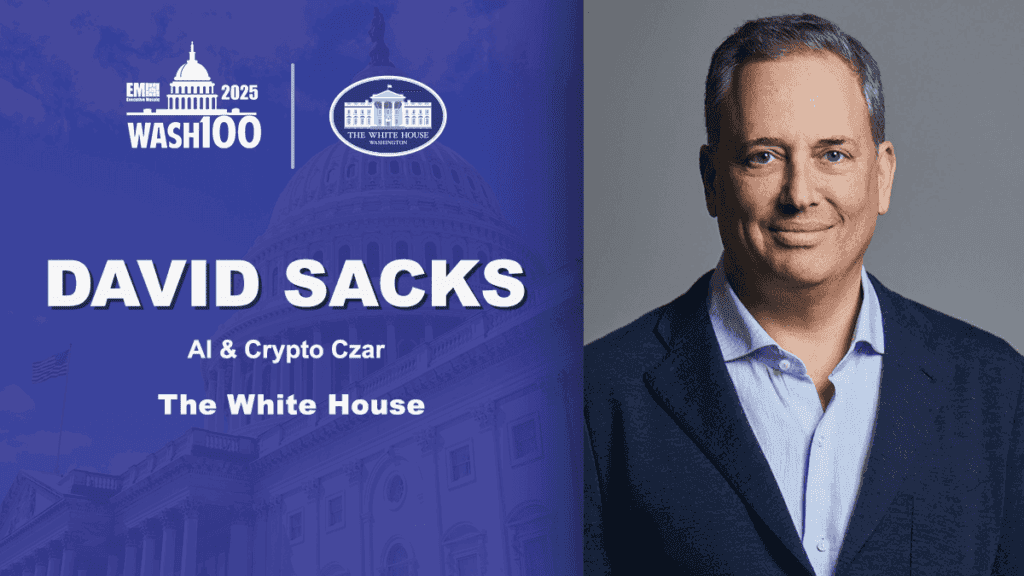
The scorecard already exists. Innovation Council Action, a new political organization championed by White House AI adviser David Sacks and founded by Taylor Budowich, has quietly ranked lawmakers by their alignment with President Donald Trump's AI agenda and is now deploying more than $100 million in the 2026 midterms to reward allies and punish holdouts.
Budowich framed the stakes in direct terms. "President Trump has made it clear, America will win the AI race against China, period. He built the framework, he's leading from the front, and this organization exists to make sure he doesn't fight that battle alone," he told Fox News Digital. "The cavalry is coming to back up the policymakers who stand with the president and will hold accountable the ones who don't."
Innovation Council Action has been building its Washington, D.C. presence since late last year, opening an office and assembling funding before formally entering the midterm cycle. The group plans to support candidates who favor deregulation while opposing those pushing for stricter AI rules, and a lawmaker scorecard, first reported by Axios, is expected to serve as the primary tool guiding where that money flows.
The group enters a cycle already thick with AI-related political spending. Leading the Future, a separate super PAC backed by OpenAI President Greg Brockman, venture firm Andreessen Horowitz, and Palantir co-founder Joe Lonsdale, has raised $125 million to target pro-regulation candidates from both parties in 2026. That bipartisan orientation has put Leading the Future directly at odds with the White House. The group launched in August without consulting the administration, and one of its leaders is a former top staffer to Senate Minority Leader Chuck Schumer. A White House official warned: "Any group run by Schumer acolytes will not have the blessing of the president or his team," and added that donors "should think twice about getting on the wrong side of Trump world." Among the donors now under the White House's scrutiny: Marc Andreessen, the billionaire co-founder of Andreessen Horowitz and a close Trump adviser, alongside Ron Conway, the founder of SV Angel who backed Democratic presidential nominee Kamala Harris in 2024.
The divergence between the two groups reflects broader tension at the center of Trump's AI push. A 2025 executive order accelerated AI data center construction by cutting federal red tape, fast-tracking environmental reviews, opening federal land for development, and speeding permitting. Trump has pushed for a single national regulatory framework to replace what he describes as a patchwork of state laws. That goal advanced only partially: Congress's "One Big Beautiful Bill" initially included a 10-year ban on states passing their own AI regulations, but the provision was stripped before final passage.
NVIDIA CEO Jensen Huang has publicly commended Trump's AI agenda, outlining on Fox News' "Special Report" what the country's job future could look like under accelerated AI development. But the political math is unsettled. If electricity prices keep rising and AI-linked job losses mount before November, Democrats have a ready argument that the administration handed a small group of tech insiders control of the grid, the labor market, and the halls of Congress while ordinary Americans absorbed the costs. If the AI boom produces visible economic growth traceable to deregulation, Republicans have a credible vindication story.
With more than $225 million in declared AI-related political spending now committed for the 2026 cycle, control of that narrative, and the Congress that shapes it, is openly in play.
Know something we missed? Have a correction or additional information?
Submit a Tip