Progressive Pumping Techniques to Extend Surf Foil Flight Without Motors
Pumping uses body and board motion to extend foil flight, giving riders longer, self-propelled rides and transferable skills across surf, downwind, wake, wing and kite foiling.
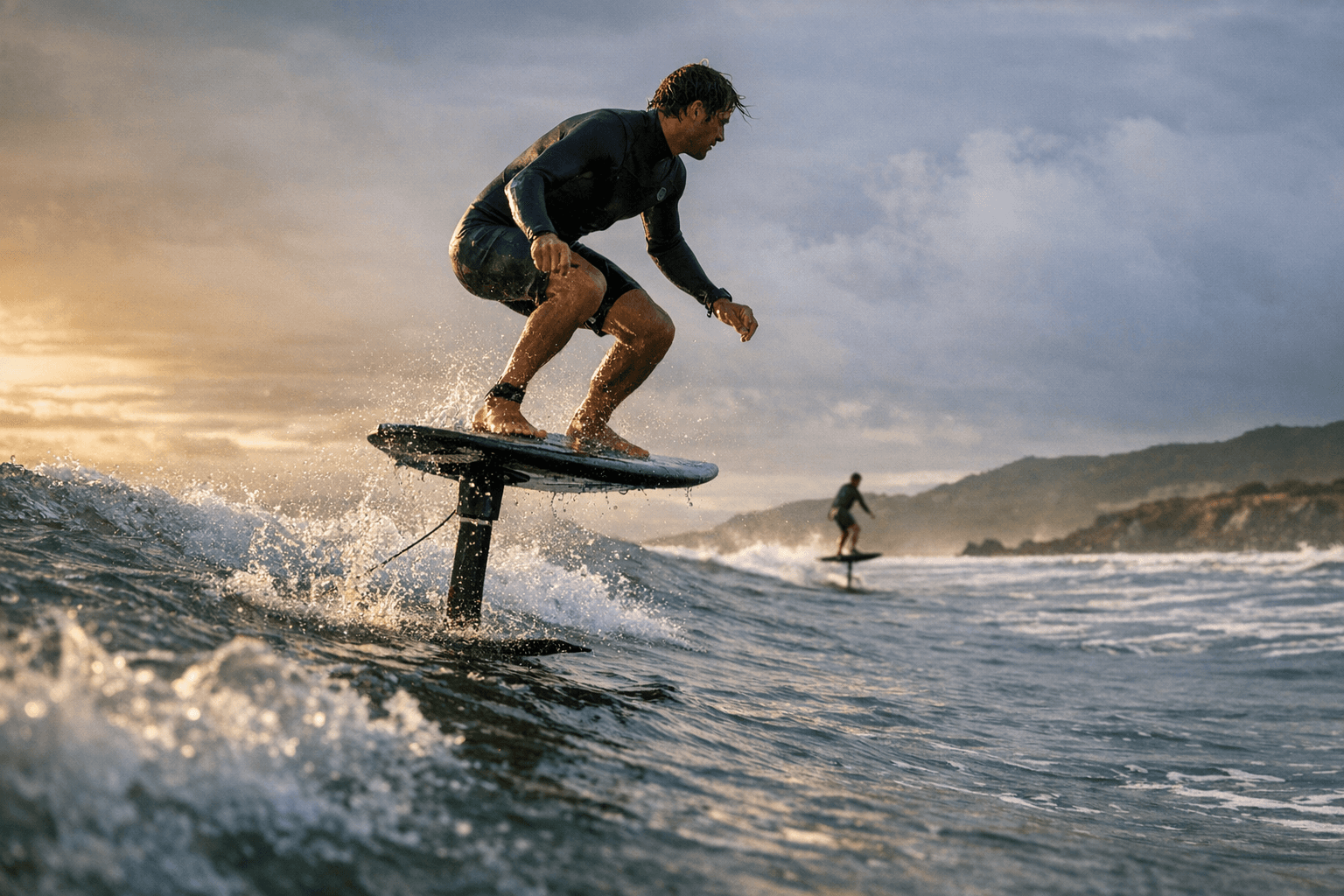
Pumping (using body/board motion to generate lift and speed) is the single most transferable human technique for foil surfers who want longer flights without motors or towing."
That line captures the practical upside: learn to pump and you can extend flight time, reduce reliance on powered aids, and unlock new lines across water types. Pumping translates into recoverable height, sustained glide and stronger control at the foil-water interface, and it is the core movement many riders are drilling to turn short hops into long, engine-like runs.
Technique is straightforward to practice but precise in execution. Key, repeatable cues include: "Keep your stance shoulder-width apart." "Drive about 60% of the pump from the front foot." "Think of the back foot as a hop upward, not a push down." "Look forward, not down, to stay balanced." "Use shorter, quicker pumps for efficiency." Over time the movement evolves: "With time, your movement will shift from frantic bounces to smooth, flowing glides. That’s when pump foiling really clicks."
Beginners most commonly enter pump foiling with dock starts. The most common entry to pump foiling is the dock start. This involves running along a dock or pontoon, jumping onto your hydrofoil board, and landing balanced enough to begin pumping. [...] Once you can get stable from a dock start, set concrete progression goals: "Go further set yourself a target to get to and ideally back." Try practical routes: "Go somewhere. Pump down the river, across the harbour or to another launch point to ride further along a river or lake." Apply the skill to different conditions: "Use your new skills to ride downwind swells, wakes or unbroken waves."
Applications cross foiling disciplines. "Surf foiling: Pump back out to sea after catching a wave." "Downwind foiling: Link swells that are otherwise out of reach." "Wake riding: Ride small wakes behind boats or glide across harbours." "Wing & kite foiling: Extend flight time during lulls or between waves." Riders report that mastering pump foiling can change session strategy - one experienced contributor says, "It has helped my downwinding no end – when I first did a wing downwinder I relied on the wing to link the bigger swells together. Now I will rarely use the wing as I pump between swells and maintain height on the foil to make it easier to ride the smaller swells."
There are physiological and performance payoffs. "The key take away I have seen for myself is in the ability to keep high on the mast so the foil is just under water where it is most efficient as well as the ability to regain height. As well as the endurance as pump foiling will definatly get the heart rate up." Expect cardiovascular work alongside skill gains; endurance becomes part of the progression as much as technique.
Pump foiling is presented as foundational: "With practice, pump foiling can make you feel like your board has its own engine—and that’s the magic of mastering self-propelled flight. [...]" For riders, that means a clear, actionable pathway: nail stance and front-foot drive, master dock starts, set distance targets, and practice short, efficient pumps until the movement smooths. The next step for the community is to turn these progressions into coached drills and measured tests of flight length so riders can quantify gains and tailor gear choices as they advance.
Know something we missed? Have a correction or additional information?
Submit a Tip