Pronto eyes $200 million valuation in new Lachy Groom-led funding round
Investors are betting Pronto can turn India’s domestic-help market into a high-velocity platform, even as its valuation jumps from $100 million to about $200 million in weeks.

Pronto is closing a new Lachy Groom-led round that would value the Gurugram-born house-help startup at about $200 million, a near-doubling from its March price and a sharp signal that global investors see more than a niche convenience play in India’s hyperlocal services economy.
The deal is expected to raise about $15 million to $20 million in fresh capital and would come only weeks after Pronto sold $25 million in Series B shares at a $100 million valuation. That March round was led by Epiq Capital, with General Catalyst and Bain Capital Ventures also backing the company. Pronto, founded in 2025, first emerged from stealth with a $2 million seed round in May 2025 at a $12.5 million post-money valuation, then added $11 million in Series A funding in August 2025 from General Catalyst, Glade Brook Capital and Bain Capital Ventures.

The latest financing would extend a valuation run that has been unusually fast even by India startup standards. Pronto said in March that it had expanded from one city to 10, including Delhi NCR, Bengaluru and Mumbai, and from five micromarkets to more than 150. The company also said it was moving from roughly 1,000 daily bookings last year to about 18,000 in March and now to about 24,000 to 25,000 orders a day, with around 500,000 orders completed in the prior month.
That growth has turned Pronto into one of the clearest tests of whether instant home services can sustain the kind of demand that quick-commerce investors typically prize. The startup offers housekeeping, laundry, cleaning and meal prep, with bookings available immediately or on schedule, and it says its shift-based model is designed to organize India’s fragmented domestic-help market. Its founder and chief executive, Anjali Sardana, has argued that the business is meant to address worker exploitation through a “win, win, win business” approach and that workers should not be treated like commodities.
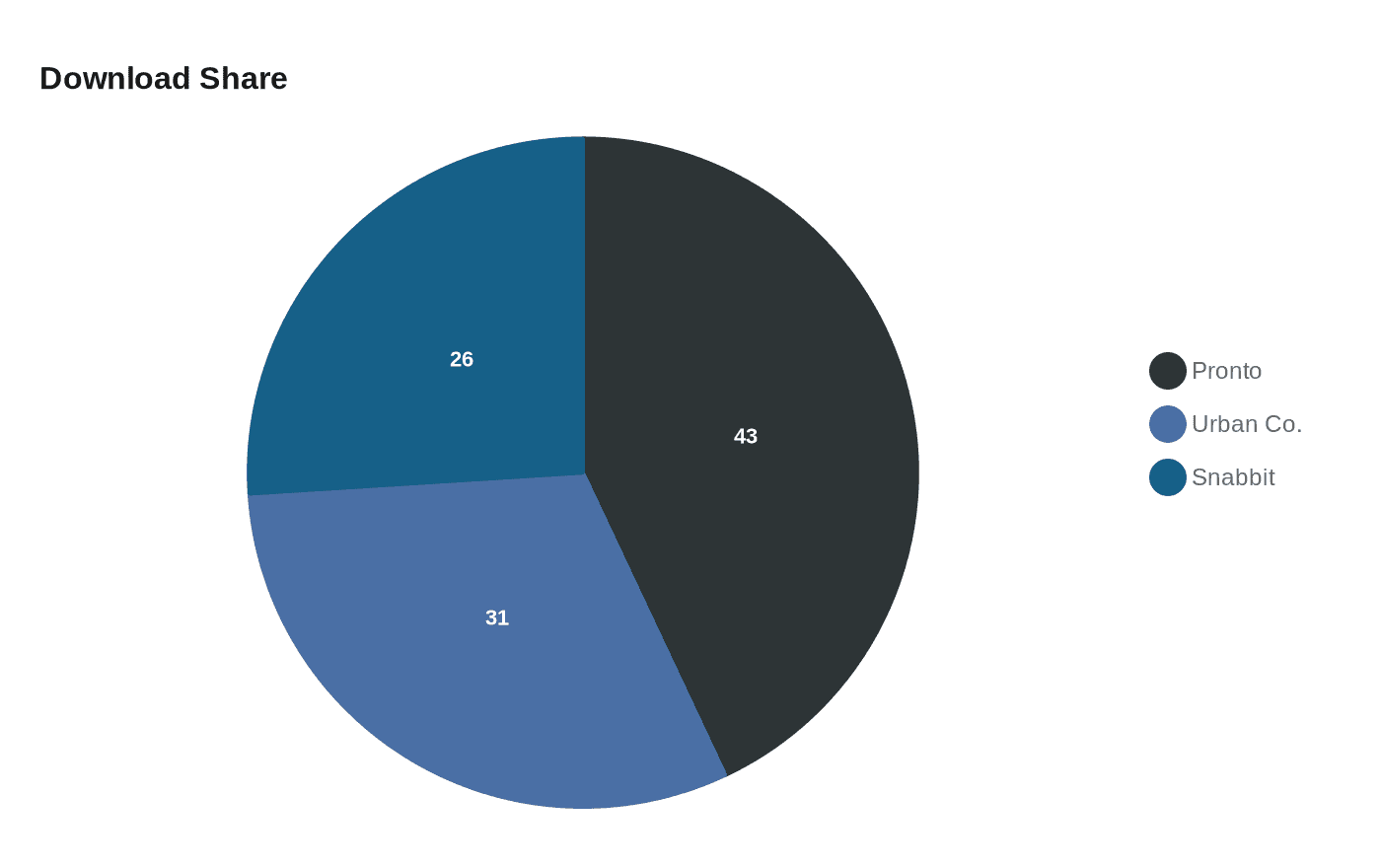
Competition is intensifying just as capital is pouring in. Pronto’s rival Snabbit is also in talks for a large new round, while market data has shown Urban Company leading the category in monthly active users and daily active users. Pronto, however, has posted the strongest month-on-month gains in app downloads, and in March it held a 43% share of downloads among the three main players, ahead of Urban Company at 31% and Snabbit at 26%.
The sector’s appeal is matched by its discomfort. The business relies on a largely informal, female-heavy workforce, and Pronto’s training hub teaches women not only cleaning and mopping skills but also how to send SOS signals if they feel unsafe inside customers’ homes. With services priced at about $1 an hour, the market is expanding fast enough to attract capital, workers and consumers, but the speed of that expansion is also raising the question that now hangs over Pronto’s soaring valuation: real demand, a capital-fueled land grab, or a market getting ahead of itself.
This article was produced by Prism’s automated news system from verified source data, official records, and press releases, then run through automated quality and moderation checks before publishing. The system is built and supervised by the people who set the standards it runs under. Read our full AI policy.
Did this article answer your question?