Putin and Xi showcase steady ties with tea diplomacy in Beijing
Putin’s Beijing tea meeting with Xi capped a summit packed with 40 documents, a 47-page statement and fresh signals of China-Russia defiance after Trump’s visit.

A tea table in Beijing became the most loaded stage in Vladimir Putin’s latest courtship of Xi Jinping, as the two leaders used a two-day state visit to project steadiness, personal trust and strategic alignment after Donald Trump’s recent meetings with Xi.
Putin’s trip to China, scheduled for May 19-20, centered on a summit in Beijing that was set to cover bilateral and international issues. The Kremlin lined up a signing ceremony, a banquet and an informal tea-and-dinner session, all framed as proof that the relationship between Moscow and Beijing remained tight despite war, sanctions and pressure from Washington.

The summit also carried a heavy paper trail. Roughly 40 documents were expected to be signed, and a 47-page joint statement was prepared on the strengthening partnership. Kremlin aide Yury Ushakov said the leaders were expected to adopt a declaration on the emergence of a multipolar world order and a new type of international relations, signaling that the meeting was meant to produce more than photographs and ceremonial warmth.
The timing sharpened the political message. Putin arrived less than a week after Trump’s meetings with Xi in Beijing, a sequence that gave the summit the feel of geopolitical theater with concrete stakes. Beijing entered the encounter with more leverage, while Moscow had reason to want public reassurance that China had not drifted toward Washington after Trump’s high-profile visit.
The symbolism of tea mattered because both governments have used it to signal intimacy and calm under pressure. Xi hosted Putin over tea outdoors in Zhongnanhai during their May 2024 talks, a setting that suggested familiarity rather than formality. In Beijing now, the same imagery helped both leaders present their bond as durable, personal and resistant to outside disruption.
Beneath the ceremony sat hard economics. The long-discussed Power of Siberia 2 pipeline, if commercial terms are settled, could eventually carry 50 billion cubic meters of gas a year from Russia’s Arctic fields through Mongolia to China. Other coverage said Russia boosted oil supplies to China by more than a third to 31 million tonnes in the first quarter of 2026, underscoring how energy has become one of the clearest pillars of the partnership.
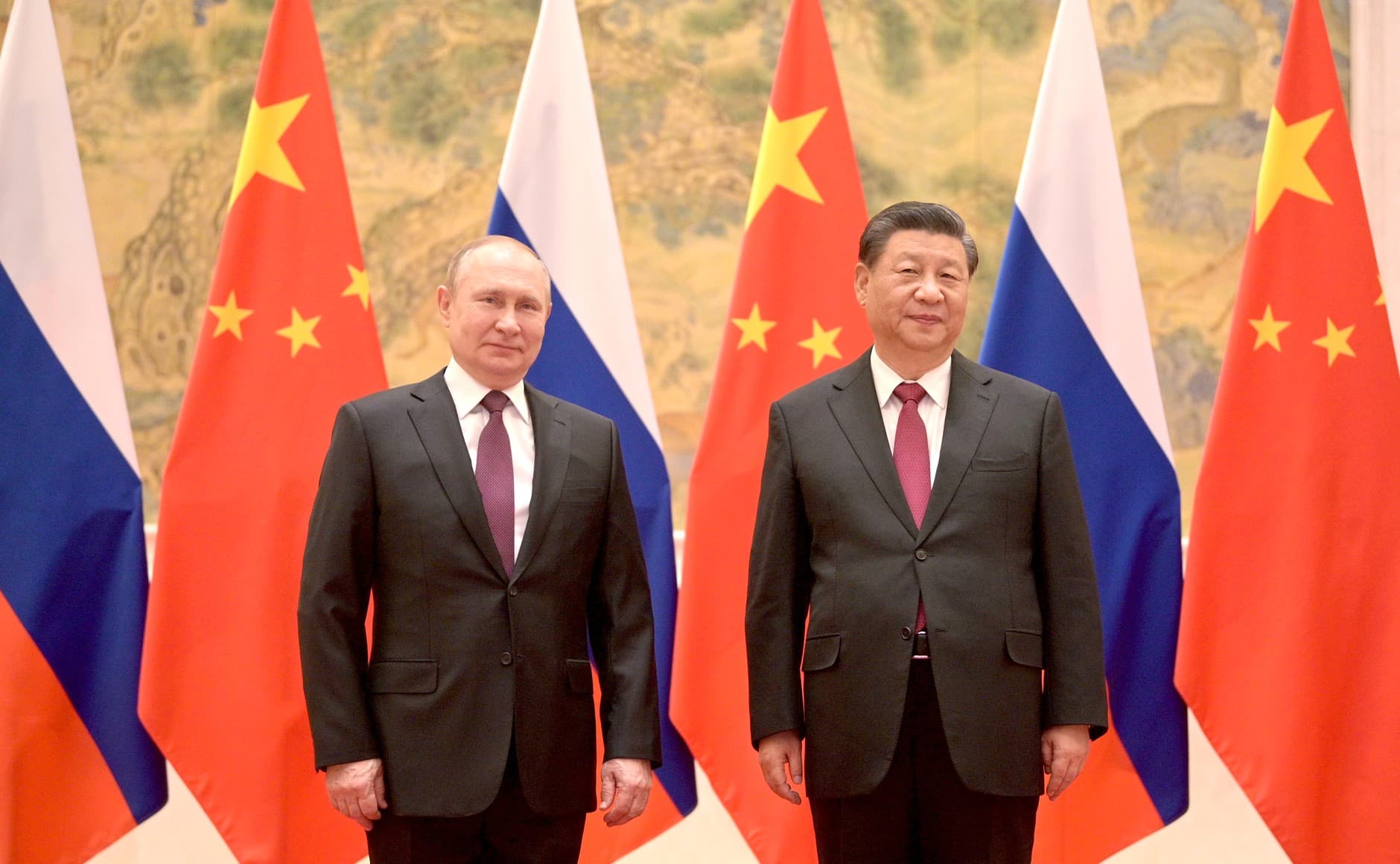
For China, the meeting reinforced Beijing’s role as a diplomatic center of gravity at a moment of global instability. For Russia, it was a reminder that even under battlefield strain and Western sanctions, the Kremlin still had a powerful partner willing to receive Putin at the highest level and help keep the war-time alignment intact.
Know something we missed? Have a correction or additional information?
Submit a Tip