Putin uses scaled-back Victory Day parade to justify Ukraine war, denounce NATO
Putin turned a stripped-down Victory Day parade into a wartime argument, even as the missing tanks and blocked internet underscored Moscow’s security fears.
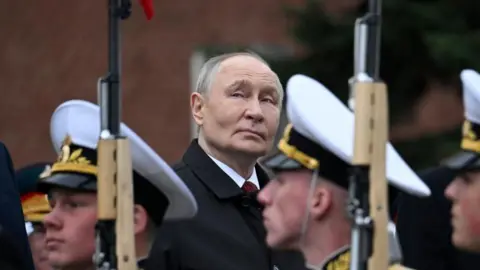
Vladimir Putin used a stripped-down Victory Day parade in Moscow’s Red Square on Saturday to cast the war in Ukraine as a fight against NATO, even as the ceremony itself exposed the Kremlin’s tighter wartime limits. With no tanks, missiles or other heavy military vehicles rolling across Red Square for the first time in nearly two decades, the annual showcase of military power became a more guarded display of control.
Putin told the crowd that Russian soldiers in Ukraine were fighting an "aggressive force" backed by the entire NATO bloc. He framed the campaign as a "just" cause and praised the courage and unity of Russian troops, using Russia’s most important secular holiday to reinforce support for the war launched in 2022. Victory Day marked the 81st anniversary of the Soviet Union’s victory over Nazi Germany, a date the Kremlin treats as central to national pride and wartime sacrifice.
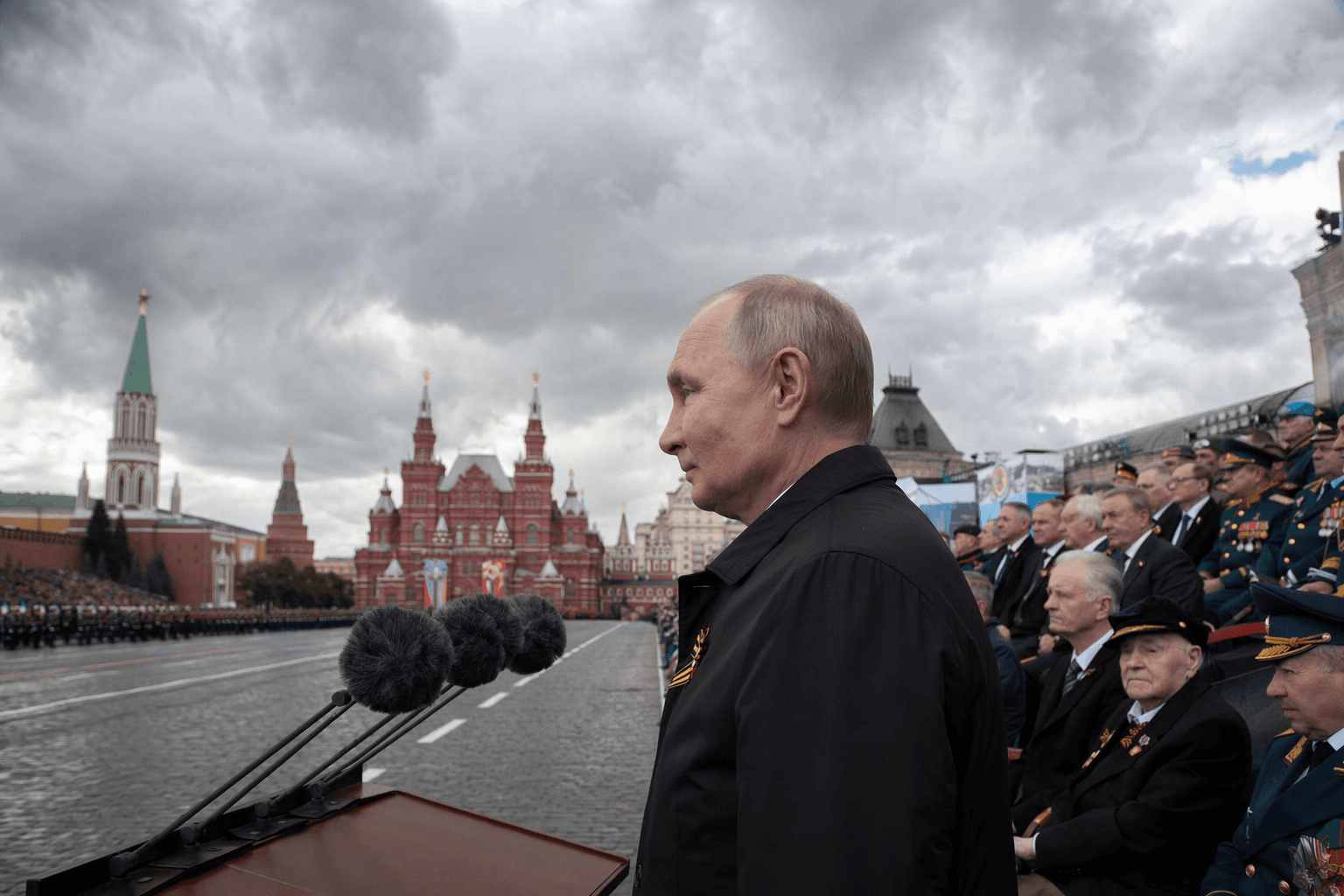
The pared-down parade highlighted how heavily security concerns shaped this year’s commemoration. Russian officials said the reduced format was driven by the "current operational situation" and the threat of Ukrainian attacks. Mobile internet access was blocked in Moscow and other cities, and the ceremony was protected by additional security measures as fears of drone strikes hung over the capital.
The contrast with the holiday’s usual pageantry was stark. Victory Day is designed to project strength, but this year’s event suggested a leadership managing the image of power under pressure. The absence of heavy armor on Red Square, combined with the tightened security in the center of Moscow, reflected the strain of a war that has dragged on for more than two years and has left Russia increasingly isolated.
The parade also unfolded against a fragile diplomatic backdrop. The United States announced a three-day ceasefire from Saturday to Monday, backed by Russia and Ukraine, along with a planned exchange involving 1,000 prisoners. Earlier unilateral ceasefires by both sides had collapsed amid mutual accusations of violations, leaving little confidence that the new pause would hold.
Foreign leaders attending the Moscow ceremony included Sultan Ibrahim Iskandar of Malaysia, Thongloun Sisoulith of Laos, Kassym-Jomart Tokayev of Kazakhstan, Shavkat Mirziyoyev of Uzbekistan and Belarusian leader Alexander Lukashenko. Slovak Prime Minister Robert Fico was also expected in Moscow for associated commemorations, underscoring that Russia still drew a handful of sympathetic guests even as much of the West remained absent.
Volodymyr Zelensky earlier mocked the Kremlin’s security fears and said Ukrainian weapons would not target Red Square. Russian officials warned that any attempt to disrupt the celebrations could trigger a massive missile strike on Kyiv, sharpening the sense that the parade was being staged under the shadow of escalation as well as remembrance.
Know something we missed? Have a correction or additional information?
Submit a Tip