Rand Paul Opposes Trump's Iran Strikes, Weighs In on New DHS Secretary
Rand Paul broke with his own party twice in weeks: voting alone against Trump's Iran war and blocking the DHS nominee he called a man with "anger issues."

Six broken ribs. That is what Rand Paul says he carries from the 2017 neighbor assault that Markwayne Mullin, Trump's pick to lead the Department of Homeland Security, allegedly bragged he "completely understood." When Mullin sat before Paul's Senate Homeland Security Committee on March 18 for his confirmation hearing, the Kentucky Republican made clear the personal score was inseparable from the constitutional one.
Paul, the committee chairman, opened by accusing Mullin of having "anger issues" and demanding he explain to the country "why they should trust a man with anger issues to set the proper example for ICE and Border Patrol agents." He pointed to a 2023 Senate hearing in which Mullin appeared to square up for a physical fight with a witness. Mullin, who leads the Oklahoma Republican's Senate profile, refused to apologize. Paul cast the lone Republican no vote when the Senate confirmed Mullin days later.
That vote made Paul the most visible GOP dissenter in Washington right now, and it came on top of a larger break he had already opened: his opposition to President Trump's decision to launch strikes on Iran without congressional approval.
U.S. and Israeli forces hit Iran beginning February 28, killing Supreme Leader Ayatollah Ali Khamenei and dozens of senior officials. Trump informed the so-called Gang of Eight but sought no authorization vote. Paul co-sponsored a bipartisan war powers resolution with Democratic Sen. Tim Kaine of Virginia, and when the Senate rejected it, Paul was the only Republican to vote yes. The chamber has now turned down similar resolutions three times.
Paul has framed his opposition in strict constitutional terms: Congress alone holds the power to declare war. But he has been equally blunt about the fiscal stakes. The Iran war has already cost at least $12 billion, and Defense Secretary Pete Hegseth confirmed the Pentagon submitted a $200 billion funding request to the White House. "I'm not for adding more debt," Paul said. "I think adding more makes us less safe." He called for de-escalation and said the war "should come to a conclusion as soon as possible."
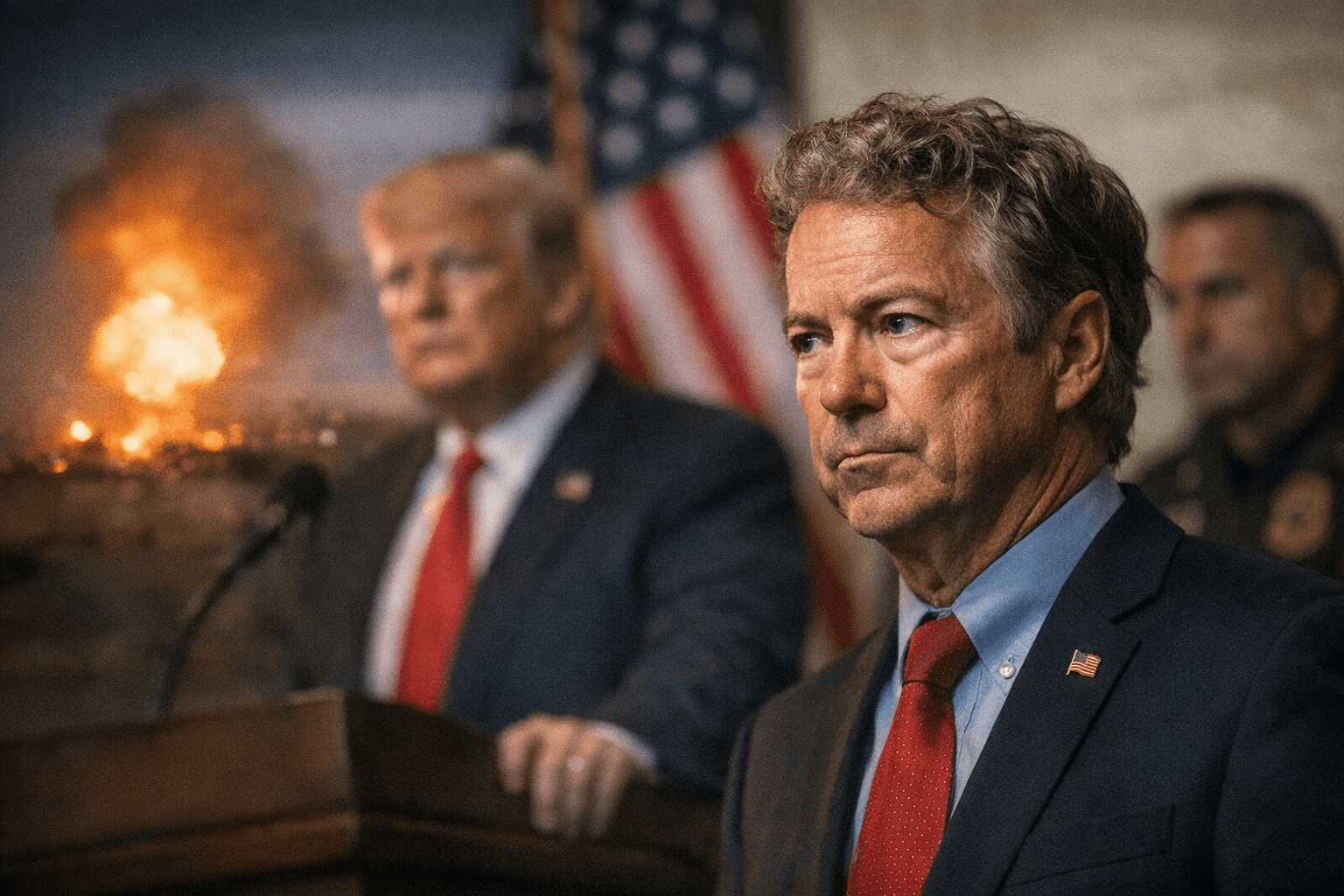
His frustration extends to his own party's passivity. "The congressional leadership, resigned to their own irrelevance, will gladly hand the president the power to initiate war in exchange for plausible deniability," Paul said, a line that drew as much attention for who it targeted as for what it argued.
The double defiance puts Paul in a structurally unusual position. As Homeland Security chairman, he controls the pipeline for nominees, hearings, and oversight of the very border security and immigration enforcement apparatus that defines Trump's domestic agenda. His willingness to use that leverage, by threatening to cancel Mullin's committee vote before ultimately proceeding, signals that his dissent carries procedural teeth, not just rhetorical ones.
Paul is also weighing a 2028 presidential run, telling CBS News correspondent Robert Costa the odds are about "50-50." His positioning on Iran and DHS reads, at minimum, as a test of whether a Republican can build a distinct national security brand independent of Trump while still holding real committee power inside a GOP-controlled Senate. Whether that calculation survives in a caucus that has repeatedly rejected his war powers resolutions remains the central unanswered question.
Know something we missed? Have a correction or additional information?
Submit a Tip

