Rare Ice Age cave beneath Pembroke Castle reveals early human life
Beneath Pembroke Castle, Wogan Cavern has yielded bones, tools and human traces reaching back more than 100,000 years, a rare Ice Age record for Wales.
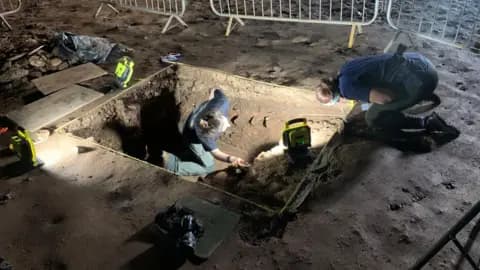
Beneath Pembroke Castle in Pembrokeshire, Wogan Cavern has emerged as one of the most significant prehistoric sites yet found in Wales, with archaeologists saying the cave preserves evidence of human and animal life stretching back more than 100,000 years.
The cave’s sediment layers have already produced bones from mammoths, woolly rhinoceroses, reindeer, wild horses and hippopotamuses, along with stone tools and signs of human occupation. Researchers say the mix of finds points to repeated visits over many millennia, creating a long record of life at the edge of Ice Age Britain.
Initial excavations in 2024 changed what researchers thought they knew about prehistoric Wales. The evidence recovered then suggested that the cave was used not only by animals moving through changing climates, but also by early humans, including traces linked to Homo sapiens and possibly Neanderthals. That combination has made the site unusually important for understanding how people lived through severe climate shifts long before the medieval castle was built above it.
The University of Aberdeen has now received funding from the Calleva Foundation to lead a five-year study of the site, with Dr Rob Dinnis returning to direct the next stage of work. Excavations are scheduled to resume at the end of May, giving archaeologists another chance to document the cave’s deeper layers and test how far back the occupation record really runs.
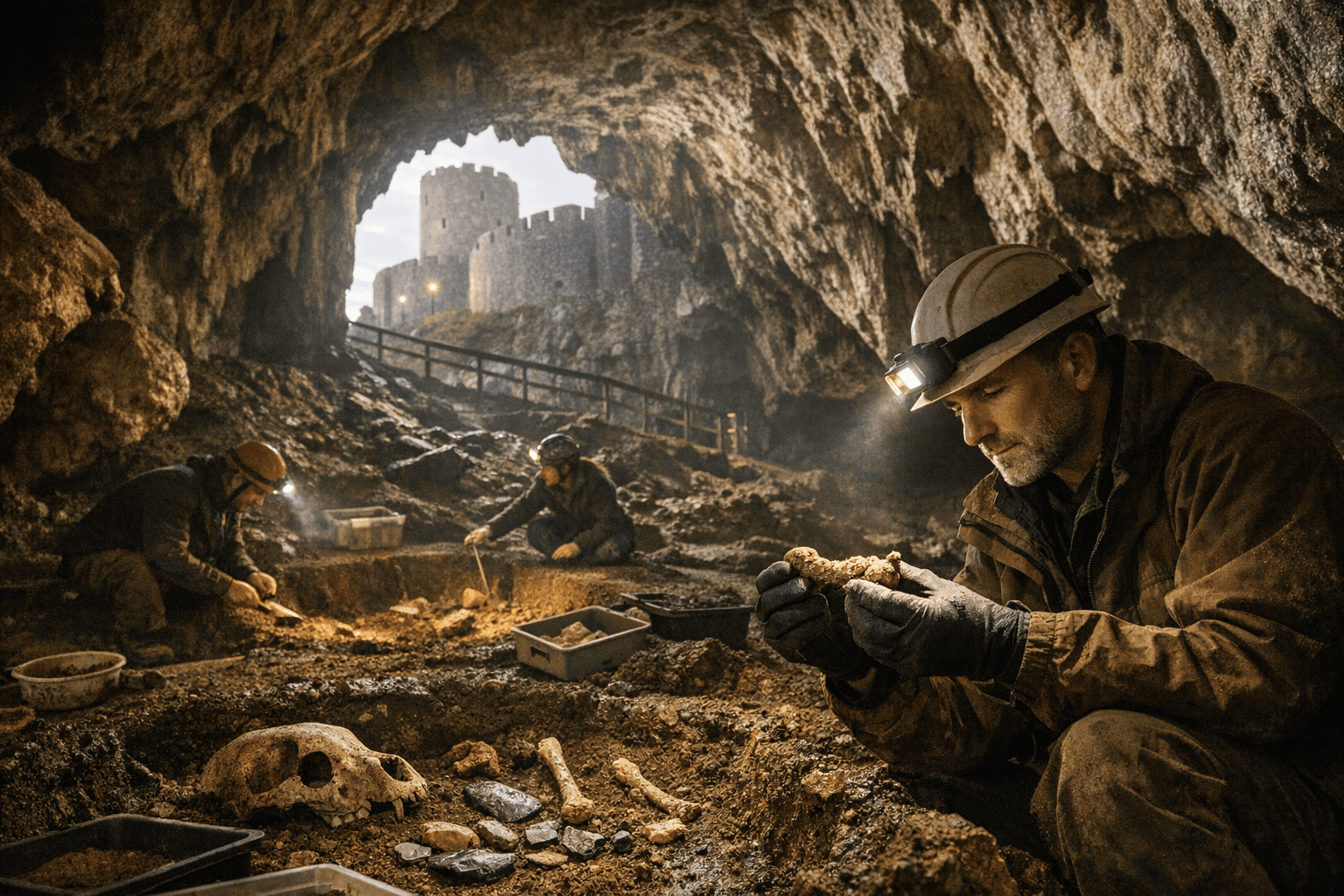
Pembroke Castle staff said the discovery opens a “new and exciting chapter” for the site and could make it a place of international archaeological importance. That assessment rests on the cave’s unusual setting as well as its contents: a vast natural chamber hidden beneath an 11th Century castle, holding evidence that predates the castle itself by tens of thousands of years.
For historians of Britain’s deep past, the significance is straightforward. If the coming work confirms the scale and continuity of the finds, Wogan Cavern could help rewrite the prehistoric story of west Wales and strengthen the case that Pembrokeshire was a major corridor for both animals and early humans during the Ice Age. The next phase of excavation will determine how far that record extends, and whether the cave can deliver a clearer picture of who lived there, when, and under what conditions.
This article was produced by Prism’s automated news system from verified source data, official records, and press releases, then run through automated quality and moderation checks before publishing. The system is built and supervised by the people who set the standards it runs under. Read our full AI policy.
Did this article answer your question?


