Reading meningitis outbreak kills sixth-form student, two others treated
A sixth-form student died after three linked meningococcal cases in Reading, while health officials said schools should stay open and close contacts may need antibiotics.

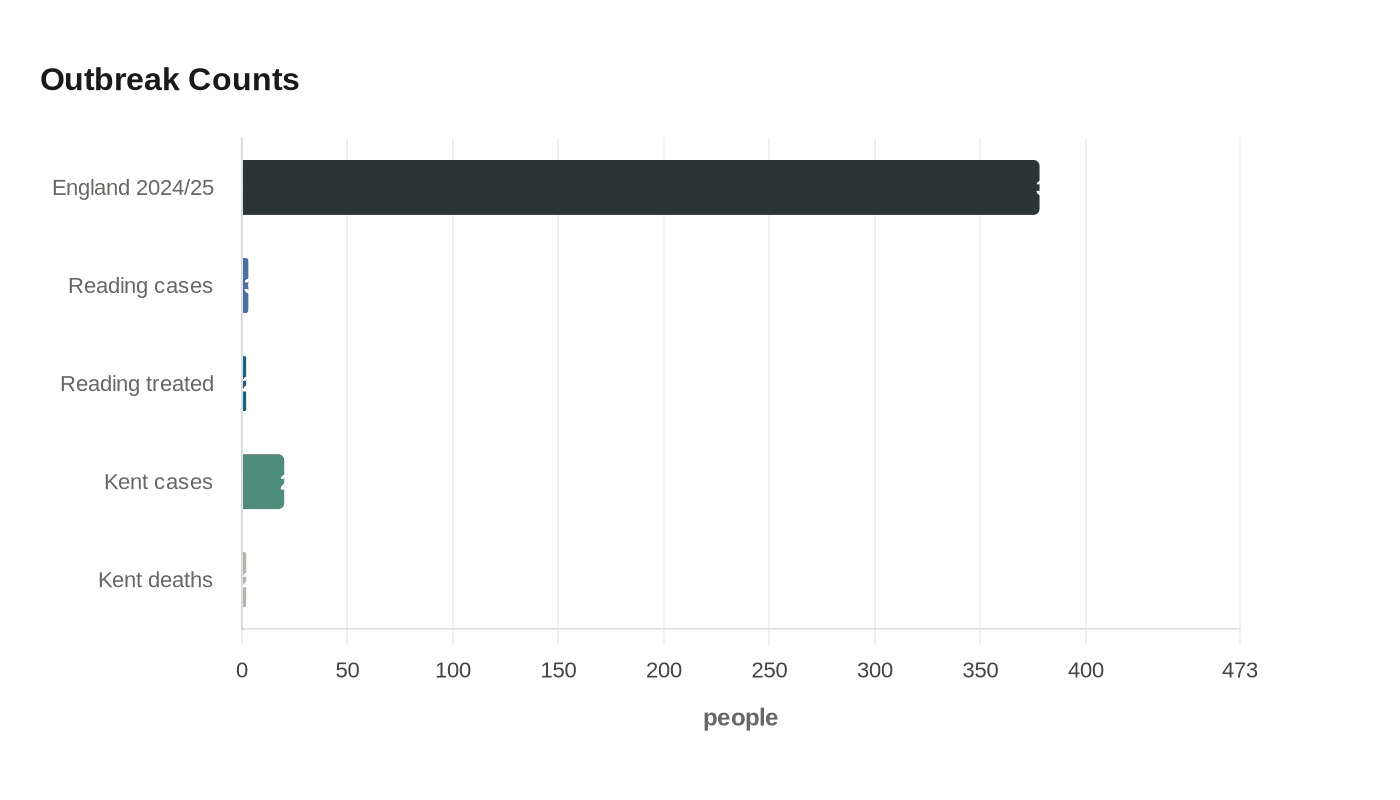
A sixth-form student has died after three meningococcal infections were identified among young people in Reading, with two other pupils receiving treatment and the cases linked to two schools. The loss has sharpened attention on how fast the disease can move, and why health officials are urging families to take symptoms seriously without assuming schools must shut their doors.
Meningococcal disease is a rare but serious bacterial infection that can cause meningitis and sepsis. UKHSA’s latest annual data show 378 confirmed invasive meningococcal disease cases in England in 2024/25, and officials say teenagers and young adults remain among the groups most at risk. The Reading cluster comes after a separate South East England outbreak in Kent in March, where UKHSA identified 20 cases between 13 and 17 March and two people died.

Families are being told to watch for fever, a very bad headache, vomiting, stiff neck, dislike of bright lights, confusion, severe sleepiness, seizures, rapid breathing, very cold hands and feet, and a rash that does not fade under pressure. The bacteria spread through close, prolonged contact, including contact with spit, kissing, sharing drinks or vapes, or living in the same home. NHS guidance says not to wait for every symptom or for a rash to appear before seeking emergency help.
Health teams decide how far to widen a response by tracing contacts, investigating whether cases are linked, and moving quickly when a cluster suggests possible onward spread. UKHSA says local health protection teams contact settings directly when extra precautions are needed, and if a setting has not been contacted, it should keep operating as normal. Close contacts may be offered preventative antibiotics, and in some outbreak situations at-risk groups can also be offered vaccination. Officials stress that schools, colleges and universities are not being told to close because meningococcal disease does not spread easily and large outbreaks are rare. That targeted approach is meant to protect pupils, staff and vulnerable families while avoiding unnecessary disruption.
This article was produced by Prism’s automated news system from verified source data, official records, and press releases, then run through automated quality and moderation checks before publishing. The system is built and supervised by the people who set the standards it runs under. Read our full AI policy.
Did this article answer your question?