Rebel violence in Congo's Ituri province kills at least 69 people
Rebel attacks in Ituri left at least 69 dead after a cycle of raids and reprisals. Peacekeepers rescued 191 people, but bodies and survivors still lay scattered near Bassa.
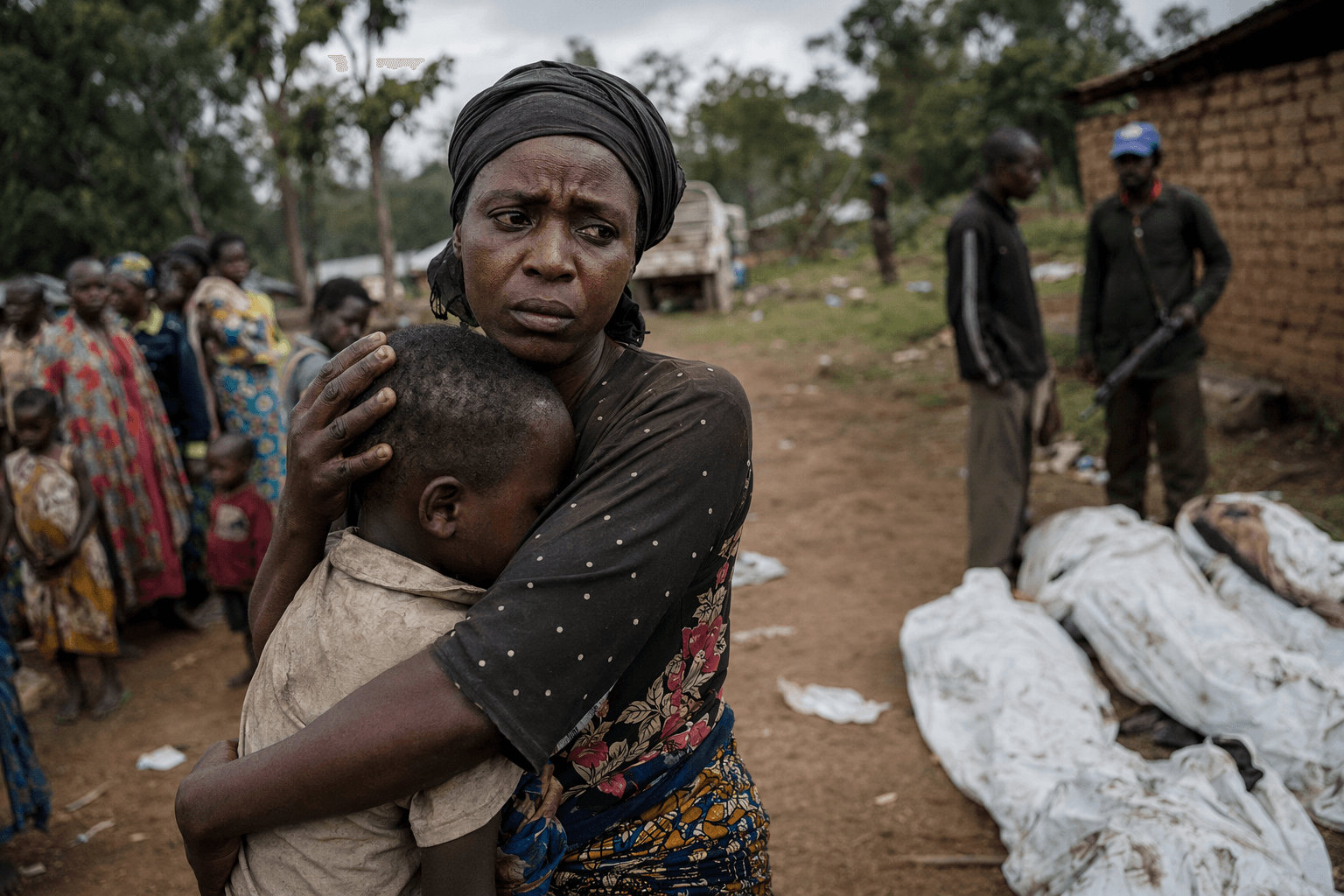
Rebel fighters left villages in Ituri province littered with the dead after a chain of attacks that killed at least 69 people and exposed how little control the Congolese state holds over one of eastern Congo’s most dangerous front lines.
Security officials blamed the CODECO militia, which says it protects the Lendu community, for assaults on several villages on April 28. Those attacks followed an earlier strike by the Convention for the Popular Revolution, or CRP, which says it fights for the Hema community and had hit positions held by the Congolese army, FARDC, near Pimbo in Djugu territory. Local leaders and security sources said the violence appeared to trigger a retaliatory wave that left more than 70 people dead in late-April fighting. One source put the toll at least 69, including 19 militia members and soldiers.
The scale of the killing was still unclear because access to the area remained so limited. Civil society leader Dieudonne Losa said only 25 bodies had been buried and several sets of remains were still missing because fighters stayed in the area for days afterward. A humanitarian source described bodies strewn on the ground near Bassa, one of the villages hit in the attack, a sign that the scene remained chaotic even after the shooting stopped.
The violence also showed how quickly civilians are trapped between rival armed groups and a weak security presence. MONUSCO said peacekeepers from its bases in Fataki and Gina rescued 191 people who were caught under fire during the April 28 assault on FARDC positions in Pimbo. UN officials later said peacekeepers evacuated 24 civilians, including 8 women and 15 children, when tensions rose again in the same area in early May. Those operations were lifesaving, but they were emergency rescues, not proof of durable control on the ground.
Ituri’s insecurity is rooted in a long Hema-Lendu conflict that intensified during the late 1990s and early 2000s, then became entangled with competition over mines and territory in a gold-rich border region near Uganda and South Sudan. The CRP has resurfaced strongly since early 2025, and its founder, Thomas Lubanga, is a convicted warlord who served a prison sentence for recruiting child soldiers. The pattern has been the same for years: one armed group attacks, another retaliates, civilians absorb the damage.
The broader humanitarian picture is worsening fast. OCHA said Ituri already hosted more than 920,000 displaced people, and more than 100,000 new displaced people were recorded there between February and April 30, 2026. MSF said the first quarter of 2026 brought more than 100,000 newly displaced people in the province. Across the Democratic Republic of the Congo, UNHCR said around 8.2 million people were forcibly displaced as of September 2025, with the total likely to reach 9 million by the end of 2026.
A UN Security Council report said the Washington Accords for Peace and Prosperity were signed in December 2025, but the security gains have not reached villages like Bassa or Pimbo. The latest killings added to a familiar record in eastern Congo: peace processes announced far from the battlefield, and civilians left to face the reprisals that follow when armed groups remain the real power.
This article was produced by Prism’s automated news system from verified source data, official records, and press releases, then run through automated quality and moderation checks before publishing. The system is built and supervised by the people who set the standards it runs under. Read our full AI policy.
Did this article answer your question?