Record-Shattering March Heat Breaks 132 Years of U.S. Temperature Data
March shattered 132 years of U.S. heat records by the widest margin ever, and forecasters warn a forming super El Niño could push temperatures even higher.
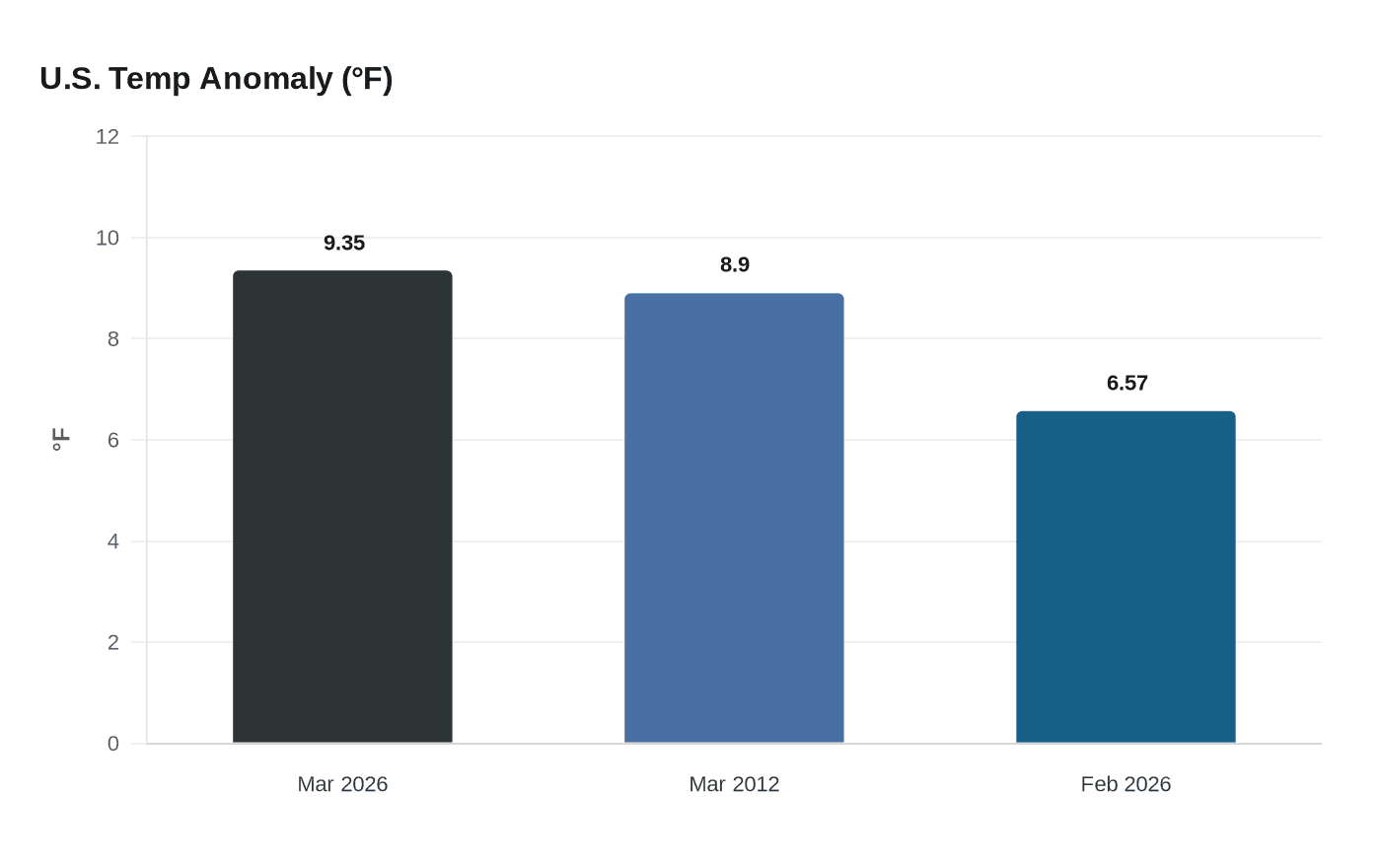
The continental United States just posted its most abnormally hot month in 132 years of federal records, and the margin exceeded every previous month ever measured. NOAA data released Wednesday showed March averaged 50.85°F across the Lower 48, a full 9.35°F above the 20th-century norm, eclipsing the previous record of 8.9°F above normal set in March 2012.
The daytime numbers were particularly striking. The average maximum temperature for March ran 11.4°F above the 20th-century average, making it nearly a degree warmer than a typical April afternoon. The heat also compounded an emerging drought: January through March was the driest quarter on record for the contiguous U.S., a "bad combination for water availability, for agriculture, for river levels, for navigation," said Jeff Masters, a meteorologist at Yale Climate Connections.
The sheer scale of record-breaking was staggering. Meteorologist Guy Walton, who specializes in analyzing NOAA data, calculated more than 19,800 daily heat records broken nationwide in March alone. More than 2,000 locations set monthly heat records, a threshold far harder to clear than daily records, and Walton found that March produced more such records than entire past decades combined.
"What we experienced in March across the United States was unprecedented," said Shel Winkley, a meteorologist at Climate Central. He pointed to both the volume of all-time records broken and the timing: March arrived on the heels of what he called the worst snow year and hottest winter on record. "That's where it's really concerning," Winkley said, "it's just the duration of this heat."

The pattern runs deeper than a single month. Six of the nation's top 10 most-above-normal months have occurred in the last decade. February 2026 ranked tenth on that list at 6.57°F above normal, and the 12 months from April 2025 through March 2026 were the warmest ever recorded in the continental U.S. On March 20 and 21, about one-third of the nation experienced temperatures that Climate Central calculated would have been virtually impossible without human-caused climate change.
Masters described the accumulating evidence plainly: the record-breaking data "tells us that climate change is kicking our butts."
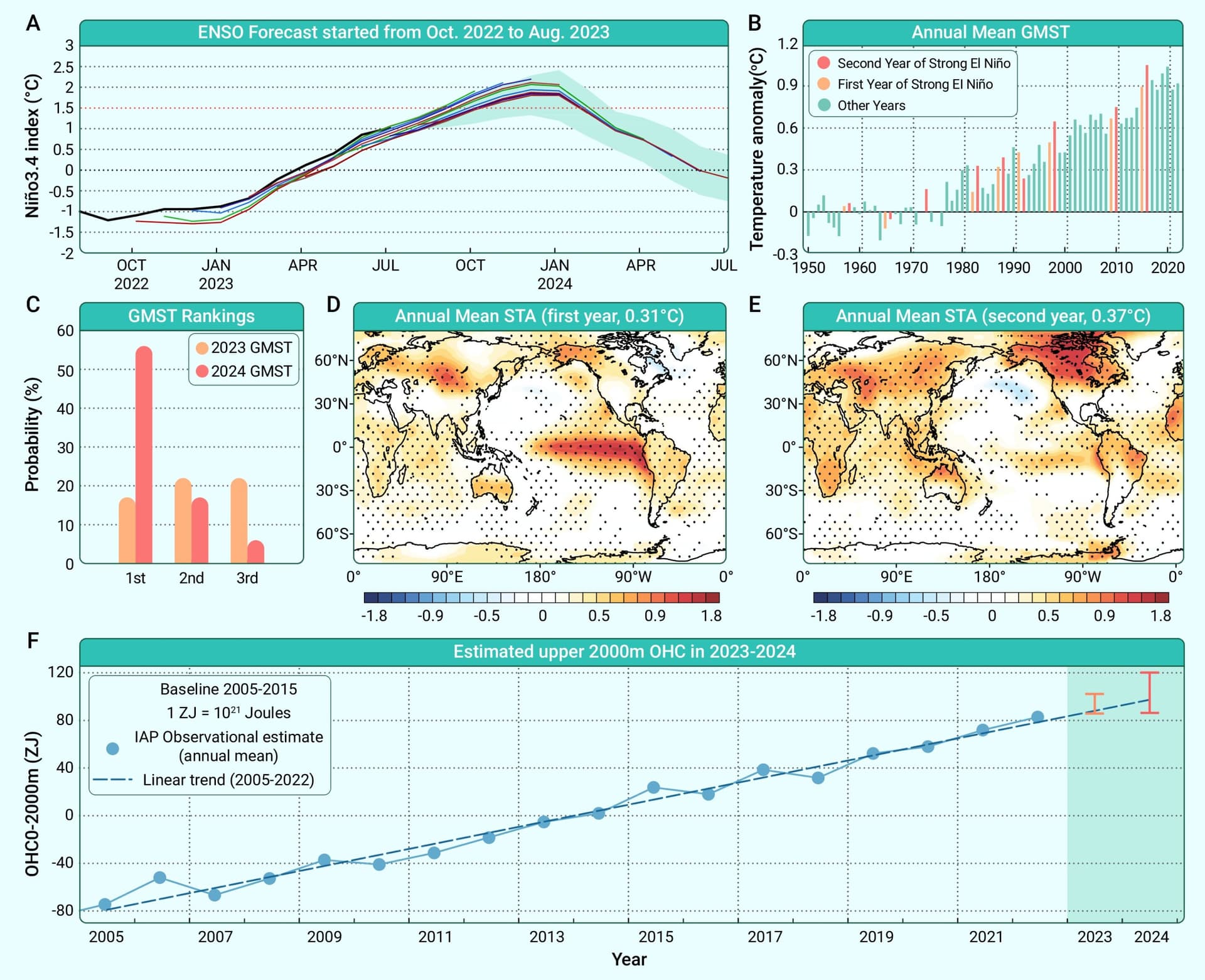
What comes next could push temperatures further still. Both NOAA and the European Copernicus Climate Change Service are forecasting a "super" El Niño to develop within months and intensify through winter, with tropical Pacific temperatures potentially exceeding 2°C above normal. That would rival the 2015-2016 event; previous super-scale El Niños occurred in 1997-98 and 1982-83.
Victor Gensini, a meteorology professor at Northern Illinois University, explained that El Niño releases ocean-stored heat into the atmosphere with a lag of several months. "A strong El Niño could plausibly push global temperatures to new record levels in late 2026 and into 2027," he said.
Jonathan Overpeck, dean of the University of Michigan's School for Environment and Sustainability, warned that the two forces are no longer independent: "Global warming is supercharging El Niños and the atmospheric warming they drive. We're likely to see another jump in global temperatures if a strong El Niño develops later this year as being predicted."
Research published in the journal Nature Communications has found that super-sized El Niños can trigger climate regime shifts that push baseline conditions into new patterns persisting for years or decades. If current forecasts verify, 2024's record for hottest year globally may not stand much longer.
This article was produced by Prism’s automated news system from verified source data, official records, and press releases, then run through automated quality and moderation checks before publishing. The system is built and supervised by the people who set the standards it runs under. Read our full AI policy.
Did this article answer your question?