Red light therapy booms as science weighs skin and muscle claims
Red light therapy is now a booming consumer buy, but the best evidence is narrower than the marketing. Skin gains look plausible; muscle recovery remains much less certain.
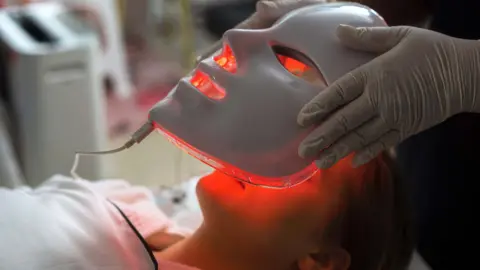
Red light therapy has moved from dermatology offices into bedrooms, gym bags, and beauty routines, but the science still draws a sharp line between modest benefits and marketing inflation. Also called photobiomodulation, or PBM, and low-level light therapy, it is now sold for everything from wrinkles and age spots to pain relief, wound healing, hair loss, and athletic recovery.
Why the boom happened
The modern rise of red light therapy has a scientific backstory that helped legitimize the field long before consumer gadgets filled store shelves. NASA-funded work in the late 1990s and early 2000s helped popularize the technology after studies found that high-intensity red and near-infrared LEDs could speed healing in oxygen-deprived wounds in rats and stimulate growth in skin, bone, and muscle cell cultures. NASA has also pointed to an even older precursor, a 1903 Nobel Prize-era discovery that concentrated red light could help heal sores.
That history matters because the technology sounds futuristic while the core idea is simple: light at specific wavelengths may influence cellular activity. Stanford Medicine described photobiomodulation as the use of light waves to change human biology and noted that it has boomed in recent years for a wide range of purposes. The problem is that a technology can be biologically plausible without every consumer claim being equally well supported.
What the skin evidence actually shows
Skin is where red light therapy has its strongest commercial appeal and some of its most encouraging data. The American Academy of Dermatology says red light is widely marketed for wrinkles, age spots, sagging skin, and hair loss. Harvard Health says it is now offered both in dermatology offices and through many at-home LED or low-level laser devices.
The research base is real, but it is not uniform. A 2025 dermatology review of red LED therapy summarized 59 studies involving 1,882 patients, which is a substantial body of evidence for a beauty-adjacent treatment. Even so, the review also highlighted a persistent problem in the field: treatment parameters vary widely, so studies do not always use the same wavelength, dose, timing, or treatment area.
That variability makes the results harder to translate into a simple consumer promise. A controlled trial did find that red and near-infrared light improved patient satisfaction, fine lines, wrinkles, skin roughness, and intradermal collagen density. Other dermatology literature says red and infrared light have been shown to augment tissue repair and promote skin rejuvenation. Taken together, those findings suggest red light may help with visible aging signs, but not in the dramatic, all-purpose way advertising often implies.
Stanford Medicine was blunt on that point, saying the science does not support all of the marketing claims attached to photobiomodulation. The American Academy of Dermatology takes a similarly cautious line, framing red light as a treatment with potential benefits rather than a guaranteed anti-aging fix.
Muscle recovery is promising, but still unsettled
The case for muscle recovery is more complicated. A 2024 systematic review of pre-exercise photobiomodulation said the topic remains controversial, even as researchers continue testing whether red light can improve muscle endurance and recovery from strength loss and injury. That is a key distinction: the underlying idea is not rejected, but the evidence is still unsettled enough that broad claims outpace consensus.
Another systematic review found a more favorable pattern, concluding that PBM appears to limit exercise-induced muscle damage, improve biochemical and functional recovery, and reduce inflammation and oxidative stress. Yet even that more optimistic reading comes with an important caveat: outcomes depend heavily on protocol details such as wavelength, dose, timing, and treatment area.
That dependency is a problem for consumers who want a simple answer. If two devices look similar but deliver different wavelengths or energy levels, they may not produce the same result. If timing matters, pre-workout and post-workout use are not interchangeable. If treatment area matters, a face mask is not the same thing as a wrap or panel aimed at a sore hamstring. The science suggests there may be real effects, but not the kind that can be separated from product design and usage details.
How to read the consumer device boom
The biggest market shift is not in a clinic but at home. Red light therapy now sits inside a fast-growing consumer category, where devices are sold for self-care, recovery, and cosmetic upkeep. That expansion raises the stakes because people are not just choosing a treatment, they are buying into claims that may be broader than the evidence.
The Food and Drug Administration draws a crucial legal line here. A 510(k) clearance means a device is substantially equivalent to a legally marketed predicate device, not that the agency has independently proven broad effectiveness for every advertised use. That distinction matters because a product may be cleared for specific labeled indications, such as aging skin, pain relief, acne, or hair growth, while marketers suggest a much wider list of benefits.
The safest interpretation is also the most boring one: some red light devices may help some people with some problems, especially skin-related ones, but clearance is not a blank check. Consumers are buying a tool with plausible biology, a growing research base, and real uncertainty around how well it works outside tightly defined uses.
The bottom line
Red light therapy is not pure hype, but it is also not a miracle gadget. The strongest evidence points to modest benefits for certain skin concerns and some possible help in recovery-related settings, while the claims stretching farthest from the data remain the least convincing. In a crowded wellness market, the real consumer test is not whether red light sounds advanced. It is whether the product in hand matches the narrow science behind it.
This article was produced by Prism’s automated news system from verified source data, official records, and press releases, then run through automated quality and moderation checks before publishing. The system is built and supervised by the people who set the standards it runs under. Read our full AI policy.
Did this article answer your question?